




A Veteran Explorer's New Chapter
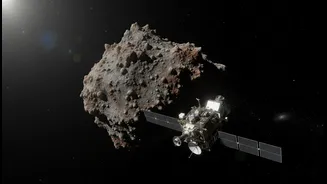
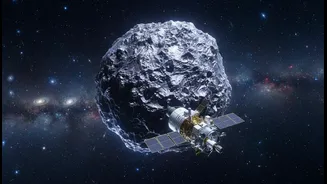
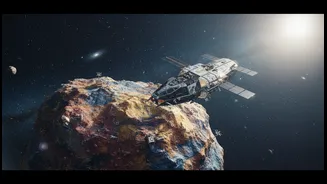
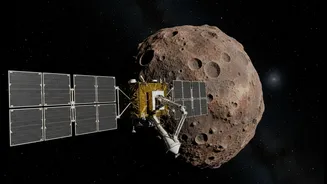
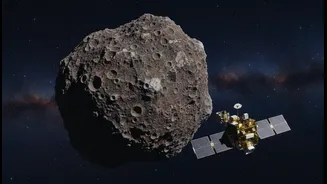
The Hayabusa2 probe is already a legend in the world of space exploration. Operated by the Japan Aerospace Exploration Agency (JAXA), its original mission achieved a stunning success in 2020 by returning precious samples from the asteroid Ryugu to Earth.
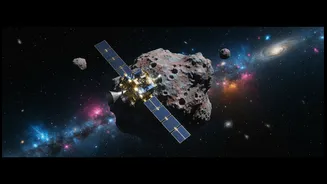
These materials have provided invaluable clues about the formation of our solar system. But instead of retiring, the healthy spacecraft was given a new, ambitious task: the Hayabusa2 Extended Mission. This new journey sent it hurtling back into deep space with two new targets on its list. The first was the recent flyby of asteroid Torifune, with a final destination set for a 2031 rendezvous with an even smaller, fast-spinning asteroid named 1998 KY26.
The Target: Asteroid Torifune
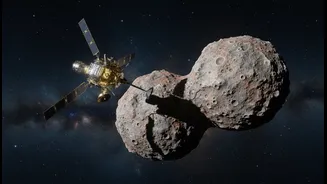
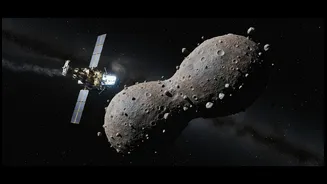
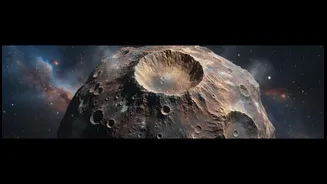
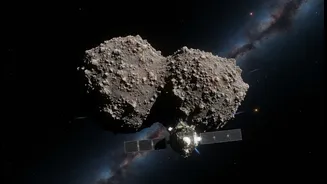
The subject of the July 5th flyby, officially known as 2001 CC21, was given the nickname Torifune after a god and ship from Japanese mythology said to travel safely at high speed. It is a near-Earth asteroid with an estimated diameter of about 450 metres. Ground-based observations suggested it was an elongated, stony-type or S-type asteroid, but the close-up images from Hayabusa2 have now confirmed its shape, revealing it to be a two-lobed object, sometimes called a contact binary. This means it likely formed when two separate asteroids slowly spiraled into each other and merged. Its size is significant; asteroids of this scale are large enough to cause major damage if they were to strike Earth, yet they can be difficult to spot with telescopes on the ground.
A High-Speed Precision Encounter
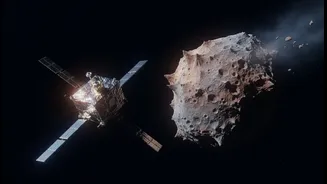
The flyby was an exercise in extreme precision. Hayabusa2 screamed past Torifune at a relative velocity of approximately 5 kilometres per second, or about 18,000 kilometres per hour. Mission controllers at JAXA guided the probe to pass within an incredibly close distance, with reports suggesting an approach of just a few hundred metres from the asteroid's surface. One JAXA team leader described the difficulty as being similar to trying to shoot a one-yen coin in Hokkaido from Okinawa. Since the spacecraft was not originally designed for such high-speed flybys, its optical navigation cameras had to work overtime, autonomously tracking the asteroid and adjusting the trajectory for a successful pass. During the brief encounter, a suite of instruments, including near-infrared and thermal-infrared cameras, gathered as much data as possible on the asteroid's composition and temperature.
Rehearsal for Planetary Defence
This mission was about much more than just observing another space rock. It served as a vital demonstration of technologies critical for planetary defence. While NASA's DART mission in 2022 proved that we can change an asteroid's path by crashing a spacecraft into it—a technique known as kinetic impact—there is another crucial part of the puzzle: getting to the asteroid in the first place. A real planetary defence scenario might require a rapid reconnaissance mission to assess a threatening asteroid's size, shape, and structure before deciding how to deflect it. Hayabusa2's flyby successfully tested this exact capability: guiding a probe with high precision to a small, fast-moving target in deep space. This success demonstrates that Japan has joined the United States in possessing the kind of precision guidance technology that underpins any credible asteroid deflection strategy.
From Science to Global Safety
The flyby of Torifune shows how scientific exploration and planetary safety are deeply intertwined. By studying asteroids up close, we learn about the history of our solar system, but we also develop the practical skills needed to protect our future. Missions like Hayabusa2 and DART are complementary. While DART was the dramatic test of the impact itself, Hayabusa2's manoeuvre represents the equally important test of the high-speed approach and targeting. Together, these missions build a global toolkit for planetary defence. The data gathered from Torifune will help scientists better understand a common type of asteroid and refine the techniques needed for a potential future intervention mission. As Hayabusa2 continues its journey toward its final target in 2031, each step adds to humanity's growing confidence that we can, if needed, protect Earth from a dangerous impact.