







What is a Planetary Alignment?
First, let's clarify what we mean by a 'lineup' or 'alignment'. The planets in our solar system are constantly moving in their own orbits around the Sun. From our vantage point on Earth, these paths sometimes cause them to appear close together in our sky.
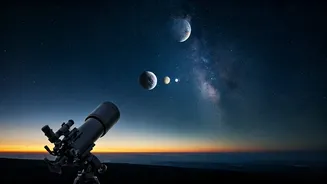
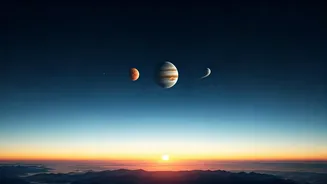
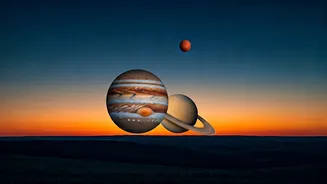
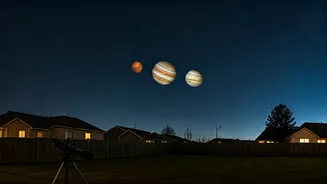
This is called a conjunction or an alignment. It doesn't mean the planets are actually forming a perfectly straight line in space—that's an extremely rare event. Instead, think of it as them sharing the same small patch of celestial real estate for a short while. Tonight's event is special because it involves three bright planets—Mars, Jupiter, and Saturn—gathering in a tight formation, a visual treat that doesn't happen every day.
Your Viewing Guide: When and Where to Look
Timing and direction are everything for this event. The key phrase in the headline is 'low tonight,' which means the alignment will be visible near the horizon. For viewers across India, the best time to look is shortly after sunset. Find a spot with a clear, unobstructed view of the western horizon. As the sky darkens, about 30 to 45 minutes after the sun has completely set, the planets will become visible. Jupiter, being the brightest of the trio, will likely pop into view first, followed by the distinct reddish hue of Mars and the fainter, steady glow of Saturn. This celestial trio will hang low in the sky and will set within a couple of hours, so your viewing window is limited but rewarding.
Do I Need a Telescope?
Absolutely not! This is the best part about planetary conjunctions—they are typically bright enough to be seen with the naked eye. All three planets in this lineup—Jupiter, Mars, and Saturn—are easily visible without any special equipment. You won't need a telescope to spot them. However, if you have a pair of binoculars, you'll get an even better view. Binoculars will make the colours more distinct and might even reveal Jupiter's four largest moons (the Galilean moons) as tiny pinpricks of light next to the planet. If you do have a small telescope, you can aim it at Saturn to get a glimpse of its magnificent rings, which is always a breathtaking sight.
Tips for Skywatchers in the City
Living in a city with significant light pollution can be a challenge for stargazing, but don't be discouraged. The brightness of these planets means they can often cut through the urban glow. To improve your chances, try to find a location away from direct streetlights. A local park, a rooftop terrace, or even a high-floor balcony with a clear view of the western sky can work wonders. Another crucial tip is to give your eyes time to adapt to the dark. Step outside, avoid looking at your bright phone screen for at least 15 minutes, and let your pupils dilate. You'll be amazed at how much more you can see once your eyes are fully adjusted to the darkness.
How to Photograph the Alignment
Want to capture a memory of this celestial event? You don't need a professional camera. Most modern smartphones are capable of taking decent night sky photos. The key is stability. Mount your phone on a small tripod or prop it securely against a stable object. Use your camera's 'Night Mode' or 'Pro Mode'. If using Pro Mode, try setting a longer shutter speed (2-5 seconds) and a moderate ISO (400-800). To avoid camera shake, use the self-timer function to take the picture. Don't expect Hubble-quality images, but you can certainly capture the beautiful arrangement of the planets against the twilight sky as a wonderful memento.