






Exploring Sikkim's majestic mountains and serene monasteries doesn't require a private car. The state's true lifeline is its network of shared jeeps and regional buses, an affordable and authentic way to travel like a local. Here's how to do it.
The Backbone of Sikkim Travel
In the
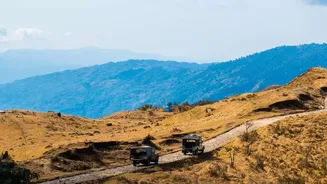
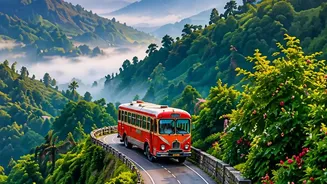
steep, winding roads of Sikkim, where there is no railway network, public transport is king. The system is dominated by shared jeeps—typically Mahindra Boleros or Tata Sumos—and buses operated by Sikkim Nationalised Transport (SNT). These vehicles are not just for tourists; they are the daily commute for students, monks, farmers, and families, making them a vibrant and essential part of local life. For travellers, this system offers a huge advantage: cost. A seat in a shared jeep from Siliguri to Pelling might cost around ₹400–₹550, whereas a private reserved car for the same route could be ₹5,500 or more. This makes exploring the state significantly more accessible for budget-conscious travellers, solo adventurers, and small groups.
Understanding the Hubs and Routes
Most journeys into Sikkim begin from Siliguri, the main gateway city in West Bengal, which has the nearest major railway station (New Jalpaiguri or NJP) and airport (Bagdogra or IXB). From Siliguri, shared jeeps and SNT buses connect to all major towns in Sikkim. Key transport hubs within Sikkim include Gangtok for the east, Jorethang for the south and west, and Gyalshing for destinations deeper in West Sikkim like Pelling and Yuksom. Popular routes include:
- Siliguri/NJP to Gangtok: A 4-5 hour journey with frequent shared jeeps and SNT buses.
- Siliguri/NJP to Pelling: Often requires a change of jeep at a hub like Jorethang or Gyalshing.
- Gangtok to Pelling: Shared jeeps connect the capital to West Sikkim, often departing in the morning.
- Gangtok to Namchi/Ravangla: Well-connected routes to the main towns of South Sikkim.
How the System Works
The shared transport system operates on a simple 'fill-and-go' basis. There is generally no online booking; you go to the designated jeep or bus stand, buy a ticket for a seat, and wait for the vehicle to fill up with ten passengers. These stands are fixed locations, so it's wise to ask a local or your hotel for the correct departure point for your destination. For example, in Siliguri, the main stands are located near the SNT bus terminus on Hill Cart Road. The most important thing to remember is timing. The majority of services, especially for longer routes, run in the morning, from around 6:30 AM to noon. Departures become scarce after 2 PM, so an early start is crucial, especially if your journey requires a connection.
Essential Tips for Travelers
To make your journey smooth, keep a few things in mind. First, travel light. Luggage goes on the roof, tied down under a tarpaulin, and space is limited. Second, be flexible. Since jeeps leave when full, not on a fixed schedule, you may have to wait. Always carry cash, as fares are paid directly at the stand or to the driver. Fares are generally fixed by local transport associations, so there is little to no bargaining. If you are prone to motion sickness, the front seat next to the driver offers the best view and a smoother ride; it's often worth asking for. Finally, use the journey as an opportunity to connect. Travelling with locals is a great way to get tips, learn about road conditions, and experience the warmth of Sikkimese hospitality.