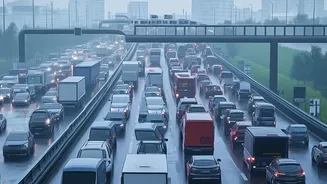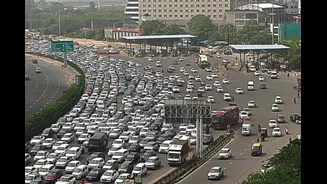






As winter approaches, Delhi is bracing for its annual battle with severe air pollution. Starting November 1, a series of measures under the Winter Action Plan will come into effect, impacting private drivers significantly. Here’s your guide.
The Main Rule: A Ban on Out-of-State Vehicles
The most significant
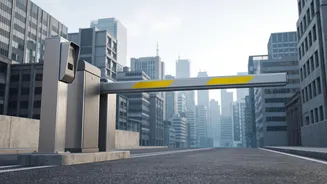
change for private drivers is the restriction on vehicles registered outside of Delhi. From November 1, 2026, to January 31, 2027, petrol and diesel vehicles that do not comply with Bharat Stage VI (BS-VI) emission standards will be barred from entering the national capital. This measure specifically targets the heavy influx of commuter traffic from neighbouring NCR cities like Gurugram, Noida, Faridabad, and Ghaziabad, which contributes significantly to vehicular emissions. The ban applies to both private and commercial vehicles registered in other states. Authorities will use AI-powered Automatic Number Plate Recognition (ANPR) cameras at border checkpoints to identify and flag non-compliant vehicles.
Which Vehicles Are Exempt from the Ban?
Not all vehicles will be stopped at the border. The entry ban has several key exemptions. All electric vehicles (EVs) and vehicles that run on compressed natural gas (CNG) are permitted to enter Delhi, regardless of their registration state. Additionally, vehicles used for essential services, such as ambulances and fire services, are exempt. It's important to note that this specific entry ban does not apply to vehicles registered in Delhi itself, though they are subject to other pollution-control rules. Any car registered after April 1, 2020, is almost certainly BS-VI compliant. Drivers can verify their vehicle's emission norm on the 'Vahan' portal or on their Registration Certificate.
No Fuel Without a Valid PUC Certificate
Another critical rule being strictly enforced from November 1 is 'No PUC, No Fuel'. All fuel stations across Delhi will be required to deny petrol, diesel, or CNG to any vehicle that does not have a valid Pollution Under Control (PUC) certificate. This rule applies to all vehicles, including those registered in Delhi. Enforcement will be tight, with around 500 fuel pumps being equipped with ANPR systems that check a vehicle's number plate against the PUC database. Driving without a valid PUC certificate can already attract a hefty fine of ₹10,000, making it essential for all drivers to ensure their certification is up to date.
Parking Fees to Double to Discourage Private Cars
To further discourage the use of private vehicles, parking charges at all authorised parking facilities across Delhi will be doubled. This increased fee structure will be in place for four months, from November 1, 2026, to February 28, 2027. However, there are a couple of notable exemptions to this rule. Electric vehicles will not be subject to the increased parking charges. Furthermore, parking lots owned and managed by the Delhi Metro Rail Corporation (DMRC) are also excluded from the price hike, encouraging commuters to use the metro for their daily travel.
What About GRAP and the Odd/Even Scheme?
These November 1 measures are part of Delhi's 'Winter Action Plan', which is distinct from the Graded Response Action Plan (GRAP). GRAP is a set of emergency measures that are implemented based on the real/time Air Quality Index (AQI). For instance, if the air quality deteriorates to the 'Severe' category (GRAP Stage III), the government may impose a ban on BS/III petrol and BS/IV diesel four/wheelers within Delhi/NCR, with a potential fine of ₹/twenty thousand for violations. The famous odd/even scheme,' where cars with odd and even number plates can only drive on alternate days,' is typically reserved as an emergency measure under GRAP Stage IV,' when the AQI becomes 'Severe Plus'. While not in effect from November/1,' it remains a tool the government can use if pollution levels spiral out of control.