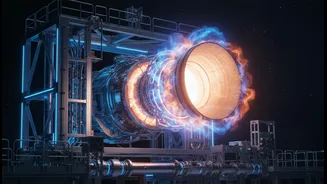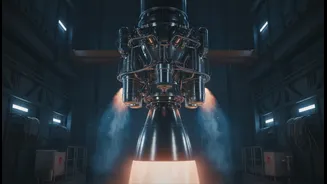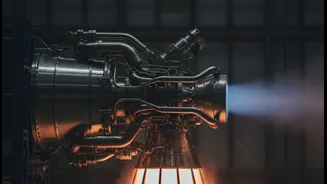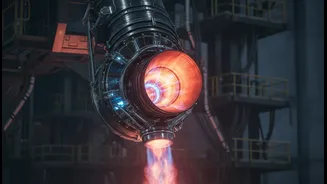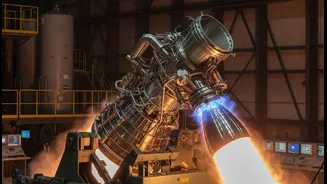




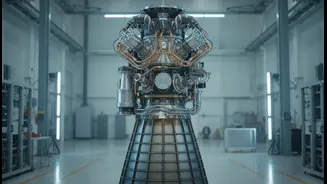
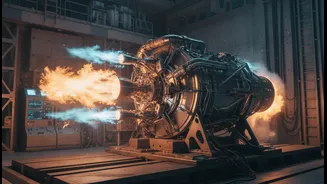



First, What Exactly is a Semicryogenic Engine?
Think of rocket engines as needing two things to create thrust: a fuel to burn and an oxidizer (like oxygen) to make it burn. A 'fully cryogenic' engine, like the one in the upper stage of India's LVM3 rocket, uses super-cooled liquid hydrogen and liquid oxygen.
A 'semicryogenic' engine, like the new SCE-2000 that ISRO is developing, uses a different mix: liquid oxygen as the oxidizer but refined kerosene as the fuel. This might sound like a small change, but it has huge benefits. Kerosene is much denser than liquid hydrogen and doesn't need to be kept at extremely cold temperatures. This makes the fuel tanks smaller, the engine easier to handle, and the overall launch operations cheaper and faster. It’s a strategic middle path that offers high power without the intense complexity of fully cryogenic systems.
Checklist Item 1: The 'Isrosene' Fuel
The first thing on our checklist is the fuel itself. ISRO isn't just using any off-the-shelf kerosene; it has developed a rocket-grade, highly-refined version aptly named 'Isrosene'. This cleaner fuel is crucial for the engine's performance and stability. Unlike the propellants in some older rockets, the combination of liquid oxygen and Isrosene is non-toxic and more environmentally friendly. The development of this specialised fuel in partnership with Indian industry is a significant step towards self-reliance, ensuring that India controls the entire supply chain for its next generation of launch vehicles.
Checklist Item 2: The 2,000 Kilonewton Thrust Target
Power is the name of the game. The new engine is officially called the SE-2000, which stands for Semi-cryogenic Engine with 2,000 kilonewtons (kN) of thrust. To put that in perspective, this is a massive upgrade. Recent tests have successfully fired the engine's power head—the heart of the system—at 175 tonnes of force, which is 88% of the final target. Reaching the full 2,000 kN (or 200-tonne) thrust will give India's rockets a significant boost. The engine is designed to replace the current core stage of the LVM3 rocket, our most powerful launcher. This upgrade will increase the LVM3's payload capacity to Geostationary Transfer Orbit (GTO) from four tonnes to five tonnes. That extra tonne means India can launch heavier communication satellites, more complex scientific probes, and larger components for future missions like the Gaganyaan human spaceflight program.
Checklist Item 3: The Mahendragiri Test Facility
All this powerful hardware has to be tested safely on the ground before it ever gets near a launchpad. This is happening at the ISRO Propulsion Complex (IPRC) in Mahendragiri, Tamil Nadu. IPRC is home to a new, state-of-the-art Semicryogenic Integrated Engine & Stage Test facility, specifically built to handle these powerful engines. The successful hot tests, where key components are fired for short durations, are all conducted here. These ground tests are where engineers gather crucial data, check for stability, and push the engine to its limits to ensure it's ready for flight. When you see news of a successful 'hot test', it's a sign that the engine has passed another critical milestone at Mahendragiri.
Checklist Item 4: The Future Ride—NGLV
While the immediate plan is to upgrade the LVM3, the semicryogenic engine is truly the foundation for India’s future in space access. The ultimate goal for this technology is to power the Next Generation Launch Vehicle (NGLV). The NGLV is envisioned as a modular, reusable rocket family that will eventually replace the workhorse PSLV and GSLV rockets. By using a cluster of these powerful and efficient semicryogenic engines in its booster stage, the NGLV will be able to lift much heavier payloads at a significantly lower cost. This reusability is key to making space access more affordable and increasing India's share of the global satellite launch market from the current 2% to a target of 10%.