






The Promise: Benefits for Science and India
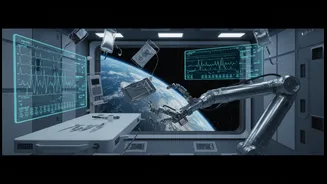
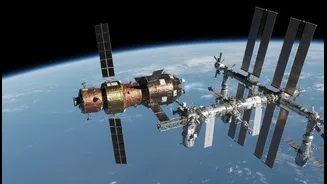
An astronaut's mission to the ISS is fundamentally about science. In the unique microgravity environment, experiments can be conducted that are impossible on Earth. Menon's mission is expected to include research into the effects of long-duration spaceflight
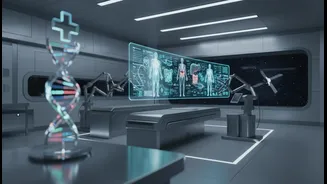
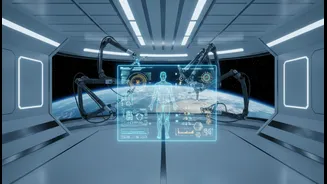
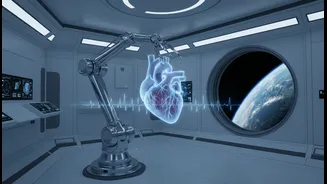
on the human body, such as how microgravity impacts blood flow and composition. He will also contribute to testing new medical technologies, like producing IV fluids from the station's water supply, a crucial capability for future deep-space journeys to the Moon and Mars. Other research areas on the ISS include material science, combustion, and growing human-like tissues to better understand diseases like cancer. For India, the benefits are also symbolic and inspirational. Menon, who spent a year in India as a Rotary Scholar supporting polio vaccination efforts, serves as a powerful role model, encouraging a new generation to pursue careers in science, technology, engineering, and mathematics (STEM).
The Perils: Understanding the Inherent Risks
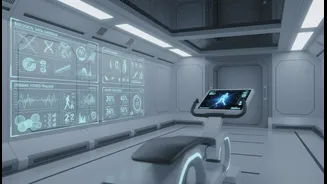
The incredible rewards of space exploration come with undeniable dangers. The three biggest immediate threats on the ISS are fire, depressurisation from a leak or meteoroid strike, and exposure to a toxic chemical like ammonia, which is used as a coolant. Beyond these emergencies, there are the long-term health challenges of living in space. Astronauts are exposed to significantly higher levels of space radiation than on Earth, which increases the lifetime risk of developing cancer and other conditions. The microgravity environment itself takes a toll, leading to bone density loss and muscle atrophy, which astronauts counteract with a rigorous daily exercise regime. There are also psychological hurdles to overcome, including the effects of isolation and confinement in a small space far from home.
Anil Menon: Uniquely Qualified for the Challenge
Dr. Anil Menon's background makes him exceptionally suited to navigate these challenges. Born in Minnesota to Indian and Ukrainian immigrants, his resume is a blend of high-level expertise. He is a US Space Force Colonel and a practising emergency medicine physician with degrees in neurobiology and mechanical engineering from Harvard and Stanford. Before becoming an astronaut, he was a first responder in disasters like the 2010 Haiti earthquake and the 2015 Nepal earthquake. He served as a NASA flight surgeon, supporting ISS crews, and was SpaceX's first flight surgeon, where he helped establish the medical program for its historic first human launches. This unique combination of medical, military, and engineering experience provides a robust foundation for handling the complex operational and human health aspects of a long-duration space mission.
The Journey Ahead: Practical Next Steps
Becoming eligible for a mission is just the beginning. The preparation for a long-duration stay on the ISS is an arduous process that takes years. After being selected as an astronaut candidate in 2021, Menon completed a two-year intensive training program. This initial phase covers everything from ISS systems and robotics to Russian language proficiency, spacewalk skills, and survival training. Candidates practice for spacewalks in the Neutral Buoyancy Laboratory, a massive swimming pool containing full-sized replicas of station modules, where they spend about ten hours underwater for every one hour they will spend on an actual spacewalk. With his mission assigned, Menon’s training becomes more specific, focusing on the precise experiments he will conduct and the operational procedures for his flight, which is scheduled to launch aboard a Soyuz spacecraft from Kazakhstan.