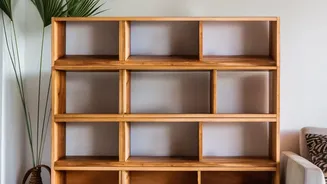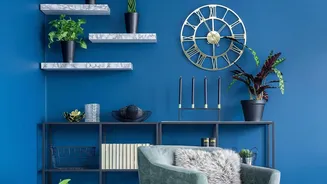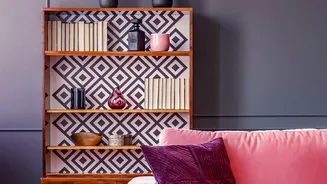


A bookshelf is more than just storage; it’s a canvas for your personality. But when it’s overflowing, it can create visual stress. The secret to transforming it from chaotic to curated lies not in what you add, but in what you leave out.
The Power of Negative Space
In the world of
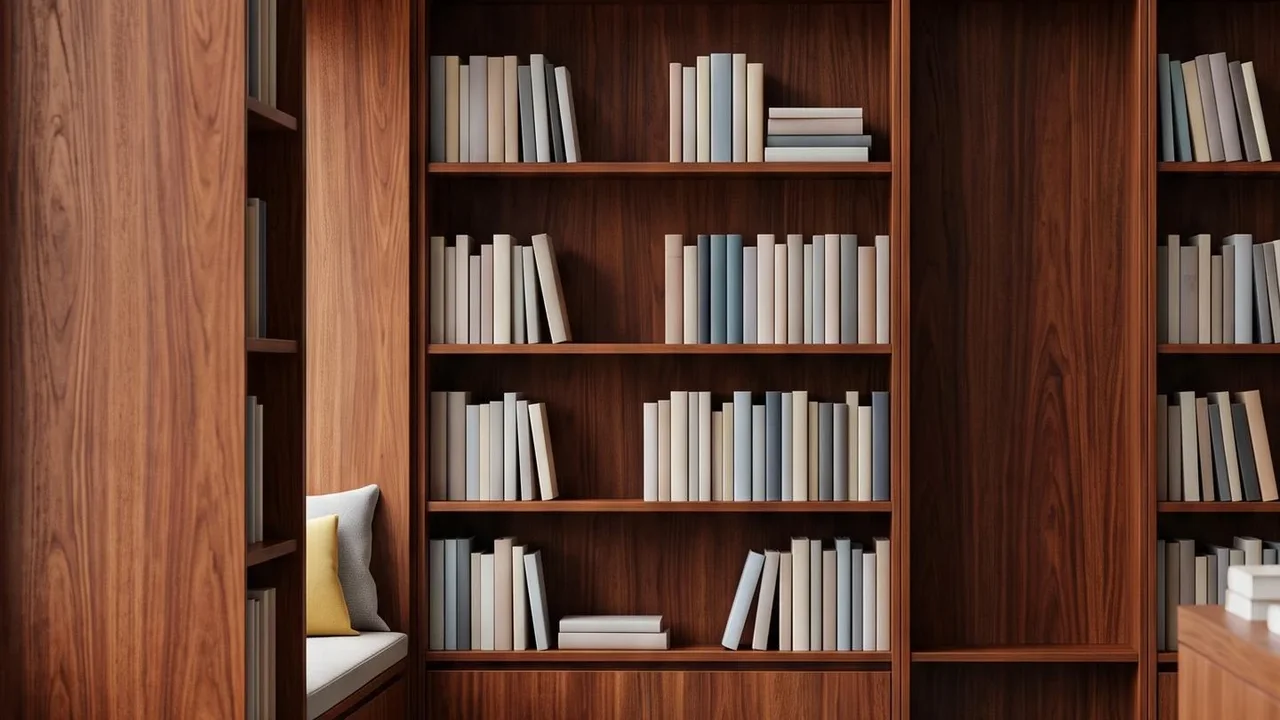
interior design, the empty areas around and between objects are known as 'negative space'. Far from being wasted, this intentional breathing room is a powerful tool. It reduces visual noise, creates a sense of calm, and allows the items you choose to display to truly shine. A crowded shelf bombards the eye with information, making it feel heavy and stressful. In contrast, a well-spaced arrangement feels thoughtful and sophisticated, turning simple storage into an elegant feature. The goal is to make the empty space part of the design itself, guiding the eye and highlighting your most cherished items.
Begin with a Blank Canvas
The first and most crucial step in any styling project is to start fresh. Empty your bookshelf completely, removing every single book and object. This step is non-negotiable. Seeing your items on the floor, away from their usual spots, gives you a fresh perspective. It allows you to assess the full volume of your collection and make conscious decisions about what deserves to return. While the shelves are empty, take the opportunity to give them a thorough dusting. This clean slate is the foundation for building a more intentional and visually pleasing arrangement.
Curate, Don't Just Collect
With everything off the shelves, it's time to edit. This is not about getting rid of books you love, but about being selective. Start by identifying the books and objects you absolutely must keep—the ones that hold personal meaning or that you truly enjoy. Then, for the rest, ask yourself if they fit the life you live now, not the one you've outgrown. A common guideline among professional stylists is to fill only about 60-70% of your shelf space, leaving the rest as valuable breathing room. This process transforms your bookshelf from a cluttered storage unit into a curated display of your personality and interests.
Vary Your Stacks and Stances
Once you have your curated collection, resist the urge to line everything up in uniform rows. Create visual rhythm by varying the orientation of your books. Arrange some books vertically as you normally would, but also create horizontal stacks of three to five books. These horizontal stacks not only break up the monotony but can also serve as pedestals or 'risers' for smaller decorative objects, adding height and dimension. Alternate between vertical groups and horizontal stacks across your shelves to create a dynamic flow that keeps the eye moving.
Introduce Balance with Objects
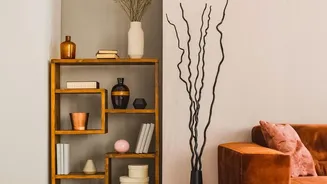
A great bookshelf balances books with a few well-chosen decorative objects. This is where you can inject personality with items like ceramic vases, small sculptures, framed photos, or plants. Use the 'Rule of Threes,' a classic design principle that suggests grouping items in odd numbers. A cluster of three objects with varying heights—one tall, one medium, one short—is almost always more visually appealing than an even-numbered group. These groupings create small, intentional vignettes that feel collected rather than cluttered.
Create Depth Through Layering
To give your shelves a professionally styled, three-dimensional feel, think in layers. Don't push everything against the back wall. A simple but effective technique is to lean a small piece of framed art against the back of the shelf. Then, place a mid-sized object in front of it, and perhaps a very small item near the front edge. This use of foreground, middle-ground, and background creates depth and shadow, making the entire arrangement feel more dynamic and sophisticated.