





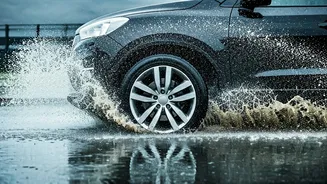


1. Pre-Trip Vehicle Health Check
Before you even start the engine, a thorough vehicle check is non-negotiable. Your tyres are the first line of defence against wet roads. Ensure they have adequate tread depth—at least 3mm is preferable for monsoon driving—to prevent skidding and aquaplaning.
Check the tyre pressure when they are cold and don't forget the spare. Next, inspect your wiper blades. If they leave streaks or make noise, replace them. A clear view is crucial in a downpour. Also, top up your windshield washer fluid, using a proper cleaning solution to cut through road grime. Finally, test all your lights: headlights (low and high beam), tail lamps, brake lights, and fog lamps. Functioning lights are essential for seeing and being seen.
2. Slow Down and Maintain Double the Distance
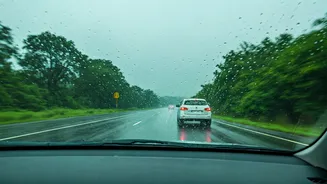
This is the simplest yet most effective rule for rain-soaked highways: reduce your speed. Wet roads significantly increase your car’s braking distance. Driving slower gives you more time to react to unexpected hazards, like a sudden pothole or a vehicle ahead braking sharply. As a rule, double the usual safe following distance you maintain in dry conditions. On a wet road, a 'two-second gap' should become a 'four-second gap' or more. This buffer zone is your biggest safety asset, giving you the space you need to brake gently and avoid collisions.
3. Understand and Avoid Hydroplaning
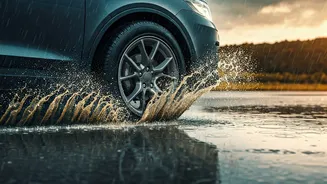
Hydroplaning, or aquaplaning, happens when a layer of water builds up between your tyres and the road surface, leading to a loss of traction. It can feel like the car is floating or sliding uncontrollably. To prevent this, slow down, especially when you see standing water, and avoid using cruise control, as you need to be in complete manual control of your vehicle. If you feel your car starting to hydroplane, do not panic and do not slam on the brakes. Instead, gently ease your foot off the accelerator, hold the steering wheel steady, and steer gently in the direction you want to go. Your car will slow down naturally and the tyres will regain their grip on the road.
4. Navigating Waterlogged Roads Safely
Encountering a flooded street is a common peril in India's monsoon season. The golden rule is to avoid driving through it if you can find an alternative route. You never know the depth of the water or what hazards, like open manholes, lie hidden underneath. If you must proceed, assess the depth; if the water is higher than the centre of your wheels, it’s too deep. Drive slowly and steadily in a low gear, keeping the engine revs high to prevent water from entering the exhaust pipe. Avoid driving against oncoming traffic, as their waves can push water into your engine bay. Once you're through, gently tap your brakes a few times to dry them out.
5. Maximise Your Visibility
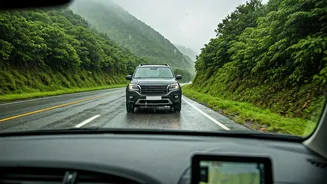
In heavy rain, visibility can drop to near zero. Switch on your low-beam headlights, even during the day. This helps other drivers see you more clearly. Avoid using high beams, as they can reflect off the rain and cause glare for oncoming traffic. Use your air conditioner to prevent the inside of your windshield from fogging up; the AC acts as a dehumidifier. Keep the rear defogger on to maintain a clear view behind you. If visibility becomes dangerously low, the smartest move is to pull over to a safe spot, well off the road, and wait for the downpour to ease.
6. Pack a Monsoon Emergency Kit
A road trip requires preparation for the unexpected, and monsoons add another layer of risk. Your emergency kit should be tailored for wet conditions. Essential items include a powerful torch with extra batteries, a reflective warning triangle, and a complete first-aid kit. Also pack a tow rope, jumper cables, and a tyre inflator. Personal items like a raincoat, an umbrella, dry towels, and a change of clothes can be lifesavers if you get stranded or need to step out in the rain. A fully charged power bank for your phone is also a must-have for communication.