





High above the clouds, the world’s largest rocket may soon glide silently through the upper atmosphere over India. SpaceX's Starship is preparing for a crucial test flight, and its ambitious trajectory marks a new chapter in commercial space exploration.
The Rocket Redefining Ambition
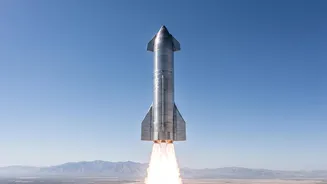
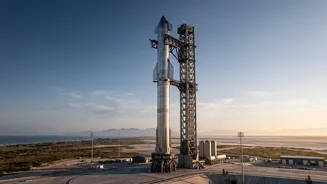
Standing taller than the Qutub Minar, Starship is the most powerful launch vehicle ever built. Developed by Elon Musk's SpaceX, it is not just another rocket. It is a fully reusable transportation system designed to carry both crew and cargo to Earth orbit, the Moon, and eventually Mars. Comprised of the Super Heavy booster and the Starship spacecraft, the entire system is intended to be reused, a revolutionary concept that aims to dramatically lower the cost of space travel. Unlike previous rockets, which are largely discarded after a single use, every part of Starship is being designed to fly again and again, much like a commercial airliner.
A New Trajectory Over India
For its upcoming orbital missions, SpaceX has planned a new flight path that concludes with a splashdown in the Indian Ocean. This trajectory, which differs from earlier tests that targeted the Pacific, allows engineers to test new in-space maneuvers while maximizing public safety. One of the most recent test flights, Flight 15, is slated for launch on November 14 from Texas, USA. During this mission, the Starship upper stage is expected to circle the Earth approximately 14 times over nearly 24 hours. This flight plan means the spacecraft will pass over parts of India multiple times, creating a unique, albeit distant, spectacle.
The Intricate Flight Plan
The upcoming test flight is one of the most complex yet. After launching from Texas, the Super Heavy booster will separate and attempt a return to the launch tower to be caught by giant mechanical arms. The Starship spacecraft will continue into orbit, where it is scheduled to deploy a batch of next-generation Starlink internet satellites. For previous test flights targeting the Indian Ocean, the journey has involved the upper stage travelling eastward from its launch site, achieving near-orbital velocity, and then performing maneuvers before re-entering the atmosphere. This controlled descent and splashdown off the coast of Australia provides crucial data on the vehicle's heat shield and flight controls.
A Silent Spectacle in the Sky?
While Starship will be flying over India, spotting it will be a challenge. The vehicle will be at an altitude of hundreds of kilometers, far higher than commercial airplanes. During its passes, it may be visible as a faint, fast-moving point of light, but only under perfect conditions: clear skies, no light pollution, and at the right time during dusk or dawn when the spacecraft is still illuminated by the sun while the ground is dark. It will not be a loud or dramatic event from the ground; the re_entry phase, where the vehicle is enveloped in plasma, will occur over the ocean. Still, for dedicated skywatchers, the prospect of seeing this historic vehicle on its journey is a thrilling one.
India’s Place in the New Space Era
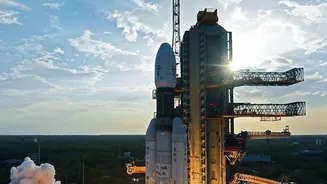
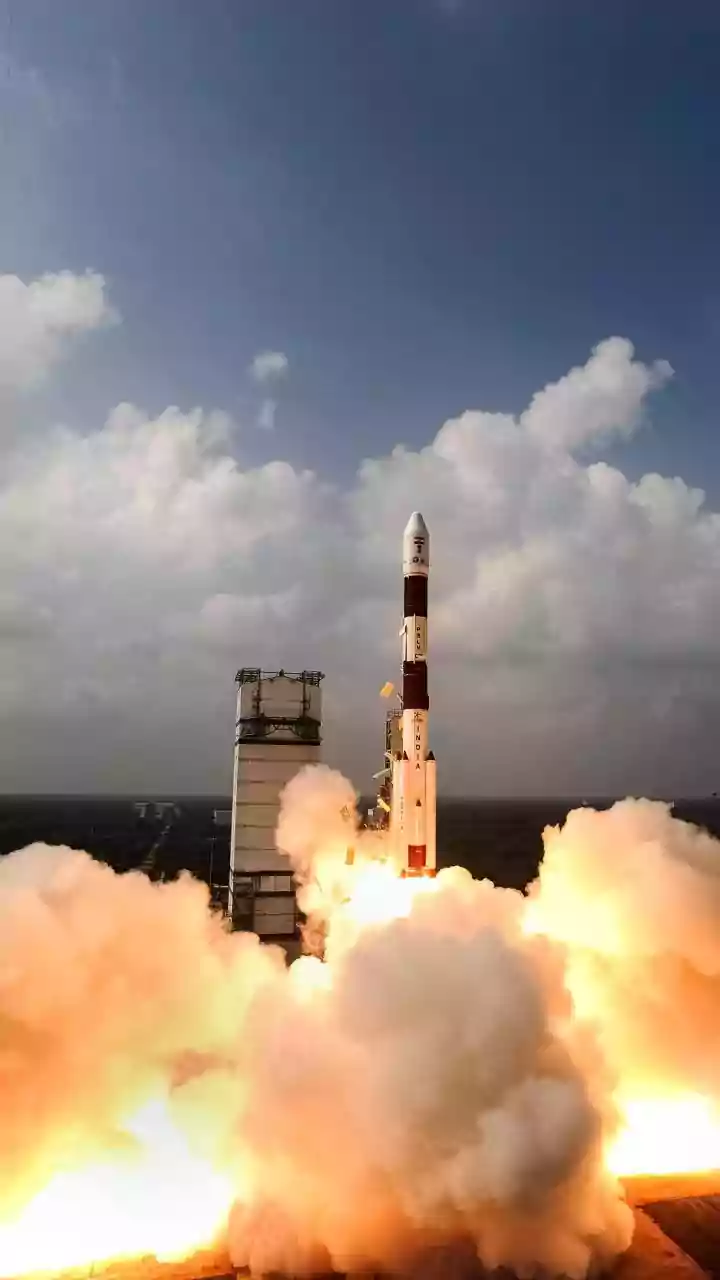
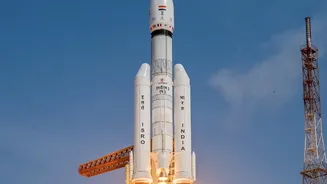
Starship's flight over India is symbolic of a rapidly changing space landscape. While SpaceX pushes the boundaries of commercial spaceflight, India's own space program, led by ISRO, is achieving remarkable feats. From the success of Chandrayaan-3 to the development of the Gaganyaan human spaceflight program, India is a major player in its own right. The presence of Starship in the skies above is not a sign of competition, but rather a reflection of a new global era where space is becoming more accessible. The technologies being proven by Starship, such as full reusability and in-orbit refueling, will ultimately benefit all of humanity's ambitions in space, including missions to the Moon and Mars, where India also has longterm interests.