






The Problem with Random Mobility
Many of us treat mobility work like a pre-flight checklist, running through a series of generic stretches and movements without much thought. While any movement is generally better than none, this random approach often fails to deliver meaningful results.
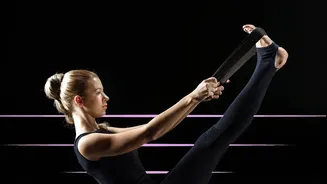
The key issue is the difference between flexibility and mobility. Flexibility is the passive ability of your muscles to lengthen, like when you hold a hamstring stretch. Mobility, on the other hand, is the ability to actively and controllably move a joint through its full range of motion. It combines flexibility with strength and coordination. Simply stretching a muscle doesn't guarantee you can control that new range of motion. Purposeful mobility training bridges that gap, teaching your body how to use its available movement potential effectively and safely.
Define Your Movement Goal
To make your mobility work effective, you must first identify what you're trying to achieve. A clear movement goal isn't vague, like "get more mobile." It's specific and functional. Are you trying to achieve a deeper, more comfortable squat in the gym? Do you want to reach overhead without your lower back arching? Or perhaps your goal is to run without nagging hip pain. These are concrete objectives. By identifying a specific task you want to improve, you can begin to work backward to find the source of your limitation. This turns your mobility routine from a guessing game into a targeted strategy for better movement in your daily life and workouts.
Connect the Drill to the Goal
Once you have a goal, the next step is to pinpoint what's holding you back. For example, if a deep squat is your goal, your limitation might be stiff ankles, tight hips, or a rigid upper back (thoracic spine). If your goal is better overhead pressing, the limitation could be tight lat muscles or poor shoulder blade control. Your mobility drills should directly address these specific limitations. Instead of a generic warm-up, you build a targeted one. For the squat, this could mean doing ankle rockers to improve dorsiflexion and hip CARs (Controlled Articular Rotations) to improve hip socket movement. For overhead movement, you might choose lat stretches and wall slides to teach your shoulder blade how to move properly. This intentional selection makes every drill a step toward your specific performance goal.
Building a Purposeful Routine
Integrating goal-oriented mobility into your fitness plan is simple. Start by dedicating 5-10 minutes before your workouts to drills that support the main movements of that day's session. If it's a leg day focused on squats, your warm-up should prime your hips and ankles. For an upper-body day, focus on the shoulders and thoracic spine. You can also have dedicated mobility days or use these exercises during recovery periods to work on more significant restrictions. The key is consistency and focus. Rather than mindlessly going through the motions, perform each repetition with intent, focusing on controlling the movement through its entire range. This mindful approach promotes better body awareness and helps your nervous system learn and adopt these improved movement patterns.