


A Sweet Tradition Reimagined
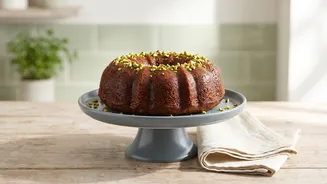
The familiar aroma of baking cakes, cookies, and brownies is getting a distinctly Indian twist. Home bakers, driven by a growing consciousness around wellness and a desire to reconnect with traditional ingredients, are at the forefront of this trend.
The move away from refined white sugar is not just about cutting out 'empty calories'; it's about embracing an ingredient that is perceived as more wholesome and flavourful. This shift reflects a broader movement towards mindful consumption, where every ingredient is chosen with purpose. Jaggery, long revered in Ayurveda and a cornerstone of Indian sweets for centuries, is now being celebrated for its versatility in contemporary baking.
Jaggery vs. White Sugar: What's the Real Difference?
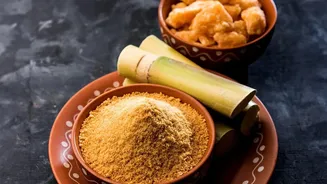
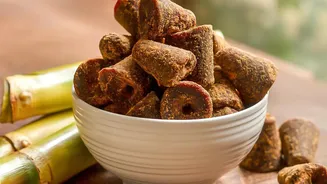
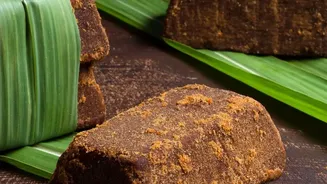
At a glance, the comparison seems simple. White sugar is highly processed, stripping away all nutrients until only sucrose remains. Jaggery, on the other hand, is unrefined, made by evaporating raw sugarcane juice or palm sap. This minimal processing means it retains trace amounts of minerals like iron, potassium, magnesium, and calcium. While jaggery is often touted as healthier, it's crucial to remember that it is still a form of sugar, with a similar calorie count to its refined cousin. Its main advantage lies in its nutritional profile and its composition as a more complex carbohydrate, which some studies suggest allows for a slower release of energy compared to the sharp spike from white sugar. However, it should still be consumed in moderation.
Not All Jaggery Is Created Equal
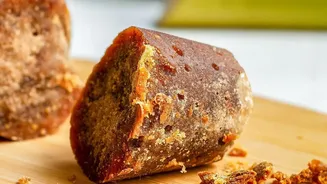
The world of jaggery is diverse, with varieties derived from sugarcane, date palm, and coconut palm, each offering a unique profile. The headline star, palm jaggery—also known as 'karupatti' in Tamil Nadu or 'nolen gur' in Bengal—is particularly prized. Made from the sap of palm trees, it often has a lower glycemic index than sugarcane-based jaggery, meaning it raises blood sugar levels more slowly. Its flavour is also distinctively complex, with deep, earthy, and almost smoky caramel notes that are less intensely sweet than regular jaggery. This unique taste profile can elevate a simple baked good into a gourmet experience.
The Baker's Guide to Using Jaggery
Swapping jaggery for sugar is not always a straightforward one-to-one substitution. Jaggery is generally less sweet, so you might need slightly more to achieve the same level of sweetness—a common recommendation is about 1.25 to 1.3 cups of jaggery for every cup of sugar. Its higher moisture content means it can keep cakes and cookies wonderfully moist and chewy. This moisture and its natural acidity react well with baking soda, helping to leaven whole wheat cakes that might otherwise be dense. For best results, it's advisable to use grated or powdered jaggery to ensure it dissolves evenly into the batter. Block jaggery can be melted into a syrup for easy incorporation. Be prepared for a darker colour and a richer, more molasses-like flavour in your final product.
Beyond the Health Halo
While the mineral content offers a slight nutritional edge, the real magic of baking with jaggery lies in its flavour. Unlike the one-dimensional sweetness of white sugar, jaggery introduces a complex spectrum of taste—from caramel and molasses to earthy and smoky undertones. This depth can transform a classic chocolate chip cookie or a simple tea cake, adding a layer of sophistication. The decision to switch is therefore as much a culinary one as it is a health-conscious one. It’s about choosing an ingredient that adds character, nuance, and a touch of wholesome tradition to every bite.