The Great Cosmic Silence
In 1950, physicist Enrico Fermi famously asked, 'Where is everybody?'. This question forms the heart of the Fermi Paradox: given the billions of stars in our galaxy, many of which likely host Earth-like planets, it seems statistically probable that intelligent
life should have arisen elsewhere. And if it has, why have we found no evidence of it? No radio signals, no visiting starships, no cosmic empires. This 'great silence' is the ultimate puzzle. For a long time, the primary method for breaking that silence was the Search for Extraterrestrial Intelligence (SETI), which used massive radio telescopes to listen for deliberate or accidental broadcasts from other star systems. Despite decades of listening, including massive citizen science projects like SETI@home, no confirmed alien signal has ever been detected.
From Listening to Looking
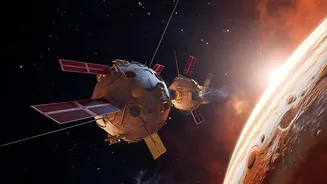
The lack of radio signals hasn't discouraged scientists; it has inspired them to change tactics. The search has expanded from merely listening for intelligent life to actively looking for any kind of life, however simple. The game-changer is the James Webb Space Telescope (JWST). Instead of waiting for a message, JWST can study planets orbiting other stars, known as exoplanets. It uses a technique called transmission spectroscopy, analysing the starlight that passes through an exoplanet's atmosphere. The gases in that atmosphere absorb certain colours of light, leaving a chemical 'barcode' that the telescope can read. This allows scientists to identify the chemical makeup of a world light-years away, a feat that was pure science fiction just a generation ago.
The Telltale Signs of Life
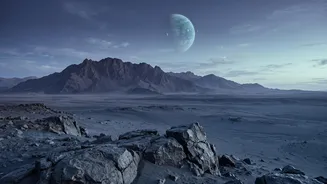
So, what are scientists looking for in these alien atmospheres? They’re hunting for 'biosignatures'—gases that are unlikely to exist in large quantities without being produced by living organisms. On Earth, life has flooded the atmosphere with oxygen. Finding a similar oxygen-rich atmosphere on another rocky planet would be a monumental discovery. But Webb can also hunt for other combinations, like methane and carbon dioxide existing together in a specific disequilibrium that could hint at biological processes. For instance, the detection of dimethyl sulfide on the exoplanet K2-18b caused a stir, as this gas on Earth is only produced by life, primarily marine phytoplankton. While these findings are still preliminary and require more study to rule out non-biological explanations, they represent a thrilling new frontier in the search.
Clues in Our Own Backyard
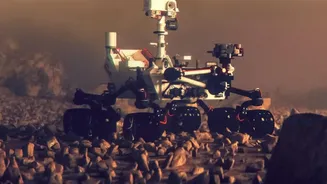
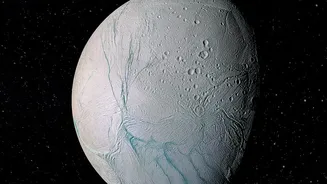
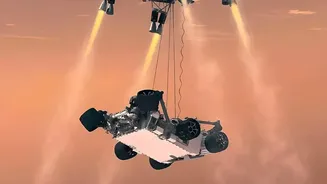
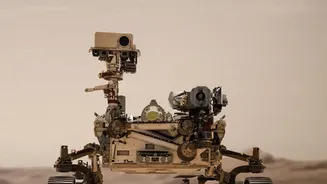
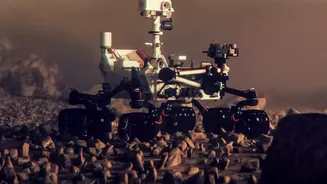
The quest isn't just focused on distant stars. It's also happening right here in our own solar system. NASA's Mars rovers, like Perseverance and Curiosity, are acting as robotic geologists, searching for evidence of past life. They aren't looking for little green men, but for organic molecules and other potential biosignatures preserved in ancient Martian rocks from a time when the planet had rivers and lakes. Recent discoveries by Perseverance in Jezero Crater have been particularly intriguing, finding complex organic matter in rocks that formed in a once-habitable environment. Scientists are also looking toward the icy moons of Jupiter and Saturn, like Europa and Enceladus, which are believed to harbour vast liquid water oceans beneath their frozen shells, offering another potential, albeit challenging, place to search.
A Quest for Meaning
Ultimately, the search for extraterrestrial life is about more than just science. It’s a deeply human and philosophical quest. Finding life, even microbial life, beyond Earth would force us to re-evaluate our place in the universe. It would suggest that the origin of life is not a one-time fluke but a common cosmic occurrence. Conversely, if we search for centuries and find nothing, that would also be a profound discovery. It might mean that life is incredibly rare and precious, a realization that could inspire us to be better stewards of our own planet. The search drives technological innovation, encourages interdisciplinary science, and unites people in a common sense of wonder. It is a frontier not just of space, but of knowledge itself.