



Meet HEX20, the Ambitious Indian Startup
HEX20 is a space-tech startup with its engineering facility based in Technopark, Thiruvananthapuram, and operations in the UAE's Masdar City. Founded by a team of young Malayali entrepreneurs, the company specialises in creating satellite systems, including
spacecraft buses, software, and power systems designed for the harsh environment of space. While India's private space sector is booming with over 300 companies, HEX20 has carved out a niche in providing high-end technology for complex missions. Their selection by the UAE Space Agency for a deep-space mission is a landmark achievement, making them the first private Indian firm to be chosen for such a task by the Gulf nation.
The Emirates Mission to the Asteroid Belt
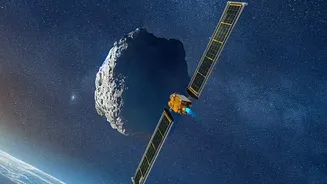
The project HEX20 is involved in is the Emirates Mission to the Asteroid Belt (EMA). Led by the UAE Space Agency, this ambitious programme will send a main spacecraft, called the MBR Explorer, on a five-billion-kilometre journey to the main asteroid belt located between Mars and Jupiter. Scheduled for launch in March 2028, the MBR Explorer will undertake an epic eight-year tour of our solar system. Its primary goal is to study seven different asteroids up close, gathering data that could unlock secrets about the formation of our solar system.
HEX20's Role: Building the Brains and Body
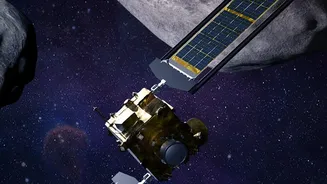
So where does the Indian startup fit in? HEX20 was selected by the UAE's Technology Innovation Institute (TII) and Space Agency to develop the small lander probe that will be carried by the main MBR Explorer. Their contribution is substantial: they developed the spacecraft bus, which is the physical structure that houses and supports the probe's instruments. They also created the mission-critical software, the onboard computer, and the power systems. These components were developed over 15 months by teams in Thiruvananthapuram and Abu Dhabi, designed to be autonomous and resilient enough to function billions of kilometres from Earth.
A Grand Tour: Six Flybys
The MBR Explorer's journey is a masterclass in celestial mechanics. After its launch, it will perform a series of gravity-assist manoeuvres around Venus, Earth, and Mars to build up the speed needed to reach the asteroid belt. Along its path, it will not just pass by but actively study six different asteroids. These flybys serve a dual purpose: they allow scientists to gather comparative data from a variety of asteroid types and also serve as a real-world test of the spacecraft's instruments and navigation systems before it reaches its final, most important destination.
The Final Target: Asteroid 269 Justitia
The mission's grand finale is an encounter with a specific asteroid named 269 Justitia, expected to happen around 2036. Justitia is particularly interesting to scientists because of its unusual reddish colour, which suggests it may have originated in the distant Kuiper Belt before migrating to its current position. This could mean its surface holds clues about the building blocks of life, such as organic materials and water, from the early days of the solar system.
The Final Encounter: An Autonomous Landing
Once the MBR Explorer reaches and enters orbit around Justitia, it will release the probe developed by HEX20. This is where the Indian startup's technology will truly shine. The probe must perform a completely autonomous descent to the asteroid's surface. While the main spacecraft will stay in contact with Earth, the lander itself will have no real-time instructions from mission control. It will rely entirely on the software created by HEX20 to manage its landing and capture crucial images as it approaches the surface. The plan is for a hard landing, but it will be a monumental achievement, marking the farthest a piece of hardware from Kerala has ever travelled in space.