

Beyond the familiar idlis and dosas lies the true heart of Tamil food, simmering gently in earthen pots and rooted in ancient grains. This is a journey into the kitchens of regional Tamil Nadu, where clay and rice tell the real story.
The Soul of the 'Manpaanai'
In Tamil, it's called
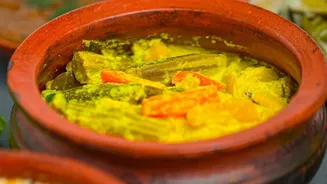
'manpaanai samayal'—clay pot cooking. This isn't just a rustic preference; it's a culinary philosophy. Unlike metal pans, the porous nature of clay allows for slow, even heat distribution, letting ingredients cook gently in their own juices. This method retains moisture and nutrients far better than modern cookware. But the real magic is in the flavour. The alkaline nature of clay neutralises the acidity in ingredients like tomatoes and tamarind, creating a smoother, more balanced taste profile. Over time, the pot itself becomes seasoned, lending a subtle, earthy essence to everything cooked within it—a taste that is impossible to replicate.
Fiery Traditions of Chettinad
No culinary tour of Tamil Nadu is complete without a stop in Chettinad, the ancestral home of the Chettiar community. Renowned for their complex spice blends and robust flavours, Chettinad cuisine truly shines when prepared in a manchatti, or clay curry pot. Dishes like the fiery 'meen kuzhambu' (fish curry) or a rich 'karuveppilai' (curry leaf) chicken curry take on a profound depth. The slow simmering process allows the myriad spices—star anise, black stone flower, and peppercorns—to meld completely, while the clay pot ensures the fish or meat remains tender. The region is a testament to how a cooking vessel can define a cuisine's very identity.
Subtle Spices of the Kongu Belt
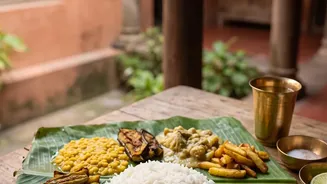
Moving west to the Kongunadu region, the flavour profile shifts. Here, the cuisine is milder, favouring fresh ingredients and subtle spices. Instead of heavy masala, you'll find dishes defined by the use of roasted turmeric, dry coconut, and groundnuts. Kongu specialities like 'Pallipalayam chicken'—a dry fry using copious amounts of shallots and red chillies—and 'arisi paruppu sadam' (a simple rice and dal dish) are staples. In this region, clay pots are used not for overpowering flavours but for preserving the natural taste of high-quality local produce, showcasing a different, more restrained side of Tamil cooking.
The Ancient Grains Revival
A great curry is only half the meal; the other is the rice. For centuries, Tamil Nadu cultivated hundreds of rice varieties, each with a unique purpose, aroma, and nutritional profile. While polished white rice became dominant, a passionate revival is bringing these heritage grains back to the table. There is 'Mappillai Samba', a robust red rice once given to bridegrooms for stamina. There's 'Karuppu Kavuni', a nutty, antioxidant-rich black rice once reserved for royalty. And for biryani, there is nothing but 'Seeraga Samba', a tiny, incredibly aromatic grain whose fragrance is the signature of Dindigul and Ambur biryanis.
The Perfect Pairing
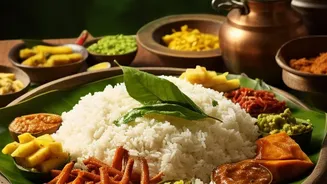
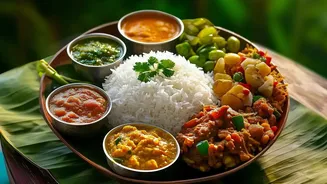
The final piece of the puzzle is pairing the right rice with the right curry. The delicate fragrance of 'Thooyamalli' ('pure jasmine') rice makes it an ideal canvas for a fragrant Kongu-style gravy, where it won't overshadow the subtle spices. The earthy, firm texture of Mappillai Samba, on the other hand, stands up beautifully to a powerful, tangy Chettinad kuzhambu, its grains soaking up the gravy without turning mushy. Understanding this synergy is key to appreciating the depth of the region's food culture. It's a dialogue between the earth of the pot, the spices of the curry, and the character of the grain.