


Why A 20-Minute Workout Works
Don't underestimate the power of a short workout. Research shows that just 20 minutes of daily moderate exercise can significantly boost your mood, improve cardiovascular health, and increase focus. For a student, these benefits are invaluable. A quick
workout can reduce stress before an exam, provide an energy boost for a long day of classes, and even contribute to better sleep. The key is consistency. A short routine you can stick to every day is far more effective than a long, strenuous one you only do once a week. This circuit is designed to be high-intensity, ensuring you burn calories and work your muscles efficiently.
The 5-Minute Warm-Up
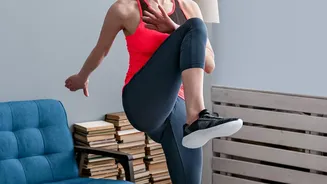
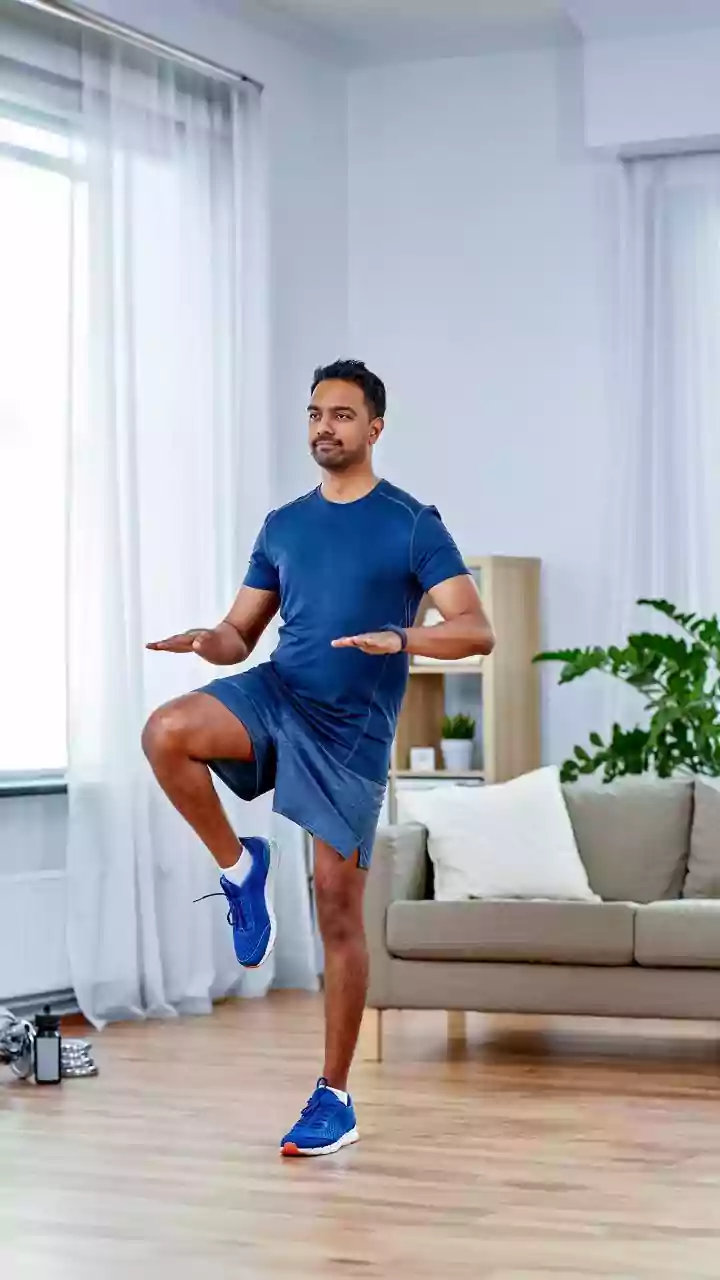
Never skip your warm-up, even when you're short on time. A proper warm-up prepares your body for exercise, reducing the risk of injury. It gets your blood flowing and lubricates your joints. You only need a few minutes. Start with some light cardio, like jogging on the spot or doing jumping jacks for a minute. Then, move to dynamic stretches which involve movement. Try arm circles (forward and backward), leg swings (forward and side-to-side), and torso twists. Aim to spend about 30 seconds on each movement. This simple routine will ensure your muscles are ready for the main workout.
The Workout: Two Rounds, Minimal Rest
This workout is structured as a circuit. Perform each of the following five exercises for 45 seconds, followed by 15 seconds of rest before moving to the next. After completing all five exercises, rest for one minute. Then, repeat the entire circuit one more time. The total work time, including the rest, is under 20 minutes.
Exercise 1: Bodyweight Squats
Squats are a fantastic compound exercise, working your thighs, glutes, and core. To perform a squat correctly, stand with your feet shoulder-width apart. Keeping your chest up and back straight, lower your hips as if you are sitting in a chair. Go as low as you comfortably can, aiming to get your thighs parallel to the floor. Then, push through your heels to return to the starting position. Make sure your knees track over your feet and don't collapse inward.
Exercise 2: Push-Ups
The classic push-up is one of the best upper-body exercises, targeting your chest, shoulders, and triceps. If a full push-up is too challenging, you can modify it by placing your knees on the floor. Start in a plank position, with your hands slightly wider than your shoulders. Lower your body until your chest nearly touches the floor, keeping your back straight and core engaged. Push back up to the starting position. You can also perform incline push-ups using your bed or a sturdy chair for an easier variation.
Exercise 3: Alternating Lunges
Lunges are great for strengthening your legs and improving balance. Stand with your feet together. Take a big step forward with your right leg, lowering your hips until both knees are bent at a 90-degree angle. Your front knee should be directly above your ankle, and your back knee should hover just above the floor. Push off your right foot to return to the start. Repeat with your left leg. Continue alternating legs for the duration.
Exercise 4: Plank
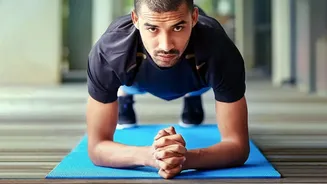
The plank is a powerhouse for core strength. It works your abs, back, and shoulders. Lie on your stomach and then prop yourself up on your forearms and toes, keeping your body in a straight line from your head to your heels. Avoid letting your hips sag or rise too high. Engage your core and glutes to maintain a stable position. Hold this position for the full 45 seconds, breathing steadily.
Exercise 5: Jumping Jacks
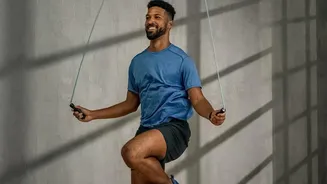
Finish the circuit with a burst of cardio to get your heart rate up. Jumping jacks are simple but effective. Start by standing with your feet together and your arms at your sides. In one motion, jump your feet out to the sides while raising your arms overhead. Immediately reverse the motion to return to the starting position. Maintain a steady, energetic pace.
The 3-Minute Cool-Down
After your second round, don't just collapse onto your bed. A cool-down is crucial for helping your body recover and improving flexibility. It involves static stretching, where you hold a stretch for 20-30 seconds. Stretch your major muscle groups. Include a hamstring stretch (sitting on the floor and reaching for your toes), a quadriceps stretch (standing and pulling your heel towards your glute), and a chest stretch (clasping your hands behind your back).