
The Threat Isn't The Blast, It's The Aftermath
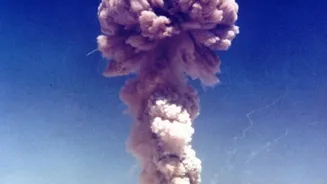
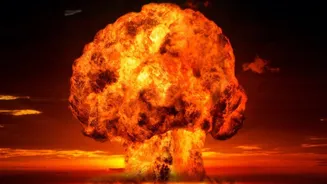
When we think of a nuclear explosion, we imagine a fireball and a shockwave. In the vacuum of space, the danger is far more insidious. A high-altitude nuclear detonation (HANE) releases a massive, invisible wave of energy, including X-rays and gamma rays.
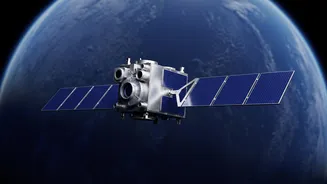
But the most catastrophic effect, as highlighted by a recent computer-modelled study from researchers at the University of Wisconsin-Madison and Princeton University, comes from what is left behind. The explosion creates a cloud of radioactive fission products. The electrons from this radioactive decay are then trapped by Earth's magnetic field, forming a persistent, artificial radiation belt around the planet. This belt acts like a deadly trap. While the initial blast might only disable satellites in its direct line of sight, this lingering radiation exposes spacecraft again and again as they orbit through it, causing their electronic systems to degrade and ultimately fail.
A Cascade of Failure Within Days
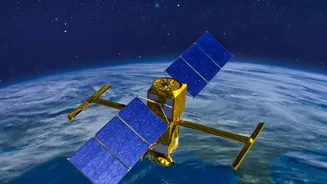
The new study, published on the preprint server arXiv, simulated a one-megaton nuclear explosion at an altitude of 500 kilometres. The results were staggering. The model, which included over 13,000 satellites currently in low-Earth orbit (LEO), showed a rapid domino effect. Within the first 24 hours, an estimated 25% of the LEO satellite fleet would fail due to repeated exposure to the artificial radiation belt. After just three days, that number would climb to 78%. By the end of a single week, the simulation predicted that approximately 98% of all satellites in low-Earth orbit would be rendered inoperable. This scenario creates a catastrophe that unfolds not in a single flash, but over several days as the orbital infrastructure that underpins modern life is systematically wiped out.
No Easy Fix: The Problem of Resilience
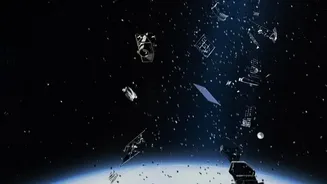
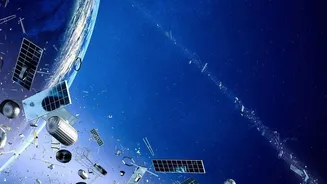
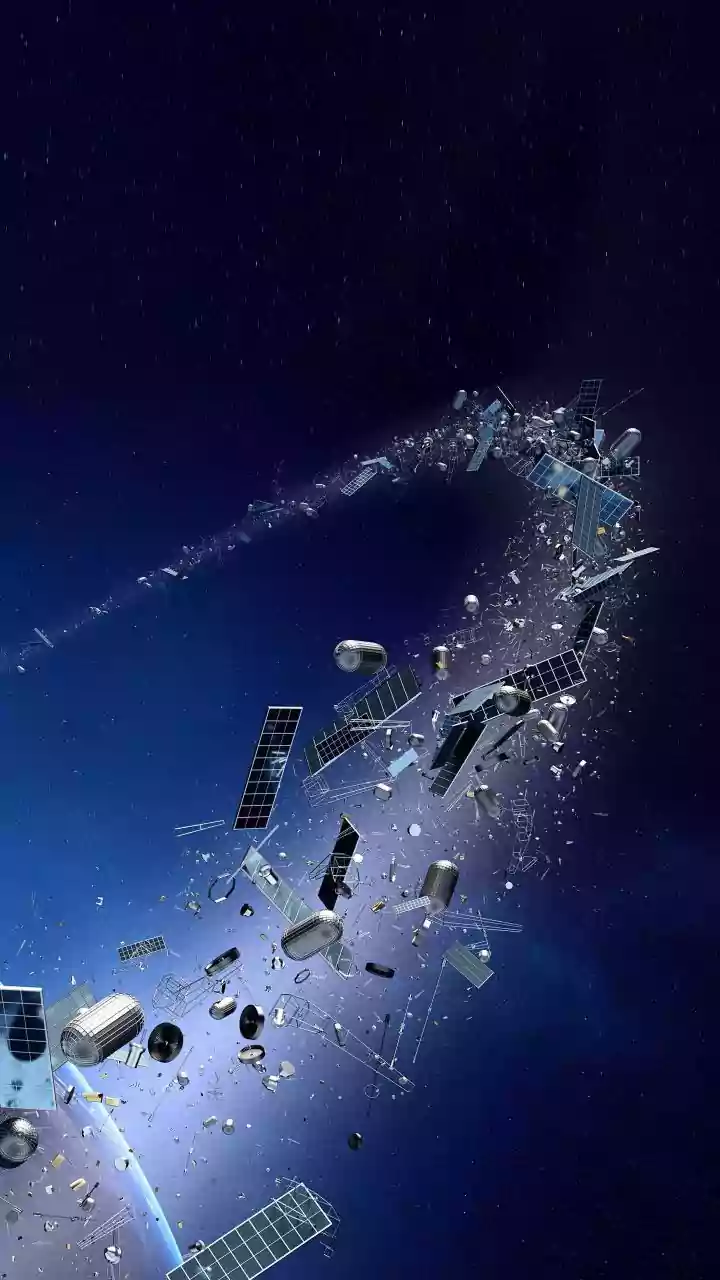
The study also poured cold water on the idea that simply building tougher satellites is a sufficient solution. In a scenario where the radiation tolerance of satellites was tripled, the outcome was only slightly delayed: 97% of the fleet was still disabled within two weeks. The problem is one of persistent, cumulative damage. Replacing the lost satellites would also be incredibly challenging. Not only would new satellites be launched directly into the same hazardous radiation environment that destroyed their predecessors, but the loss of so many operational spacecraft would create another crisis: space junk. With thousands of satellites suddenly unable to manoeuvre, the researchers project a sharp increase in orbital collisions, estimating around 20 collisions within the first two years alone, creating thousands of new pieces of debris and making LEO even more dangerous for years to come.
Why This Matters on the Ground
The loss of satellite constellations would not be an abstract orbital event; it would trigger a profound crisis on Earth. Our global economy and daily routines are deeply intertwined with space infrastructure. Satellite-based systems are essential for GPS navigation, which manages everything from logistics and shipping to the ride-hailing app on your phone. Global financial transactions, ATM networks, and credit card payments rely on the precise timing signals provided by GPS satellites. We depend on satellites for weather forecasting, disaster monitoring, and a huge portion of our global communications, including internet and phone services in remote areas. The 'prolonged degradation' of these services, as one expert noted, would not be an instant collapse but a slow-motion disaster, disrupting supply chains, finance, and communication for years.
The Search for a Stronger Shield
This growing awareness of vulnerability has intensified the study of satellite resilience. The challenge is immense, as traditional shielding like a Faraday cage is often too heavy and costly for space assets. Researchers and agencies like NASA are exploring new, innovative solutions. These include the development of specialized, lightweight coatings that can be applied to satellite exteriors and internal components to mitigate the effects of an electromagnetic pulse (EMP) and space radiation. Another approach involves 'hardening' electronic components at the circuit level to make them inherently less susceptible to radiation damage. Beyond individual satellite protection, another strategy involves redundancy through large, distributed constellations. The idea is that if some satellites are lost, others can quickly take their place, though the study shows even this approach has limits against a persistent radiation threat. These technical solutions are coupled with renewed diplomatic efforts to reinforce the Outer Space Treaty, which prohibits placing nuclear weapons in orbit.