




The Moon's Shifting Veil
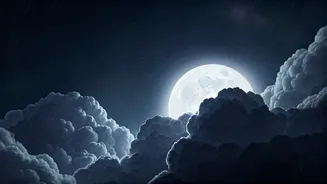
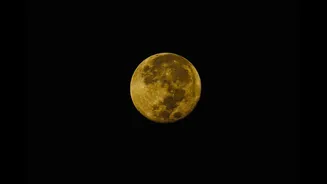
A cloudy night doesn't have to be a sky-gazing disappointment. In fact, clouds can transform the moon into the star of an atmospheric light show. The key is the type of clouds. High-altitude cirrus clouds, composed of millions of tiny ice crystals, are
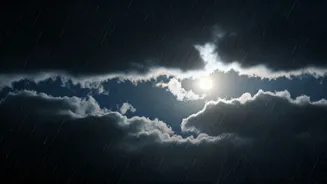
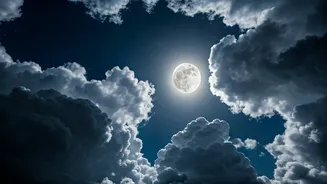
the perfect canvas for a lunar halo. These hexagonal crystals act like a giant lens, refracting moonlight to form a perfect, luminous ring around the moon, typically with a radius of 22 degrees. While folklore sometimes suggests a halo predicts rain, it's really just a sign of high, icy clouds that sometimes precede a storm system. Different clouds create different effects. Wispy cirrus can make the moon appear soft and ethereal, while thicker stratocumulus clouds can create a sense of drama, with the moon playing peekaboo, casting shifting shadows and light across the landscape. It’s a reminder that even an imperfect sky has its own unique artistry.
When Rain Paints the Night
The combination of rain and moonlight can produce one of nature’s rarest and most magical sights: a moonbow. Also known as a lunar rainbow, a moonbow is created the same way as its daytime counterpart, by light refracting through water droplets. However, because moonlight is so much fainter than sunlight, moonbows are incredibly subtle and often appear to the naked eye as a ghostly white arc. To spot one, conditions must be perfect. The moon needs to be full or nearly full to provide enough light, it must be low in the sky (less than 42 degrees above the horizon), the night sky must be very dark, and there must be rain or mist in the air opposite the moon. While they are rare, they are most frequently seen near large waterfalls like Victoria Falls or Yosemite Falls, where the constant spray provides the necessary water droplets for the moonlight to work its magic. The fleeting, spectral beauty of a moonbow is a powerful reward for the patient observer.
Rays of Celestial Light
You may have seen stunning beams of light fanning out from the sun at twilight, known as crepuscular rays. But did you know the moon can create them too? These lunar crepuscular rays occur when a bright moon is low in the sky and its light is blocked by scattered clouds or distant mountains. This creates distinct columns of light and shadow that appear to radiate from the moon, like ethereal searchlights piercing the darkness. The effect is an illusion of perspective; the rays are actually parallel, but like railroad tracks appearing to converge in the distance, they seem to fan out from their light source. Sometimes, you can even see anticrepuscular rays, which appear on the opposite side of the sky, seeming to converge at a point directly opposite the moon. These phenomena require a specific balance of hazy air and broken clouds, turning the entire sky into a grand stage for light and shadow.
An Invitation to Look Up
Embracing the drama of a cloudy, moonlit night can change your entire perspective on skywatching. In India, the monsoon season, with its dynamic and often turbulent skies, offers a perfect opportunity to witness these atmospheric displays. Instead of waiting for a perfectly clear night, which can be rare during certain times of the year, the moments during a break in the rain can be the most rewarding. The air is often cleaner after a shower, and the lingering moisture and broken clouds set the stage for halos, vibrant coronas, or even the faint arc of a moonbow. This kind of skywatching is less about identifying distant constellations and more about appreciating the immediate, ever-changing environment above you. It's about finding beauty not just in the stars, but in the veils that drift before them.