








A Historic 'Aagaman' for Indian Spaceflight
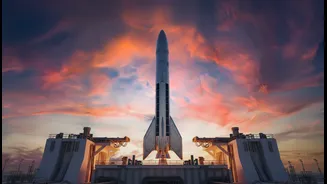
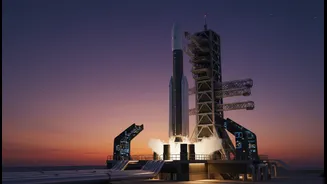
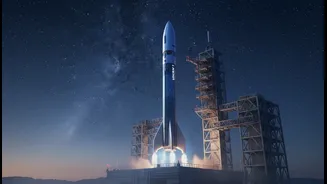
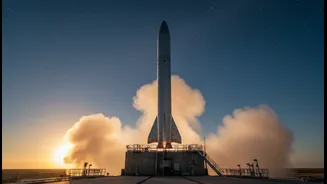
On July 18, all eyes will turn to Sriharikota as Skyroot Aerospace attempts the maiden flight of its Vikram-1 rocket. The mission, aptly named 'Aagaman' or 'arrival', signifies a pivotal moment: the first time a fully privately designed and developed
Indian rocket will try to place satellites into orbit. Unlike a sub-orbital flight which briefly touches space, this mission aims to achieve the velocity needed to circle the Earth, a far more complex challenge. Founded by former ISRO engineers, Hyderabad-based Skyroot has moved from its successful suborbital Vikram-S launch in 2022 to this ambitious orbital attempt. A success would not only validate their technology but also officially open the doors for India's private sector to compete in the global small satellite launch market, an industry currently dominated by international players.
The 'NewSpace' Revolution Takes Hold
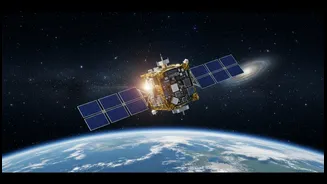
Skyroot's launch is the most visible sign of a much larger trend. India's private space industry, often dubbed 'NewSpace', is undergoing a revolution, spurred by government reforms in 2020 that created IN-SPACe, a body to facilitate private sector participation. This has unlocked opportunities for startups to build rockets, satellites, and provide launch services, areas once exclusively handled by ISRO. The goal is to foster an ecosystem where ISRO focuses on advanced research and development, while private firms drive commercial applications. Companies like Skyroot, Agnikul Cosmos, Pixxel, and Dhruva Space are now key players, attracting significant investment and creating a competitive, innovation-driven environment. This shift is transforming India from just a user of space technology into a global provider of commercial space services.
In-Demand Careers on the Launchpad
This burgeoning industry has created a surge in demand for highly specialized engineering roles that go beyond general mechanical or software skills. Propulsion Engineers, who design the rocket engines, are critical. Avionics Engineers are needed to develop the rocket's electronic brain—its navigation, communication, and control systems. Another key role is the Guidance, Navigation, and Control (GNC) Engineer, responsible for the complex systems that steer the vehicle precisely to its target orbit. Additionally, as companies look to build entire constellations of satellites, Satellite Systems Engineers and Flight Test Engineers who validate performance and safety are in high demand. These are not just jobs; they are opportunities to work on the cutting edge of technology.
Building the Skills for Liftoff
Entering this high-tech field requires a specific skill set. A strong foundation in aerospace or aeronautical engineering is the starting point, with degrees focusing on subjects like thermodynamics, propulsion, and aerodynamics. However, technical proficiency with modern tools is what truly sets a candidate apart. Expertise in Computer-Aided Design (CAD) software like SolidWorks or CATIA is essential for design work. Equally important is experience with simulation software like ANSYS and programming languages such as Python or C++, which are used for modeling flight dynamics and developing control systems. Beyond technical skills, employers seek strong problem-solving abilities, creativity, and the ability to work in collaborative, fast-paced teams on complex projects with strict safety standards.
An Ecosystem of Innovators
While Skyroot is grabbing headlines with Vikram-1, it is part of a broader, vibrant ecosystem of Indian space startups. Chennai-based Agnikul Cosmos is also developing its own launch vehicle, Agnibaan, notable for its 3D-printed semi-cryogenic engine. Pixxel, a Bengaluru startup, is building a constellation of hyperspectral imaging satellites to provide detailed data about the planet. Meanwhile, Dhruva Space specializes in building small satellites for clients, and Bellatrix Aerospace is creating innovative satellite propulsion systems, including 'space taxis' to move satellites between orbits. This diversity of companies shows the depth of India's growing space economy, offering career paths not just in launch services but also in satellite manufacturing, data analytics, and in-orbit services.