






The Great Tariff Balancing Act
At the heart of any trade deal are tariffs—the taxes on imported goods. For years, the debate was stuck on a simplified trade-off: Indian cars versus British Scotch whisky. The final agreement, which came into force on July 15, 2026, reveals a far more
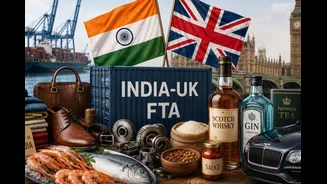
nuanced compromise. Under the deal, India will gradually reduce its high import duties on British cars over a ten-year period through a quota system. Similarly, the formidable 150% tariff on Scotch whisky will be cut to 75% immediately and then phased down to 40% over a decade. This is a significant, if not immediate, opening. In return, the UK is granting immediate duty-free access to nearly 99% of Indian exports, a major boon for labour-intensive sectors like textiles, leather goods, and jewellery. While consumers may have to wait for prices on some UK goods to drop, Indian exporters gain a competitive edge in the British market from day one. India also successfully protected sensitive domestic sectors, including agriculture and dairy, from a surge of imports.
What 'Made in India' Really Means
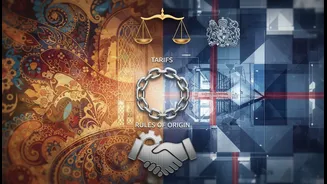
A critical, yet often overlooked, part of the agreement is the 'Rules of Origin'. These regulations act as the gatekeeper for the deal’s benefits, ensuring that preferential tariffs are only applied to goods genuinely produced in India or the UK. The goal is to prevent products from a third country, like China, from being minimally processed or simply rerouted through India to gain cheaper access to the UK market, or vice versa. The newly notified rules are strict: simple activities like washing, labelling, packaging, or basic assembly will not be enough for a product to qualify for lower tariffs. To benefit, goods must be 'wholly obtained' (like crops grown in India) or undergo 'substantial transformation'. This protects the integrity of both Indian and British manufacturing. For businesses, this means meticulous documentation is required, but the agreement streamlines this through a self-certification process, which should reduce administrative burdens for exporters.
A Breakthrough on Social Security
Perhaps one of the most significant victories for India, especially for its massive services sector, is the new Social Security agreement, also known as the Double Contribution Convention (DCC). For years, Indian professionals sent to work in the UK by their employers were caught in a frustrating loop: they paid mandatory National Insurance contributions in the UK but were often unable to claim benefits or have those contributions refunded upon their return to India. The DCC, which comes into effect alongside the trade deal, finally resolves this. Now, Indian employees temporarily posted in the UK can get an exemption from paying UK social security contributions for up to 60 months, provided they remain covered under India's own social security scheme. This is a substantial extension from a previous 52-week exemption. This change will save Indian companies significant costs, make Indian professionals more competitive, and ease the financial burden on thousands of skilled workers and their families.