

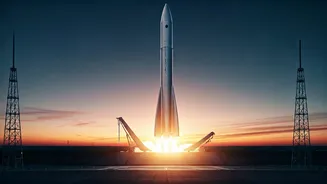


From Prestige to Profit
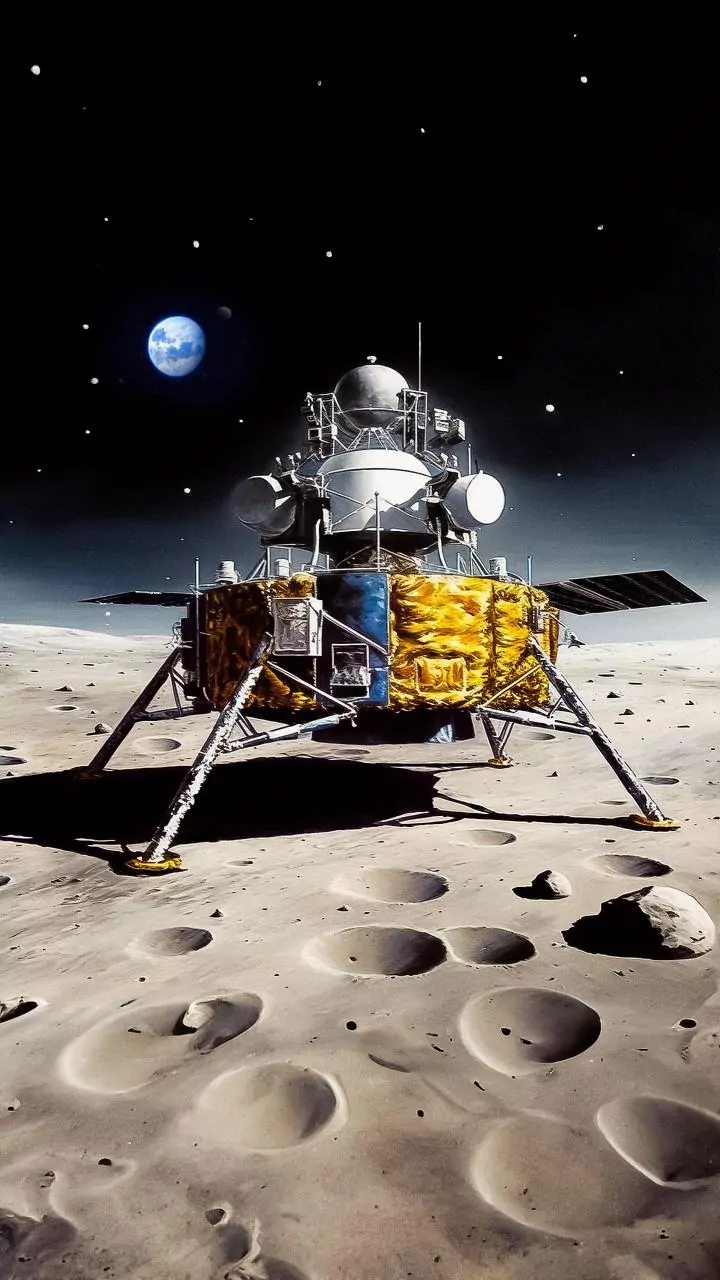
The original space race between the United States and the Soviet Union was a Cold War battle for geopolitical and ideological supremacy. [14] Every launch was a measure of national might, culminating in the symbolic Apollo Moon landing. Today, the motivations
are vastly different. The new space economy, projected to be worth $1.8 trillion by 2035, is driven by commercial opportunities. [3] The focus has shifted from planting flags to building businesses. Companies are no longer just building and launching hardware; they are competing to deliver services like satellite connectivity, Earth observation intelligence, and resilient data networks, creating recurring revenue streams that were unimaginable a few decades ago. [3]
The New Titans: Billionaires and Startups
The most visible change is the rise of private companies, led by billionaire visionaries. [6] Elon Musk’s SpaceX and Jeff Bezos’s Blue Origin have revolutionised the sector. SpaceX, with its reusable Falcon rockets, now dominates the commercial launch market, holding an 82% market share and servicing a massive Starlink satellite constellation. [3, 17] Blue Origin's New Glenn rocket joined the orbital club in 2025, adding another major private player to the field. [23] Beyond these giants, a vibrant ecosystem of startups is flourishing, tackling everything from in-orbit manufacturing and space-based solar power to satellite cybersecurity and debris removal. [4, 8] This commercial dynamism is compressing the timeline from concept to revenue, often outpacing government agencies. [3]
A Crowded Cosmos: New National Ambitions
While private enterprise grabs headlines, the new space race is also defined by a growing number of nations. China now operates the Tiangong space station and has plans for a crewed lunar mission before 2030, positioning itself as a direct competitor to US ambitions. [5] Its International Lunar Research Station project is a clear alternative to the US-led Artemis Accords, attracting partners like Russia, Pakistan, and South Africa. [5] India has cemented its status as a major space power, becoming the first nation to land on the lunar south pole with its Chandrayaan-3 mission and successfully sending probes to Mars and the Sun. [7, 15] The United Arab Emirates (UAE) has also made a mark with its Mars Hope Probe and is collaborating with India on training future astronauts. [20] These nations are investing in space not just for prestige but for strategic independence, economic diversification, and technological advancement. [7, 17]
India's Ascent: Frugal Innovation Meets Private Ambition
India's role in the new space race is particularly noteworthy. For decades, the Indian Space Research Organisation (ISRO) was known for its remarkably cost-effective missions, such as the Mangalyaan Mars orbiter, which reached Mars on its first attempt. [7, 11] Now, a policy shift is fuelling a domestic boom. India's 2023 space policy formally opened the door for private companies to undertake end-to-end activities, leading to a surge in startups. [24] The number of space startups has grown from a single one in 2014 to over 400 by early 2026. [7] Companies like Pixxel are helping build India's national Earth observation constellation, while foreign direct investment flows into the sector. [3, 24] By signing the Artemis Accords and collaborating with partners like the UAE and Germany, India is leveraging its proven capabilities to become a critical global player. [7, 24]
The Future Frontier: Tourism, Mining, and Manufacturing
The long-term priorities of the modern space race sound like science fiction, but are becoming concrete business plans. Space tourism, though still a niche for the ultra-wealthy, is a reality. [9] More transformative is the goal of utilising space resources. The lunar south pole is seen as valuable real estate for its water ice, which could be converted into rocket propellant. [16, 18] Companies are developing autonomous space factories to manufacture high-value products like pharmaceutical crystals in microgravity. [4] The ultimate prize for some is asteroid mining, with the potential to access vast quantities of precious metals and flip our entire economy. [12] While many of these goals are long-term, they represent the new economic calculus: the solar system is being viewed as an extension of humanity's economic sphere. [28]