



A Groundbreaking Discovery
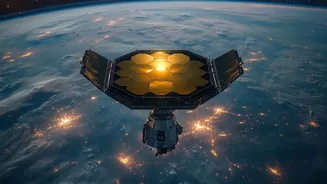
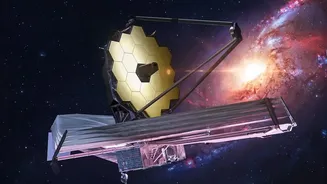
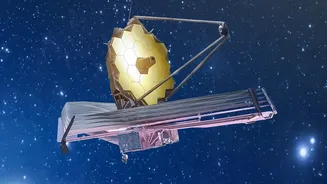
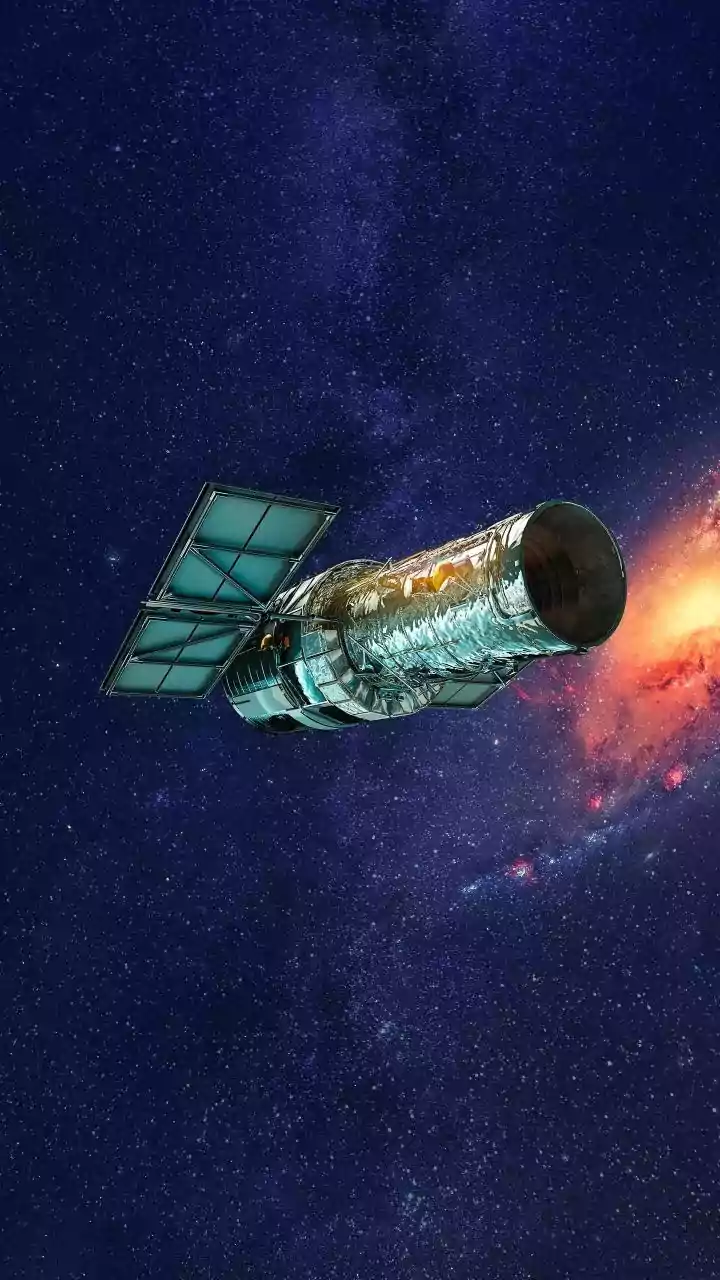
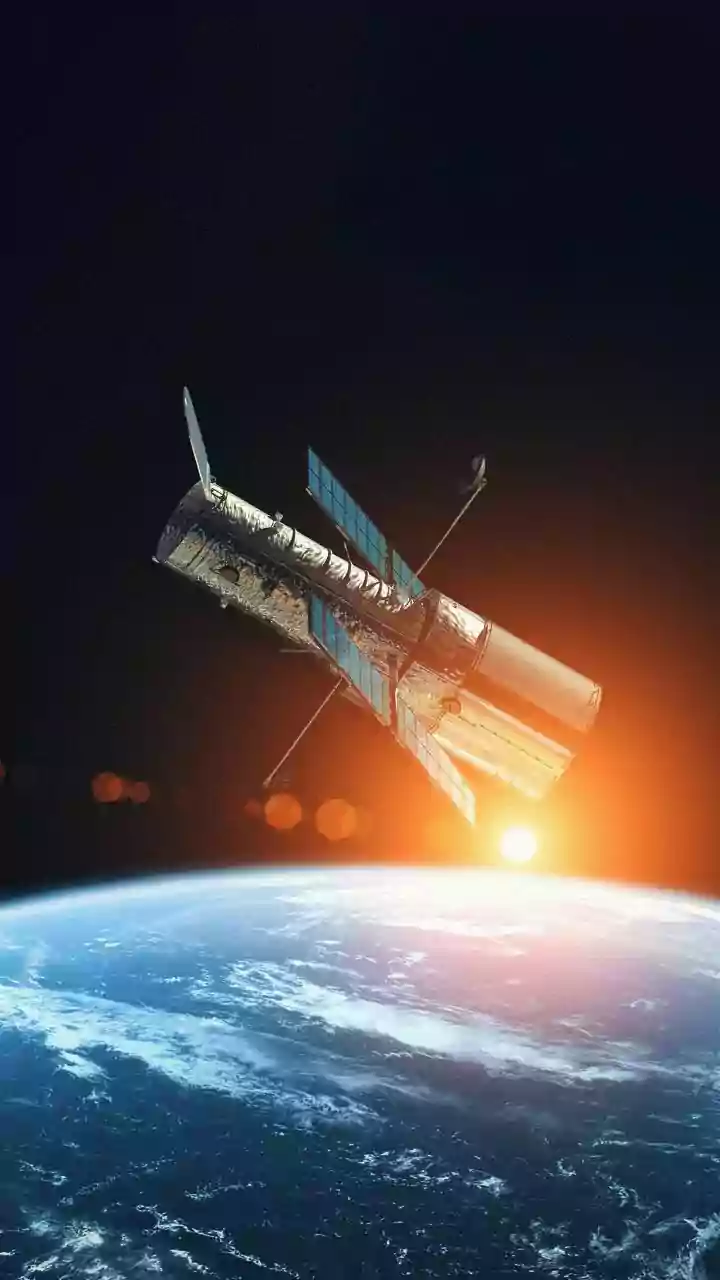
In the vast, silent expanse of space, the James Webb Space Telescope (JWST) has detected the chemical signature of water vapour in the atmospheres of rocky super-Earth exoplanets. This finding marks a pivotal moment in astronomy, moving from detecting
water on gas giants to finding it around planets with solid surfaces. Two notable examples are 55 Cancri e and LHS 1140 b, each a world vastly different from our own but now linked by this crucial discovery. For years, scientists have sought evidence of atmospheres on rocky worlds, a key step in identifying potentially habitable planets. While the presence of water vapour does not automatically signal life, its confirmation is the most significant evidence to date for a substantial atmosphere on a rocky planet outside our solar system, a feat made possible by the unparalleled power of the JWST.
Meet the Super-Earths
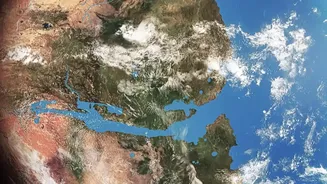
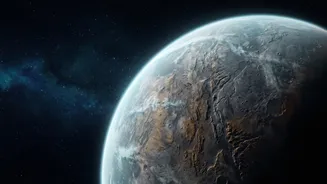
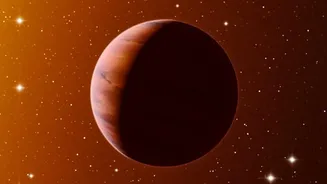
So, what exactly are these 'super-Earths'? The term describes a class of planets more massive than Earth but lighter than ice giants like Neptune. They are a common type of planet in our galaxy, yet our own solar system curiously lacks one. One of the planets in question, 55 Cancri e, is a searing hot world orbiting so close to its star that its surface is likely a bubbling ocean of magma. Its diameter is nearly twice that of Earth, and it completes a full orbit in less than 18 hours. In contrast, LHS 1140 b is a more temperate world, orbiting within its star's 'habitable zone'—the region where temperatures could allow for liquid water. It is about 1.7 times the size of Earth and could be a true water world, potentially covered in a deep ocean. Studying such different planets helps scientists understand the vast diversity of worlds that exist.
How the Telescope 'Sees' Water
Detecting a specific gas from light-years away sounds like science fiction, but the JWST does it using a technique called transmission spectroscopy. When an exoplanet passes in front of its host star from our perspective, a tiny fraction of the starlight filters through the planet's atmosphere. Different gases in that atmosphere absorb light at specific wavelengths. Think of it like a barcode; each element or molecule has a unique pattern. The JWST's highly sensitive instruments, particularly its spectrographs, capture this light and spread it into a rainbow, or spectrum. By analysing which 'colours' are missing from the starlight after it has passed through the atmosphere, astronomers can definitively identify the gases present, including the unmistakable signature of water (H2O).
Water Vapour, Not Necessarily an Oasis
Finding water vapour is incredibly exciting, but it is crucial to manage expectations. These are not necessarily Earth-like oases. On the blistering hot 55 Cancri e, the atmosphere is thought to be rich in carbon monoxide or carbon dioxide, constantly replenished by gases bubbling out of its magma ocean. The planet is far too hot to be habitable, with surface temperatures reaching thousands of degrees. The case of LHS 1140 b is more tantalising. Located 48 light-years away, initial observations rule out a hydrogen-dominated atmosphere and instead point towards one composed of heavier molecules like nitrogen and water vapour. While it orbits in the habitable zone, confirming the presence of liquid water on its surface will require several more years of observation. The detection of water vapour is just the first step on a long road to determining true habitability.
A New Era in the Search for Life
This confirmation of water vapour on rocky worlds heralds a new era for exoplanet science. For the first time, we are not just finding planets; we are beginning to understand what they are truly like. Each discovery helps scientists refine their models of how planets form and evolve. Studying the atmosphere of a lava world like 55 Cancri e can even provide insights into the early, molten conditions of planets like Earth and Venus. For more promising candidates like LHS 1140 b, these initial findings pave the way for more detailed follow-up studies. The ultimate goal is to find a rocky planet with an atmosphere containing a mix of gases—like water, oxygen, methane, and carbon dioxide—that could indicate the presence of biological processes. The JWST is our best tool in this grand endeavour, pushing the frontiers of what we know about our place in the universe.