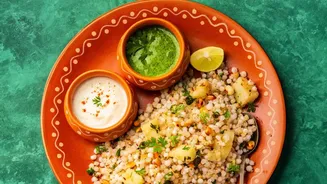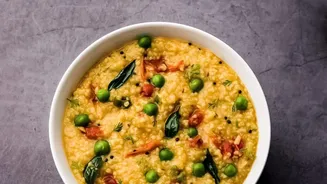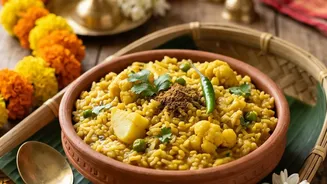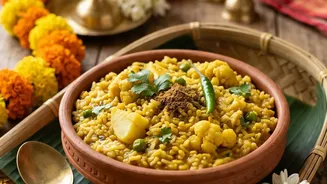

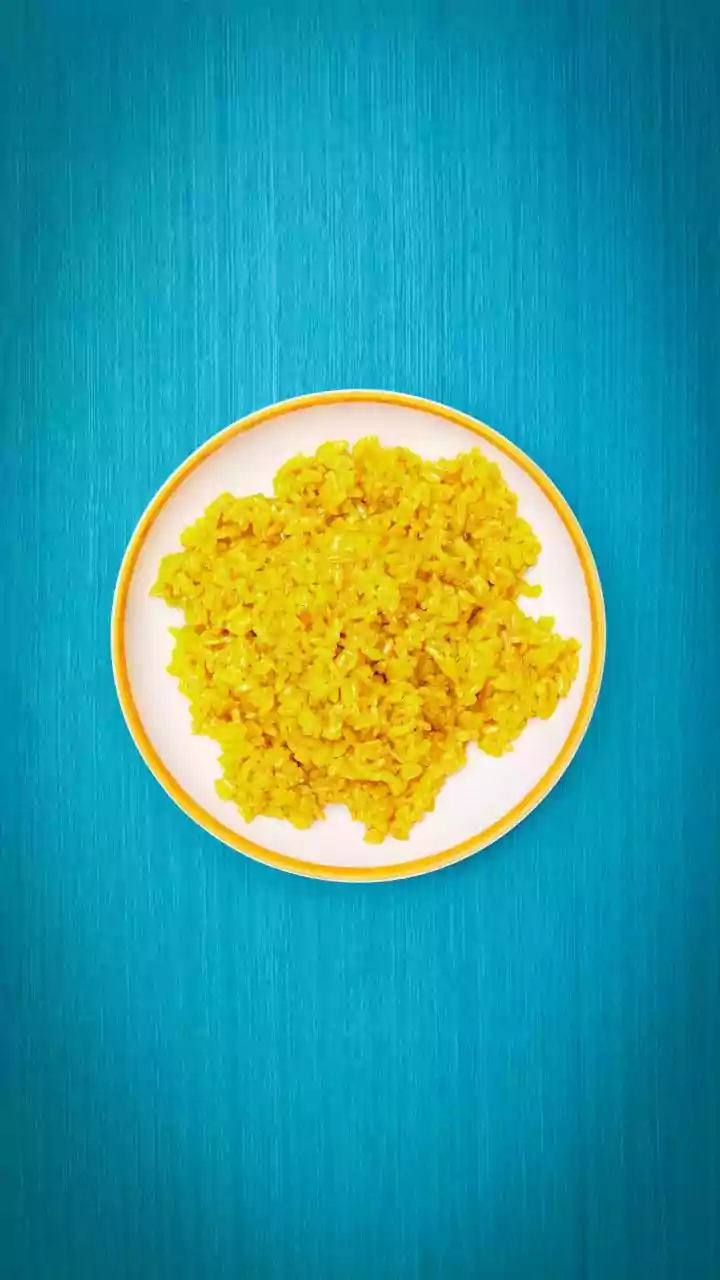
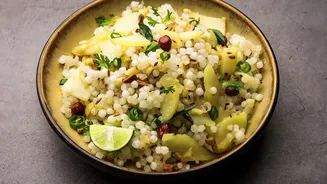
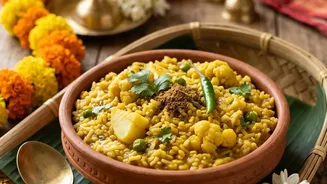
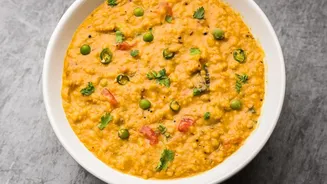
Dalia and khichdi are mainstays of healthy Indian eating. But have you ever wondered how these two comforting, seemingly similar dishes can offer different nutritional benefits? The answer lies not just in the ingredients, but in the science of cooking.
Meet the Comfort Food Contenders
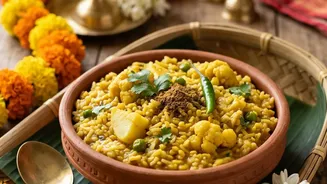
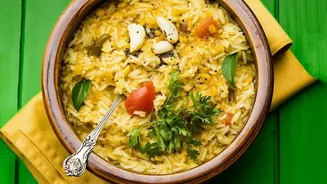
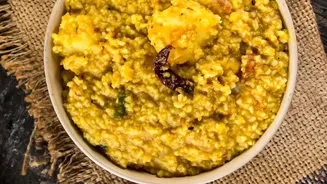
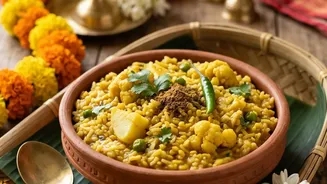
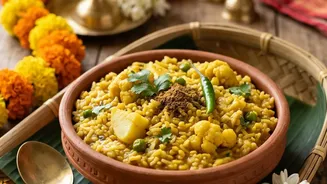
In one corner, we have dalia—broken or cracked wheat, a minimally processed whole grain. It's often cooked into a savoury upma or a simple porridge. In the other corner is khichdi, the classic one-pot wonder made by cooking rice and lentils (usually moong dal) together until soft and wholesome. Both are celebrated for being light, nourishing, and easy to digest, often recommended during recovery or for a simple, healthy meal. But while they share a reputation for wellness, their nutritional profiles begin to diverge long before they hit your bowl.
A Tale of Two Grains
The fundamental difference starts with the raw ingredients. Dalia is made from whole wheat kernels, meaning it retains its bran and germ. This makes it exceptionally rich in dietary fibre. A 100-gram serving of uncooked dalia packs around 10-12 grams of fibre and about 12 grams of protein. Khichdi, on the other hand, is built on a combination of rice and lentils. While this duo creates a 'complete protein' with all essential amino acids, its fibre content is more modest, primarily coming from the lentils. A typical bowl of moong dal khichdi provides a good balance of carbs and protein but less fibre overall compared to dalia.
The Science of Cooking
Here’s where things get interesting. The process of cooking itself fundamentally alters the nutrition of food. Applying heat helps break down complex structures in food, which can be both good and bad. Cooking improves the digestibility of proteins and can even increase the bioavailability of certain antioxidants, like the lycopene in tomatoes. However, heat and water are the enemies of certain nutrients. Water-soluble vitamins, like Vitamin C and B-group vitamins, can leach out into the cooking water and be lost. The longer you cook something, and the more water you use, the greater this loss can be. This is why pressure cooking often preserves more nutrients than boiling; it's much faster and uses less water, reducing the time and medium for nutrients to escape.
Glycemic Index: The Hidden Factor
One of the most significant differences between dalia and a standard khichdi is the Glycemic Index (GI)—a measure of how quickly a food raises blood sugar levels. Thanks to its high fibre content, dalia has a low GI, typically around 41–55. This means it releases energy slowly, providing a sustained fuel source and preventing sharp sugar spikes, making it an excellent choice for diabetics and for weight management. A traditional khichdi made with white rice has a higher GI. While the presence of dal helps to moderate the blood sugar response compared to eating plain rice, dalia generally offers superior blood sugar control.
Add–Ins Make the Meal
No dish is an island. A plain bowl of boiled dalia is nutritionally worlds apart from a 'meetha dalia' loaded with sugar and full–fat milk. Similarly, a simple khichdi prepared for someone who is unwell is very different from a masala vegetable khichdi topped with a generous dollop of ghee. Adding vegetables is the single best way to boost the nutritional value of either dish. Veggies add vitamins, minerals, and more fibre, making the meal more filling without a huge calorie increase. Conversely, adding large amounts of fat or sugar can quickly turn a healthy staple into a calorie–dense indulgence.
The Verdict : Which Is Better?
Ultimately , neither dish is universally 'better'—their strengths are simply different . Dalia is the champion of fibre and blood sugar control . Its slow–releasing energy makes it ideal for a filling breakfast that keeps you satiated for hours . Khichdi is the winner for easy digestion and providing a complete protein , which is excellent for muscle repair and recovery . Its soothing nature makes it a perfect light dinner or recovery meal . The best choice depends entirely on your personal health goals . For weight management and sustained energy , a savoury vegetable dalia is a fantastic option . For a comforting , protein–rich meal that’s gentle on the gut , khichdi is hard to beat .