








Confidence Amidst Volatility
Despite global headwinds and bouts of volatility, the underlying sentiment in the Indian market remains robust. [17] Key figures have highlighted India's position as a trusted investment destination, citing a fast-growing economy and strong domestic fundamentals.
[20] Investors have largely been buoyed by expectations of strong GDP growth, resilient corporate earnings, and supportive government policies aimed at attracting foreign capital. [17, 18] After a period of correction, many analysts see favourable risk-reward ratios, making it a "stock picker's market." [17, 22] While foreign institutional investors have shown some caution, domestic liquidity and resilient consumer demand have provided a strong cushion, keeping the market's long-term outlook positive in the eyes of many. [10, 17]
The Monsoon: An Economic Lifeline
The southwest monsoon is far more than just a weather event in India; it's a critical economic variable. [12] Accounting for about 70% of the country's annual rainfall, it is the lifeline for the $300 billion agriculture sector. [2, 4] A healthy monsoon is crucial for kharif crop sowing, replenishing reservoirs, and ensuring water availability for irrigation. [13] Its performance has a direct and significant influence on food prices, rural demand, and overall economic output. [4] Sectors like fast-moving consumer goods (FMCG), tractors, and two-wheelers are particularly sensitive to rural incomes, which are heavily dependent on the monsoon's outcome. [5, 8]
A Worrying Forecast for 2026
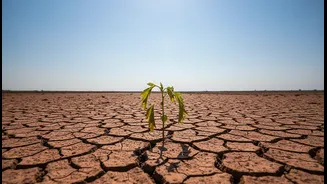
The forecast for the 2026 monsoon season has introduced a note of caution. The India Meteorological Department (IMD) has projected a "below-normal" monsoon, with rainfall expected to be around 90-92% of the Long Period Average (LPA). [3, 8, 9] This is being described as one of the weakest initial forecasts in years. [8] Driving this outlook is the potential development of El Niño conditions during the season, a phenomenon historically linked to weaker monsoons in India. [9, 15] While a positive Indian Ocean Dipole (IOD) can sometimes offset El Niño's impact, it is expected to remain neutral this year, offering little mitigation. [3, 12] As of late June, cumulative rainfall was already reported to be significantly below normal, amplifying concerns. [2, 4]
The Ripple Effect on Markets
A deficient monsoon can trigger a cascade of economic challenges that directly impact market sentiment. Economists warn that "bad rains bring bad sentiment." [2, 4] A shortfall in rainfall can lead to lower crop yields, pushing up food inflation. Research suggests a 10% rain deficit could add as much as one percentage point to consumer inflation. [2, 4] Higher food prices squeeze household budgets, dampening rural consumption and hurting corporate earnings for companies dependent on this demand. [8] This can spook investors, leading to market corrections. In rural India, the impact is often seen first in delayed purchases of items like tractors and motorcycles long before it appears in official data. [2, 4]
Navigating the Uncertainty
While the monsoon is a significant risk, India's economy has developed stronger buffers over the years. [3] Increased irrigation coverage, larger food grain reserves, and a rising share of non-farm income in rural areas provide some resilience against a weak monsoon. [3] The government is also preparing contingency plans for districts vulnerable to low rainfall. [2, 4] For investors, the current situation calls for a balanced approach. While market optimism is backed by strong growth forecasts, the monsoon's performance remains a key variable to watch. [17, 26] The coming weeks will be crucial in determining whether the season's rainfall catches up or if the market's sunny outlook will face a cloudy interruption. Staying informed on both macroeconomic trends and on-the-ground realities will be key to navigating the potential volatility ahead.