

The Sun's Hidden Temper
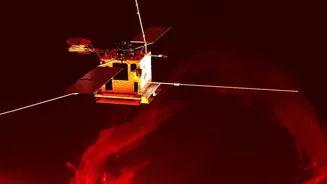
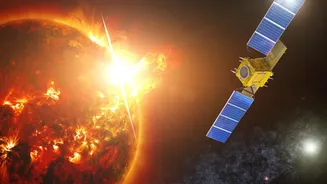
The Sun, our life-giving star, has a volatile side. It periodically releases enormous bursts of energy and magnetised plasma, known as coronal mass ejections (CMEs). When a powerful CME is aimed at Earth, it can trigger a severe geomagnetic storm. The historical
benchmark for such an event is the Carrington Event of 1859, which was so powerful it set telegraph stations on fire and created auroras visible as far south as the Caribbean. At the time, the impact was limited to this nascent technology. If a storm of that magnitude were to strike today, the consequences for our satellite-dependent civilisation would be catastrophic, with damage estimates running into the trillions of dollars.
Modelling a Cascade of Failures
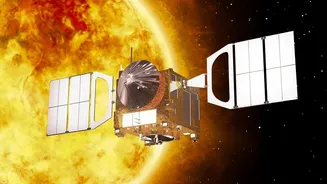
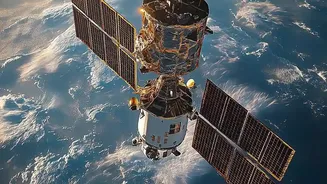
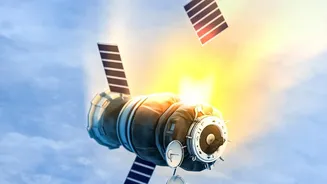
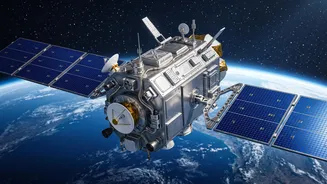
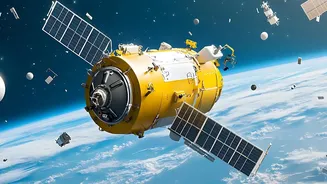
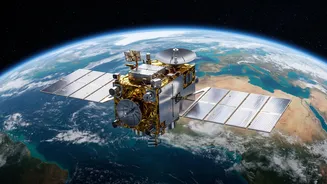
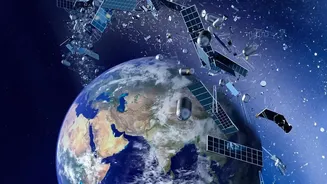
Recent scientific studies are moving beyond theory to model the precise impact of such an event on our orbital infrastructure. These models simulate how an extreme solar storm would affect different satellites in various orbits. The primary effects are twofold. First, energetic particles can penetrate satellite shielding, causing internal electrical charges that damage or destroy sensitive electronics. This can lead to anything from phantom commands to total satellite loss. Second, the storm heats and expands Earth's upper atmosphere, increasing the atmospheric drag on satellites in Low Earth Orbit (LEO). This increased drag can cause satellites to lose altitude and fall out of orbit, as seen when a relatively minor storm destroyed nearly 40 Starlink satellites in 2022. The latest models show that not all orbits are equally vulnerable, with a satellite's position relative to the incoming storm playing a key role. Frighteningly, some research calculates that a major failure could trigger a cascade of collisions, known as the Kessler Syndrome, in a matter of days.
When the Signals Go Silent
The failure of satellite networks would not be a distant, abstract problem; it would bring modern society to a standstill. In India, the consequences would be immediate and widespread. GPS-based navigation, essential for logistics, ride-hailing services like Ola and Uber, and even food delivery, would cease to function. The precision timing signals from GPS satellites are also the invisible backbone of the digital economy, including the UPI payment system, stock market trades, and mobile networks. Without them, financial transactions would fail and communications would become unreliable. Beyond finance, we would lose critical services like modern weather forecasting, which is almost entirely reliant on satellite data, hindering our ability to predict cyclones and monsoons. Satellite television would go dark, and long-distance communication, especially for remote and maritime sectors, would be severed.
The Urgent Push for Resilience
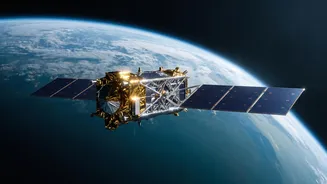
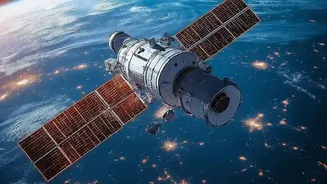
This growing awareness of our vulnerability is driving a global effort to improve 'satellite resilience'. This involves a multi-pronged approach. First is building tougher satellites with better shielding and more robust electronics that can withstand higher levels of radiation. One study suggests that an additional 2.5 mm of aluminium shielding could significantly mitigate the risk of internal charging for satellites in geostationary orbit. Second is improving our space weather forecasting. New instruments, like the High-Energy Particle Instrument (HEPI) being developed by the European Space Agency, are designed to give better warnings of incoming solar particle storms. Better forecasting allows operators to take preemptive action, such as temporarily powering down non-essential systems or rescheduling manoeuvres to reduce risk. Finally, researchers are developing smarter operational strategies and risk-aware routing that could divert data traffic through less-affected parts of a satellite constellation during a storm.