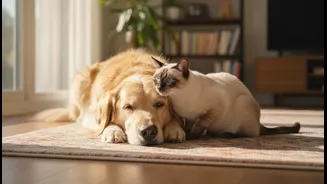









The Great Pet Personality Divide
The labels 'dog person' and 'cat person' are deeply ingrained in our culture. Dog people are often stereotyped as outgoing, energetic, and rule-following, much like the loyal canines they adore. In contrast, cat people are frequently seen as more introverted,
independent, and creative, mirroring the enigmatic nature of felines. Some research has even found distinct personality differences between the two groups. Studies have suggested that self-identified dog people tend to score higher on traits like extroversion and agreeableness, while cat people may score higher on openness and neuroticism. These labels are more than just a casual preference; for many, they form a part of their identity, influencing lifestyle choices and even how they perceive others. This cultural shorthand is so powerful that it can feel like choosing a side in a friendly, long-running debate about which animal makes the superior companion.
Shifting Focus from 'What' to 'How'
While the stereotypes are fun, a growing body of research is pointing toward a more nuanced truth: the quality of our interactions with our pets may be far more significant than the pet's species. A recent study highlighted that interacting with both dogs and cats appears to provide similar emotional benefits. The key takeaway is that positive feelings increase the more an owner interacts with their pet, regardless of whether it's a dog or a cat. This shifts the focus from a simple preference to the active, moment-to-moment relationship being built. The bond between a human and an animal is a two-way street, and its strength seems to be determined by mutual engagement, not just by the inherent traits of a dog or a cat. This suggests that the benefits we get from pets—like reduced stress and increased happiness—are a direct result of the effort and attention we put into the relationship.
What Does Quality Interaction Look Like?
Quality interaction goes far beyond simply sharing a living space. It’s about being present and engaged. For a dog, this could mean dedicated daily walks, active play sessions, training, or simply petting them attentively. For a cat, it might look like interactive playtime with a wand toy, gentle grooming, or responding to their cues for affection. The crucial element is responsiveness. A strong human-animal bond is built on a foundation of understanding and meeting each other's needs. Research shows that these positive interactions can have tangible physiological benefits for humans, such as releasing oxytocin—the 'love hormone'—and lowering levels of the stress hormone cortisol. The animal benefits, too, feeling more secure and content. Therefore, a rich relationship can be built with either a cat or a dog, provided the owner is willing to invest in quality time.
It Takes Two to Tango
Of course, the animal’s own personality is a major factor in the relationship. Just as humans are individuals, so are pets. You might have a highly social cat who loves to greet guests, or a reserved dog who prefers quiet companionship. The best human-animal bonds often happen when there is a good match between the owner's personality and the pet's individual temperament. A high-energy person might find a perfect partner in an active dog who loves to run and hike. A quieter individual might forge a deep connection with a calm lap cat. The idea is not to force a pet to fit a certain mould, but to understand and appreciate its unique nature. This mutual understanding is where the strongest, most rewarding relationships are formed, proving that compatibility is more complex than a simple species label.
The Real Prize: A Stronger Bond
Ultimately, moving beyond the 'dog person' vs. 'cat person' debate opens us up to a more fulfilling experience of pet ownership. The tangible benefits are clear: a strong human-animal bond is associated with reduced loneliness, increased feelings of social support, and an overall mood boost for the owner. Globally, an overwhelming majority of pet owners consider their animal a part of the family and have personally experienced health benefits from this bond. These benefits don't come from a label, but from the shared moments of connection, play, and unconditional support. By focusing on the quality of our interactions, we not only enhance our own well-being but also enrich the life of our animal companion, creating a cycle of mutual care and affection that truly defines the relationship.