





Beyond the bustling beaches of Alibaug, the Konkan coast hides stories less often told. On a rocky headland guarding a river mouth, the ruins of Korlai Fort offer a unique glimpse into a chapter of history written not by the Marathas, but by the Portuguese.
A Fort With a Different Story
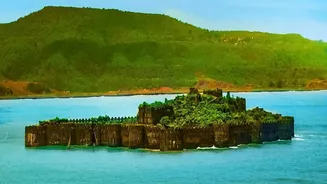
While Maharashtra's coastline is famously dotted with formidable forts built by the Maratha Empire, Korlai stands apart. Also known as Morro de Chaul or Castle Curlew, it was constructed by the Portuguese in 1521 to guard the strategic entrance to the Revdanda creek and control the sea trade routes. For over two centuries, this fort was a key part of Portugal's coastal province that stretched up to Bassein (Vasai). Its history is a complex tapestry of conflict with the Ahmadnagar Sultanate and a failed siege by Chhatrapati Sambhaji Maharaj in 1687, before it was eventually ceded to the Marathas in 1739. This European origin gives Korlai a distinct architectural and cultural flavour, setting it apart from its more famous neighbours like Murud-Janjira or Sindhudurg.
Echoes of a European Past
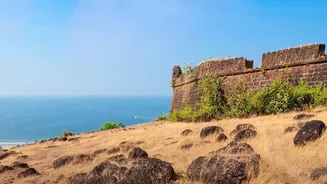
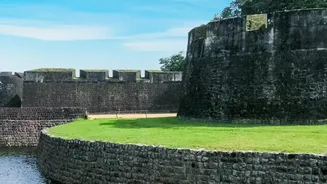
A walk through Korlai is a walk through its layered past. The fort is a sprawling structure in ruins, with fortifications stretching over 2,800 feet. It features eleven gates, many of which still bear Portuguese inscriptions. Within its walls, you can find the haunting ruins of a church, built in 1630 for the garrison, which was in use until 1728. The fort was designed for defence, with over 300 parapets for guns and cannons. Yet, what truly makes the area unique is the living history in the adjacent Korlai village. Here, a small community of Christians still speaks 'Kristi' or 'Nɔw-ling' (our language), a rare Creole language that blends Portuguese and Marathi—a direct linguistic link to the fort's builders.
The Climb and the Reward
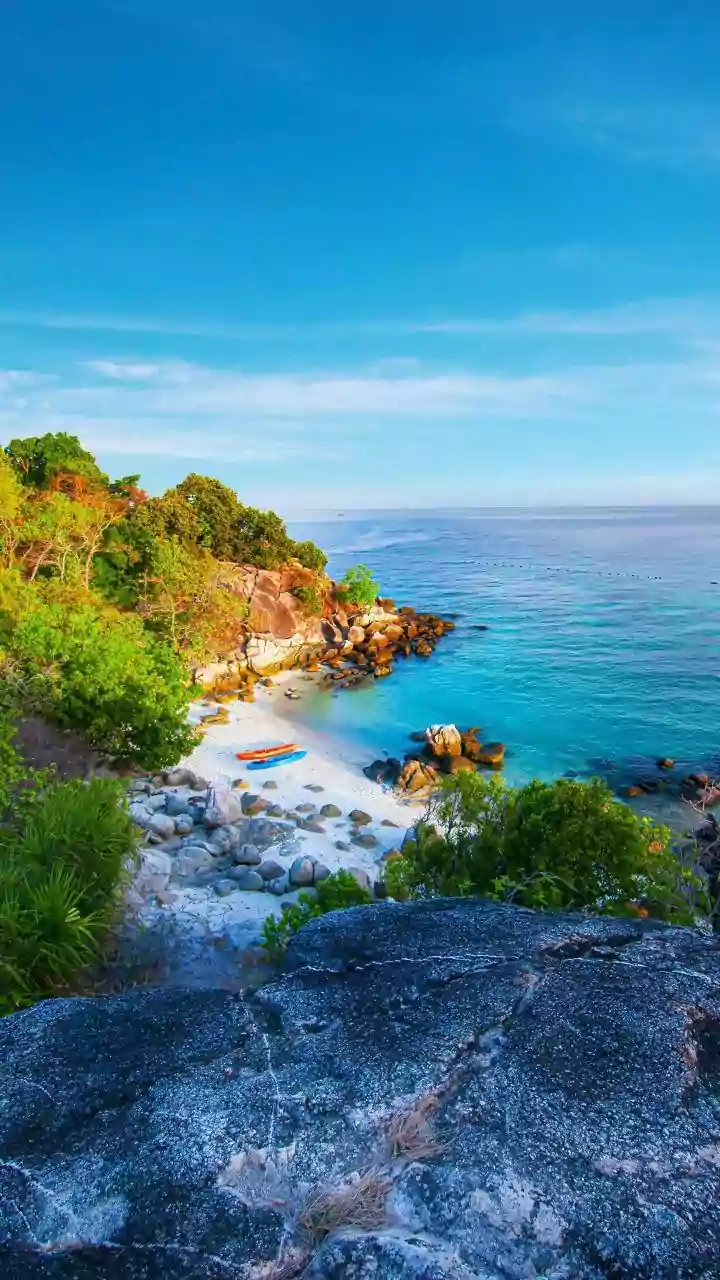
Reaching the fort involves a short but steep trek from Korlai village, a climb that takes about 20-30 minutes through open grassland. The path is exposed to the elements, making an early morning or late afternoon visit the best option to avoid the strong midday sun. The effort is immediately rewarded upon reaching the ramparts. The fort is strategically perched on a hill with the Arabian Sea on three sides, offering breathtaking panoramic views. You can see the long stretch of Korlai beach, the Revdanda creek, and the vast expanse of the sea. It's a photographer's delight and a perfect spot for those seeking tranquillity away from crowded tourist spots.
The Lighthouse and Practical Tips
At the southern end of the fort complex stands the Korlai Lighthouse, built in 1955. It remains an active, automated lighthouse, guiding ships along the coast. The area around the lighthouse is wellmaintained and offers another peaceful vantage point to soak in the coastal scenery. For those planning a visit, Korlai is about 22 km south of Alibaug and roughly 115 km from Mumbai. The best time to visit is from November to February when the weather is pleasant. It is advisable to wear sturdy shoes for the climb and carry your own water and snacks, as there are limited facilities at the fort itself. Entry to the fort is free.