


The Robotic Vanguard: Our Proven Explorers
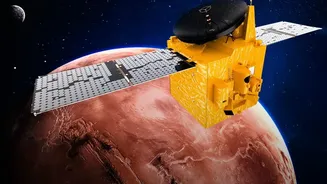
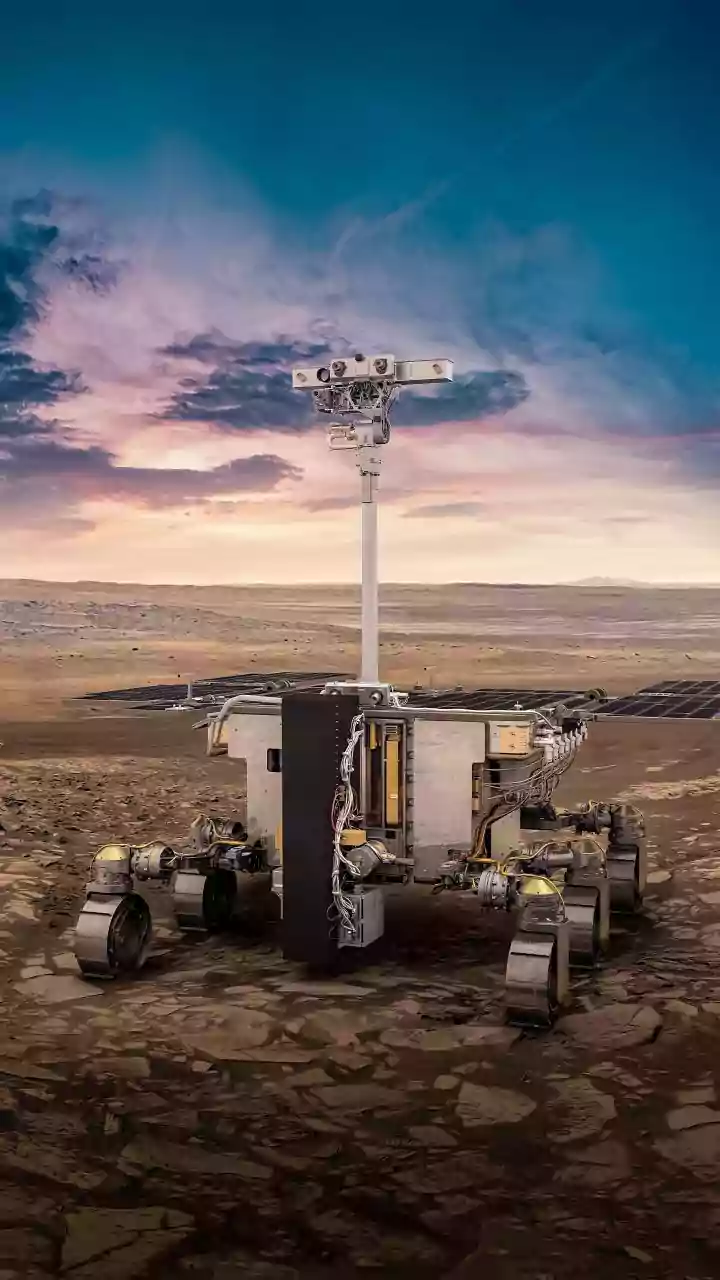
Robotic missions have fundamentally transformed our understanding of Mars. Since the first successful flyby in 1965, a fleet of orbiters, landers, and rovers has mapped the surface, analyzed the thin atmosphere, and confirmed the presence of water ice.
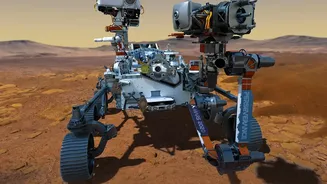
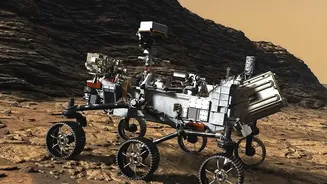
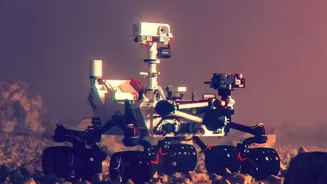
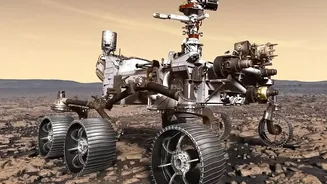
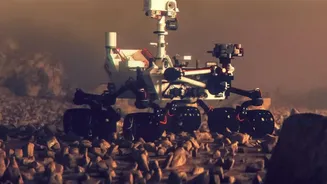
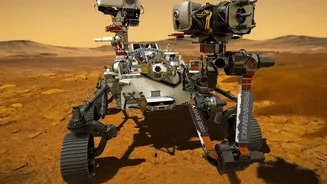
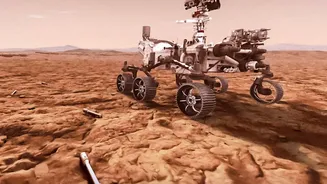
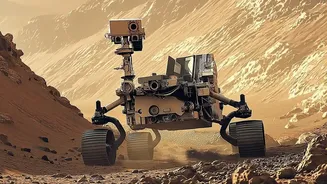
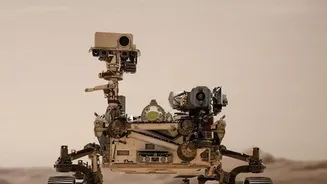
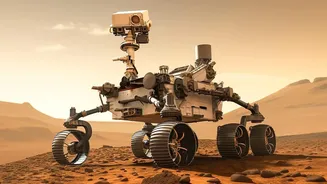
Missions like NASA's Perseverance and Curiosity rovers have become household names, acting as remote geologists that drill into rocks and search for signs of ancient habitable environments. The primary arguments for this robotic-first approach are compelling: cost and safety. The Perseverance rover mission cost under $3 billion, whereas estimates for a single crewed mission to Mars range from $100 billion to over $500 billion. Robots don't need life support, food, or a return ticket, and if a mission fails, the loss is financial and scientific, not human.
The Human Advantage: Speed and Intuition
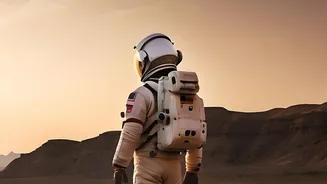
Despite their success, robots are slow and deliberate. Every action is carefully planned by teams on Earth, with communication delays of up to 24 minutes each way making real-time control impossible. This is where the human advantage becomes clear. A human geologist can accomplish in a single week what a rover might take a year to do. Humans possess an unmatched ability for on-the-fly decision-making, intuition, and adaptability. An astronaut can walk around an obstacle that would trap a rover, pick up an interesting rock on a hunch, or use their dexterity to perform complex repairs and experiments. Studies comparing remote rover teams to human field geologists in Mars-analogue environments on Earth found that while robots could identify basic materials, human teams made more accurate, detailed, and contextual assessments.
The Ultimate Hurdles: Safety and Survival
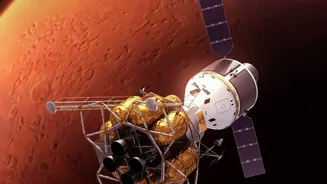
The immense cost of human missions is driven by one primary factor: keeping astronauts alive. A round trip to Mars could last up to three years. Throughout that journey, crews would face immense challenges. The lack of a global magnetic field and a thin atmosphere on Mars means astronauts would be exposed to high levels of cosmic radiation, increasing their lifetime risk of cancer and other diseases. The physiological effects of prolonged exposure to low gravity include muscle atrophy and bone density loss. Furthermore, the psychological strain of isolation and confinement in a small craft, with no hope of a quick rescue, is a significant risk that agencies like NASA are studying intently through long-duration analog missions on Earth.
A Symbiotic Future: Paving the Way for People
The debate is often framed as 'robots versus humans', but the reality is more of a partnership. Robotic missions are not just an alternative to human exploration; they are an essential precursor. Our rovers and orbiters are scouting for ideal landing sites, identifying potential hazards, and mapping resources like water ice that could one day be used by human crews. The Mars Sample Return mission, a complex robotic endeavor to bring Martian rocks back to Earth, is seen as a critical step to analyze the environment for potential hazards to astronauts, like toxic dust, before they arrive. In this sense, every robotic mission makes a future human mission safer and more scientifically productive. The ultimate goal is a sophisticated collaboration between human explorers and their autonomous systems.