




The Sun's Unseen Temper
We often think of space as empty and calm, but our Sun is an active star with its own form of weather. Instead of wind and rain, it sends out streams of charged particles and massive bursts of energy. These events, known as solar flares and coronal mass ejections
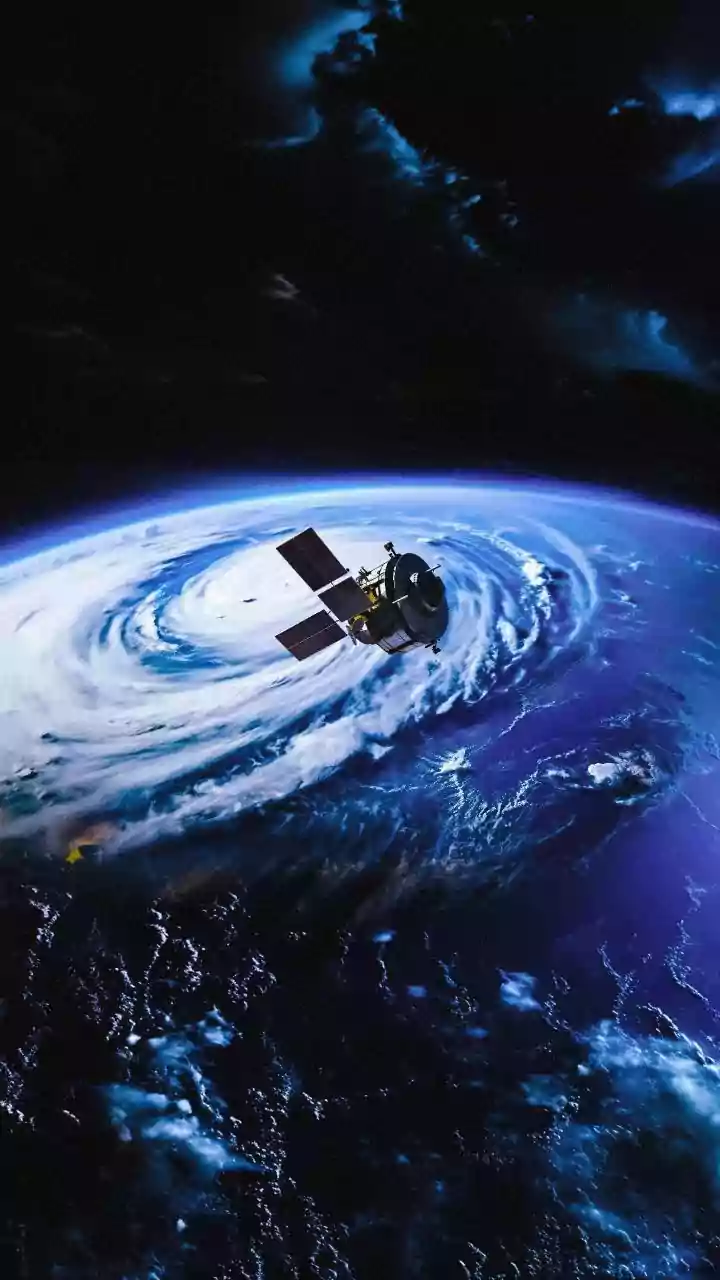
(CMEs), create what scientists call 'space weather'. While Earth's magnetic field protects us on the ground, this solar radiation can wreak havoc in orbit. These storms of particles and magnetism can disrupt radio signals, interfere with navigation systems, and even pose a risk to power grids on the surface. For the technology floating above our protective atmosphere, the danger is far more direct.
A New Rush Hour in Orbit
In recent years, the space above our heads has become incredibly crowded. This is due to the rapid rise of 'mega-constellations' — vast networks of hundreds or thousands of small satellites working together. Companies like SpaceX's Starlink, which already operates over 10,000 satellites, Amazon's Project Kuiper, and Eutelsat OneWeb are deploying these fleets to provide global broadband internet. As of September 2026, the total number of active satellites has surged past 18,000, largely driven by these new commercial ventures. This boom, transforming sectors from logistics to agriculture, means that more of our core economic and social infrastructure is now located in low-Earth orbit (LEO).
When Solar Storms Meet Satellites
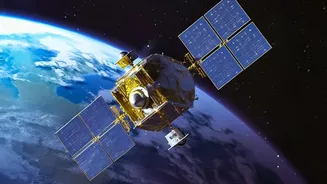
For these densely packed satellite constellations, a major space weather event poses a dual threat. Firstly, energetic particles can bombard a satellite's sensitive electronics, causing malfunctions, phantom commands, or permanent damage. This is like a sudden power surge that fries delicate computer components. Secondly, geomagnetic storms heat and expand Earth's upper atmosphere. This increases the atmospheric drag on satellites in LEO, causing them to slow down and lose altitude. If not corrected, this can lead to premature re-entry, as seen when a geomagnetic storm destroyed dozens of newly launched Starlink satellites in 2022. With thousands of satellites now operating in these vulnerable orbits, the potential for a cascading failure is a serious concern.
India’s Eye on the Sun
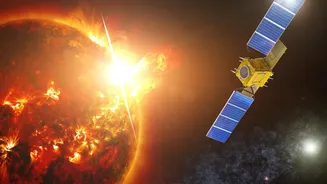
Just as we have weather forecasts for Earth, we need them for space. Continuous monitoring is the key to protecting these vital assets. This is where missions like India's Aditya-L1 come in. Positioned 1.5 million kilometres from Earth, it has an uninterrupted view of the Sun. Its suite of instruments can detect the early signs of solar flares and CMEs, providing crucial data for space weather prediction. This can offer an early warning—anywhere from 30 minutes to an hour—allowing satellite operators to take protective measures, such as temporarily shutting down sensitive systems or adjusting orbits to minimise drag. While Aditya-L1 is a solar physics mission, the data it gathers is a significant step towards building India’s own space weather forecasting capabilities. This expertise is vital for safeguarding not just national assets, but a global digital economy.