







Beyond the Bullet Points
For decades, the text resume has been the undisputed king of job applications. It’s a neat, structured summary of your education, skills, and experiences. But in a sea of qualified candidates with similar-looking CVs, its limitations are becoming clear.
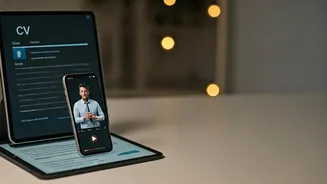
A text resume can list your skills—like “excellent communication” or “creative problem-solver”—but it can’t prove them. It presents you as a collection of keywords and bullet points, failing to capture your personality, energy, and genuine passion. This is where a video portfolio changes the game. It’s not about replacing your resume, but about supplementing it with a dynamic, personal touch that a static document simply cannot offer.
Why Recruiters Are Paying Attention
Imagine being a recruiter sifting through hundreds of applications for a single entry-level role. Most resumes look the same: B.Tech from a good college, a relevant internship, and a list of technical skills. A video link, however, immediately piques their interest. In just 60 to 90 seconds, a recruiter can get a feel for your confidence, your communication style, and your enthusiasm. These are the critical soft skills that are incredibly hard to gauge from a piece of paper. For roles in sales, marketing, client relations, or any field that requires strong interpersonal abilities, a compelling video can instantly move your application to the top of the pile. It shows initiative and a modern approach to professional branding.
What to Include in Your Video
A great video portfolio is not a lengthy documentary about your life. It’s a concise, professional, and engaging pitch. Think of it as a trailer for your career. Structure it around three key parts: 1. **The Hook (0-15 seconds):** Start with your name, the role you’re interested in, and a powerful opening line about what drives you. Grab their attention immediately. 2. **The Proof (15-60 seconds):** This is the core of your video. Don't just list your skills; show them. Briefly talk about a key project from college or an internship. Explain the problem you solved or the impact you made. If you’re a designer, show a piece of your work. If you’re a coder, talk through a snippet of a challenging project. This brings your resume to life. 3. **The Close (60-90 seconds):** End with a confident closing statement. Reiterate your interest in the company and the specific role. End with a clear call to action, like “I’m excited about the possibility of discussing this further and have attached my full resume for your review.”
Quick Tips for a Polished Video
You don't need a professional film crew. Your smartphone is more than enough, but execution matters. Here are some quick tips: * **Sound is Key:** Use a quiet room and consider an affordable lavalier mic that clips to your shirt. Bad audio is more distracting than slightly grainy video. * **Good Lighting:** Film facing a window for natural light. Avoid sitting with a bright light or window behind you, which will turn you into a silhouette. * **Stable Camera:** Prop your phone up on a stack of books or a small tripod. Shaky, handheld footage looks unprofessional. * **Dress the Part:** Wear what you would wear to an interview for that company. * **Smile and Be Authentic:** Don't read from a script verbatim. Have bullet points to guide you, but let your personality shine through. Make eye contact with the camera lens, not with your own image on the screen.
Common Mistakes to Avoid
While a good video can set you apart, a bad one can hurt your chances. Steer clear of these common pitfalls: going over 90 seconds (recruiters are busy); a cluttered or unprofessional background (a plain wall is best); speaking in a monotone voice; or simply reading your text resume out loud. The point of the video is to add a new dimension, not to repeat what’s already on paper. Also, be mindful of where you host it. A simple, unlisted YouTube or Vimeo link is professional and easy to share. Avoid sending large video files directly via email.