


An Unforgettable Tournament for the Wrong Reasons
The events in question unfolded during the India Open, a premier Super 750 tournament, held at New Delhi’s Indira Gandhi Indoor Stadium. Instead of making headlines for thrilling rallies, the tournament in January 2026 became infamous for a series of bizarre
and disruptive incidents. International players, who had come to compete at the highest level, found themselves battling not just their opponents, but also the chaotic environment. Matches were interrupted by bird droppings from pigeons nesting in the rafters, forcing players to stop mid-game. One Korean player, Kang Min Hyuk, even posted on social media after a monkey was spotted in the spectator stands, cheekily asking if animals were given free admission. These weren't isolated incidents, but part of a pattern that left organizers red-faced and the global badminton community asking serious questions.
The Simian and Avian Invasion
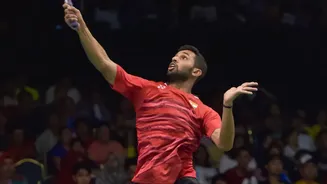
The presence of monkeys and pigeons was more than just a comical sideshow; it was a significant disruption that highlighted major infrastructural failings. Players like Denmark’s Mia Blichfeldt publicly criticised the 'unhealthy' conditions, pointing to dirty floors and bird poop in the training areas. The most visible embarrassment occurred when a match featuring India's own H.S. Prannoy was halted twice because of pigeon droppings landing on the court. The monkey sighting in the spectator gallery and another at a training venue only added to the sense of chaos. For a country aspiring to be a global sports hub, having its premier badminton event derailed by wildlife was a public relations disaster.
The ₹20 Crore Question
The headline's mention of ₹20 crore points to the larger context of investment and expectations. While that specific figure relates to recent renovations, the venue itself, the Indira Gandhi Indoor Stadium complex, has seen massive investment over the years, particularly during the 2010 Commonwealth Games. The fact that such basic issues as venue hygiene and security from animal intrusion persisted despite these investments was a source of great frustration. The problems weren’t just about a leaky roof or a stray bird; they hinted at a systemic failure in venue management and preparedness for a world-class event. The Badminton Association of India (BAI) and the Sports Authority of India (SAI) faced intense criticism for the organisational lapses.
A Wake-Up Call for Indian Badminton
The fiasco of the January India Open served as a crucial, if embarrassing, wake-up call. With the prestigious BWF World Championships scheduled to be held in the very same venue in August 2026, the stakes were incredibly high. In response to the backlash, BAI and SAI initiated a massive overhaul. Organizers spent months and a reported ₹20 crore on renovations, promising a 'completely transformed' venue. The changes were extensive: the roof was waterproofed, vents were sealed, wooden doors were replaced with automatic double-door systems, and a non-toxic gel was applied to repel birds. In a uniquely Indian solution to the monkey problem, officials even hired a team of 'monkey whisperers'—men who expertly mimic the aggressive calls of langurs to scare away macaques from the stadium premises.
Redemption and the Road Ahead
The frantic preparations seem to have been a success. Organizers recently conducted a media tour to showcase the upgrades, a clear attempt to control the narrative and reassure players and fans. From high-tech, US-imported machines that produce sounds to repel birds to the low-tech but effective 'langur mimics', no stone was left unturned. The BWF, badminton's global governing body, has expressed its satisfaction with the measures taken, stating that BAI acted swiftly to address the feedback. The upcoming World Championships will be the ultimate test. India's ability to pull off a seamless, world-class event will be crucial in proving that the country has learned its lessons and is ready to solidify its place as a top-tier destination for international sport.