






That Eerie Sound From Deep Space
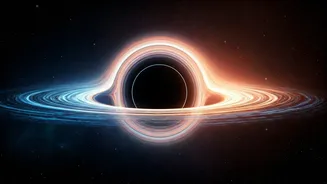
The internet is buzzing with what many are describing as the 'sound' of a black hole, and it’s as eerie as it is fascinating. The audio, which has been shared widely, features a deep, spectral moaning that sounds like it’s straight out of a sci-fi horror
film. It's based on the supermassive black hole at the heart of the Perseus galaxy cluster, roughly 250 million light-years from Earth. The clip has ignited a firestorm of curiosity, with users comparing it to everything from a 'billion souls being tortured' to the sound of an interstellar whale. The fascination stems from a simple, long-held belief we all learned in school: in the vacuum of space, no one can hear you scream. So, what are we actually listening to?
What You Actually Heard
First, let's clear things up: you can't hear sound in the way we experience it on Earth in the near-vacuum of space. Sound needs a medium to travel through, like air or water. However, the phrase 'no sound in space' is a popular misconception, according to NASA. While most of space is an empty vacuum, large galaxy clusters like Perseus are filled with massive amounts of hot gas, providing a medium for sound waves to travel. Back in 2003, astronomers using NASA's Chandra X-ray Observatory discovered that the black hole in Perseus was sending out pressure waves, creating ripples in this surrounding gas. These are, for all intents and purposes, real sound waves. The problem? The note they produce is about 57 octaves below middle C, a frequency so low it's far beyond the range of human hearing.
From Data to Viral Audio
To make the inaudible audible, scientists used a process called sonification. This is the practice of translating data into sound. In this case, NASA astronomers took the pressure wave data from the Chandra telescope and drastically scaled up the frequency—by about 144 quadrillion and 288 quadrillion times—to bring it into the range of human hearing. The result is the haunting audio clip that’s now trending. It’s not a direct recording, but rather a faithful representation of the actual sound waves discovered in the Perseus cluster. NASA has used sonification for other celestial objects as well, including the black hole M87, turning different wavelengths of light into musical tones. This technique offers a new way to experience and understand the vast amounts of data astronomers collect.
Why We're All Obsessed
The viral trend speaks to our innate fascination with the mysteries of the universe. The sound is unsettling yet profound, a tangible connection to one of the most enigmatic objects in cosmology. It challenges a fundamental assumption about space being silent and replaces it with a far stranger reality. The audio gives a voice to the void, transforming an abstract concept into something we can experience viscerally. On Twitter, the reactions range from pure scientific wonder to existential dread, memes, and humorous takes. It's a reminder that even after decades of space exploration, the cosmos retains its power to surprise and unify us in shared awe. These sonifications don't just present data; they tell a story, and this particular story from 250 million light-years away has clearly resonated with millions.