




An Invitation to Look Up
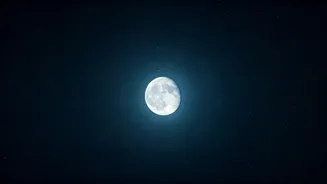
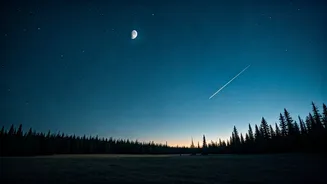
The night sky has always been a source of wonder, a vast canvas that invites us to pause and gain perspective. This month, you don't need a fancy telescope or a degree in astrophysics to connect with the cosmos. The Moon, our constant celestial companion,
will be putting on a quiet show as it glides past some of our solar system’s most brilliant planets. These events, known as conjunctions or 'moon pairings', are more than just astronomical alignments; they are invitations to step outside, take a deep breath, and experience a moment of calm science. It’s an opportunity to trade screen time for sky time, and the best part is, it's completely free.
Early Risers' Reward: The Moon Meets Saturn
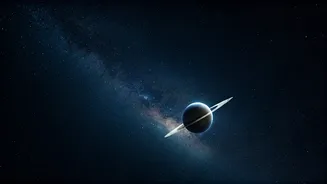
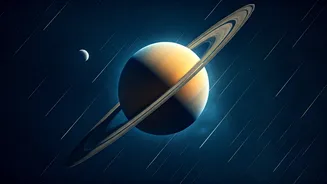
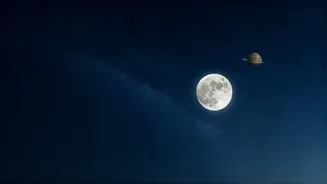
The first major celestial meeting of the month is a treat for the early birds. In the pre-dawn hours of July 7th and 8th, you can witness the Moon sharing the sky with the majestic ringed planet, Saturn. Look towards the eastern sky after midnight, and you’ll see the third-quarter Moon accompanied by a steady, golden point of light—that’s Saturn. Unlike the twinkling stars around it, Saturn holds a serene, unwavering glow. It's a peaceful scene to start your day, a quiet cosmic handshake happening millions of kilometres away but perfectly visible from your backyard or balcony. You won't need any special equipment to enjoy the view, just a clear sight of the morning sky.
A Celestial Trio: Moon, Mars and the Pleiades
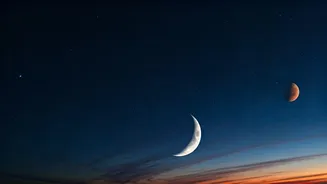
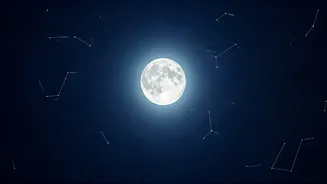
Just a few days later, the sky offers another beautiful arrangement. On the morning of July 11th, a delicate, waning crescent Moon will form a striking triangle with the fiery planet Mars and the sparkling Pleiades star cluster. Often called the Seven Sisters, the Pleiades is a stunning cluster of blue-white stars that looks like a tiny, shimmering patch to the naked eye. Mars will add a touch of orange-red colour to the scene. To catch this display, look east about two hours before sunrise. The three objects will appear beautifully clustered together, a fleeting moment of cosmic artistry that serves as a reminder of the sky’s dynamic beauty. If you have binoculars, they will offer an even more breathtaking view of the many stars within the Pleiades cluster.
An Evening Show: Venus and the Crescent Moon
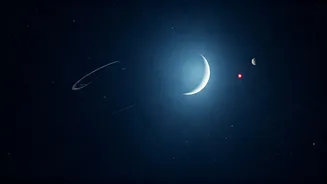
Perhaps the most accessible and eye-catching event of the month occurs in the evening sky on July 16th and 17th. Shortly after the sun dips below the horizon, the brilliant planet Venus—often called the 'Evening Star'—will be joined by a slender, young crescent Moon. Look to the west in the lingering twilight to see this dazzling pair. Because Venus is so incredibly bright, this conjunction is one of the easiest to spot, even from light-polluted cities. The sight of the delicate crescent hanging near the brightest object in the evening sky is an effortlessly beautiful spectacle, a perfect, calm ending to a busy day.
How to Have Your Best Science Moment
Enjoying these celestial sights is simple. First, check the weather for a clear night. Find a spot with an unobstructed view of the sky, preferably away from the direct glare of streetlights. Give your eyes about 15-20 minutes to adjust to the darkness; this will help you see fainter objects. While all these pairings are visible with the naked eye, a pair of binoculars can enhance the experience, revealing more detail on the Moon's surface or the countless stars in the Pleiades. Consider downloading a stargazing app on your phone, which can help you identify planets and constellations with ease. But most importantly, allow yourself to simply be present. Put away distractions and just soak in the quiet majesty above.