

The Anatomy of a Thali
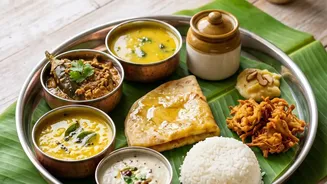
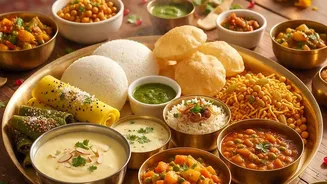
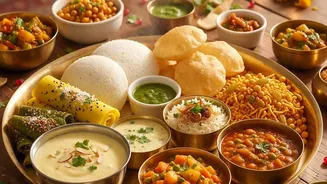
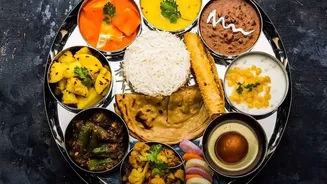
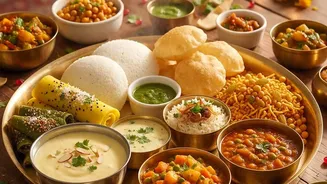
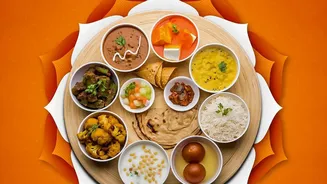
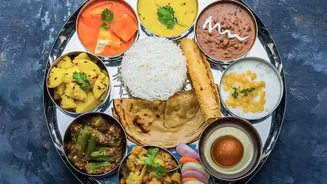
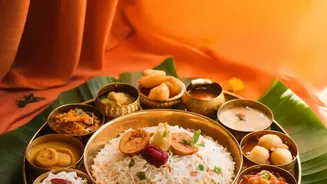
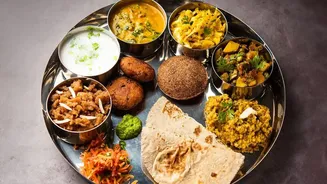
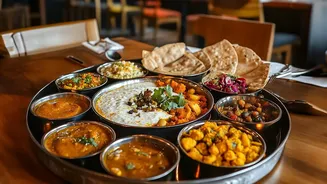
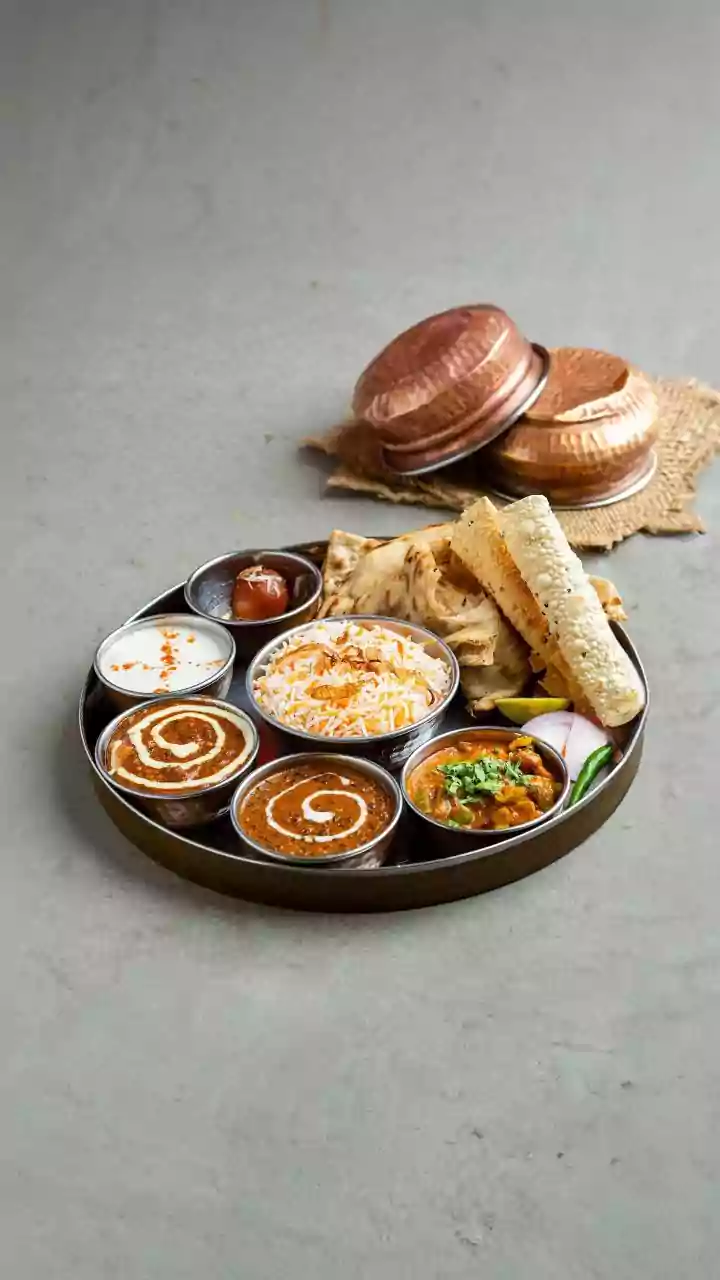
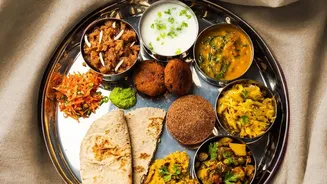
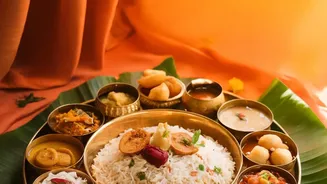
The traditional Rajasthani thali is a masterclass in balance, designed to delight every part of the palate. A typical platter features a vibrant assortment of dishes served in small bowls called 'katoris'. Expect a combination of spicy curries, cooling
yogurt-based preparations, breads made from local grains, tangy pickles, and rich, ghee-laden sweets. This isn't just a random assortment; the cuisine was shaped by the region's arid climate and martial history, favouring dishes that could last long without refrigeration. With Rajasthan being India's most vegetarian state, the thali showcases an incredible diversity of plant-based cooking.
The Holy Trinity: Dal Baati Churma
No discussion of Rajasthani food is complete without mentioning its most famous dish: Dal Baati Churma. This trio is the heart and soul of the cuisine. The 'baati' is a hard, unleavened bread roll baked to a perfect crispness, traditionally over firewood. It's broken apart and drenched in ghee before being eaten with 'dal', a flavourful lentil curry made from a mix of five different lentils (panchmel dal). The 'churma' provides the sweet counterpoint; it's a coarse, sweet powder made from crushed baati, ghee, and sugar, often studded with dried fruits. This dish has its roots in the wartime food of Rajput soldiers, designed for sustenance and longevity.
Beyond the Baati: Key Curries
While Dal Baati Churma is the star, the supporting cast is equally compelling. 'Gatte ki Sabzi' is a staple, featuring soft dumplings made from gram flour (besan) simmered in a tangy, yogurt-based gravy. Its invention is a testament to the region's ingenuity in creating delicious meals without relying on fresh vegetables, which were often scarce. Another unique preparation is 'Ker Sangri', a curry made from dried desert beans and berries, offering a distinctive peppery and tangy flavour. You might also find 'Panchmel Sabzi', a mix of five vegetables, and a spicy 'Kadhi' that differs from its Punjabi counterpart.
The Street Food Experience
To experience the thali as a local does, one must visit the humble dhabas and street-side eateries. Here, the focus is on hearty, flavourful, and affordable food. In cities like Jaipur, you can find small shops serving a simpler, yet equally delicious, version of the thali. These often feature one or two vegetable preparations like 'Aloo Pyaaz ki Sabzi', a generous serving of dal, and a stack of 'Bejad ki Roti'—a flatbread made from a mix of grains. The experience is fast, no-frills, and deeply authentic, offering a true taste of everyday Rajasthani food for a fraction of the price of fine dining.
Dining Like Royalty
At the other end of the spectrum is the royal thali, an experience steeped in pomp and ceremony. This is dining as a form of cultural immersion, often set within the stunning confines of a former palace hotel in Jaipur or Udaipur. Restaurants like Suvarna Mahal at Rambagh Palace in Jaipur offer lavish thalis served on silver platters, featuring recipes passed down through generations of royal chefs. The dishes are more refined, the ingredients more exotic, and the presentation immaculate. Here, you'll savour delicacies prepared with slow-cooking techniques and subtle spices, all while surrounded by frescoed walls and live classical music.
Where to Find Your Perfect Thali
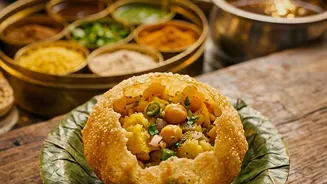
Each city in Rajasthan offers its own unique culinary stops. In Jaipur, you can find everything from street-style thalis at Mahaveer Rabri Bhandar to fine-dining experiences at palace hotels. Chokhi Dhani offers a cultural village setting for its traditional meal. Jodhpur, the Blue City, is famous for its Mawa Kachori and robust Marwari flavours. Udaipur, with its lakeside palaces, is renowned for its regal dining experiences where the ambience is as much a part of the feast as the food itself. Whether you seek a quick lunch or a decadent dinner, the state's cities are dotted with 'bhojnalayas' (vegetarian restaurants) that keep the tradition alive.