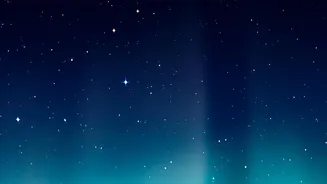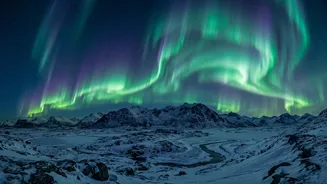




The ethereal dance of the aurora is one of nature's greatest spectacles. For decades, we've seen it not just as beautiful, but as a direct warning of space weather that can cripple power grids. But new research is challenging this long-held view.
The Traditional Warning Sign
For as
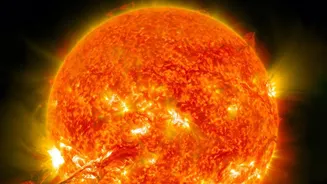
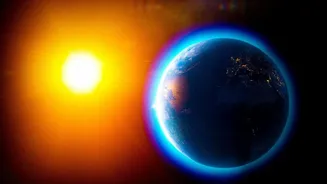
long as we have operated national power grids, the rule of thumb has been simple: a brighter aurora means bigger trouble. The logic seemed sound. A powerful solar storm, like a coronal mass ejection, slams into Earth’s magnetic field, transferring huge amounts of energy. This energy excites particles in our upper atmosphere to create the beautiful auroral lights. At the same time, this interaction was thought to reliably generate geomagnetically induced currents (GICs) on the ground—rogue electrical currents that can flow into long conductors like power lines, overload transformers, and cause widespread blackouts. Famous outages, like the one in Québec in March 1989 that left six million people in the dark, were accompanied by spectacular auroras, cementing the connection in our minds. The aurora became a visual proxy for invisible danger.
A Deceptive Dazzle
However, recent findings are showing that this connection is not as direct as we once believed. New research combining satellite data with ground-based magnetic field measurements reveals a more complex picture. Scientists have found that the most visually stunning auroral displays do not always correlate with the strongest and most dangerous GICs on the ground. While the two phenomena are born from the same solar event, they are not perfect twins. One recent study highlighted that while an aurora may be brilliant overhead, the magnetic disturbances at ground level can vary dramatically over just tens of kilometres. This means a spectacular light show in one area doesn't guarantee a high-risk situation for the grid directly below. The aurora, it turns out, can sometimes be a deceptive guide to the true level of geomagnetic threat.
The Science Behind the Mismatch
The reason for this disconnect lies in the different types of electrical currents generated during a geomagnetic storm. The brilliant, fast-moving curtains of light we see are primarily caused by energetic particles (electrons) raining down Earth’s magnetic field lines and colliding with atoms in the upper atmosphere. These are driven by what are known as field-aligned currents. However, the dangerous GICs that threaten our infrastructure are mainly induced by large-scale, and often more slowly changing, electrical currents flowing horizontally through the ionosphere, known as the auroral electrojet. The new research shows that the intensity of the particle precipitation that causes a bright aurora doesn't always scale with the strength of these grid-threatening electrojets. Furthermore, local ground conductivity, which depends on geology and even soil moisture, plays a huge role in determining how severe GICs will be in a specific location, a factor the visible aurora cannot account for.
Rethinking Our Defenses
This updated understanding has critical implications for how we protect our infrastructure. Grid operators and space weather forecasters can no longer rely on aurora intensity as a primary shorthand for grid risk. The focus must shift to more direct and nuanced measurements. Instead of just asking 'How bright will the aurora be?', the crucial question becomes 'What are the characteristics of the magnetic field changes on the ground?'. This requires a greater reliance on widespread networks of ground-based magnetometers, which measure the magnetic field directly, rather than just auroral forecasts. This doesn't mean a major aurora isn't a cause for concern—it absolutely remains a key indicator of a significant geomagnetic storm. It simply means that it is not the full story, and a lack of a spectacular aurora doesn't guarantee safety, nor does a brilliant one guarantee a catastrophe for the grid.
The Future of Space Weather Prediction
This research is pushing the scientific community to refine its forecasting models. The goal is now to move beyond predicting the overall intensity of a storm, often measured by the Kp index, and towards forecasting the specific regional impacts on the ground. By better understanding the complex chain of events from a solar eruption to the currents flowing beneath our feet, scientists hope to provide more precise and actionable warnings. It's a crucial step in building resilience for our increasingly tech-reliant society. As our world becomes more interconnected through power grids, pipelines, and communication networks, being able to distinguish between a beautiful but relatively harmless light show and a genuinely hazardous geomagnetic event is more important than ever. This work ensures we are better prepared to keep the lights on, no matter how brightly the sky above may glow.