
A Hero's Sacrifice
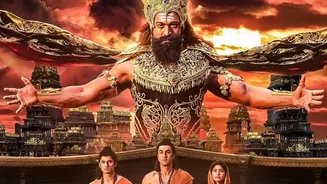
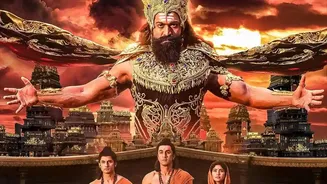
In the epic Ramayana, Jatayu is a noble and powerful vulture king, a friend to Lord Rama's father, Dasharatha. His defining moment comes when he witnesses the demon king Ravana abducting Sita, Rama's wife, in his flying chariot. Despite his old age, Jatayu intervenes,
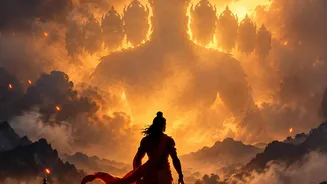
fighting valiantly to stop Ravana. A fierce battle ensues high in the sky, but Ravana, with his powerful sword, ultimately clips Jatayu's wings. Mortally wounded, Jatayu falls to the earth, but he lives long enough to inform Rama and his brother Lakshmana of Sita's abduction and the direction of Ravana's flight, providing a crucial lead in their quest. Rama, in a moving gesture, performs Jatayu's final rites as he would for his own father.
The Fall in Kerala
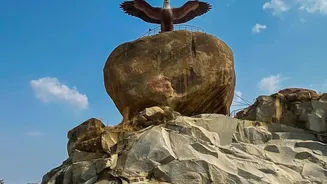
According to local lore in Kerala, Jatayu fell upon a large rock in the village of Chadayamangalam. Today, this site is home to the Jatayu Earth's Center, a sprawling 65-acre eco-tourism park that blends mythology with adventure. Its centrepiece is a colossal concrete sculpture of the fallen hero, measuring 200 feet long, 150 feet wide, and 70 feet high, making it the world's largest bird sculpture. Designed by filmmaker and sculptor Rajiv Anchal, the statue depicts Jatayu on his back, wings spread, in his final moments. The site, which aims to honour women's safety and honour, also features a museum, a 6D theatre narrating the story, and a cable car to ascend the hill.
The Last Rites in Andhra Pradesh
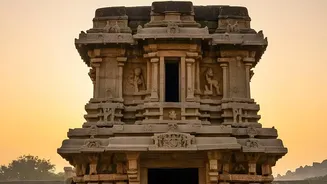
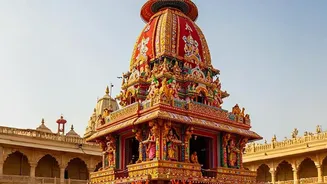
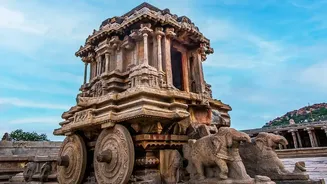
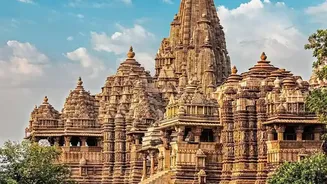
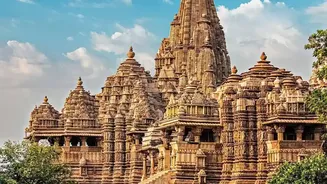
Another state lays a strong claim to a key part of the Jatayu legend. In Andhra Pradesh, the village of Lepakshi is believed by many to be the place where the dying Jatayu was found by Rama. The very name 'Lepakshi' is said to derive from Rama's compassionate words in Telugu, 'Le, Pakshi' — meaning 'Rise, bird'. Located just a few hours' drive from Bangalore, this site is home to the historic Veerabhadra Temple, a marvel of Vijayanagara architecture. Near the temple complex is another large statue of Jatayu, and local tradition also points to a large footprint in the rock, believed by some to belong to Sita.
A Tale of Two Sites
The existence of multiple sites tied to the same legend does not dilute their significance but rather highlights the deep cultural penetration of the Ramayana across India. While Chadayamangalam in Kerala commemorates the fall of Jatayu with a modern, monumental sculpture, Lepakshi in Andhra Pradesh honours the moment of his salvation with ancient temple lore and etymology. Each offers a different but equally powerful experience for visitors. Chadayamangalam provides a modern, immersive tourist experience complete with adventure activities, while Lepakshi offers a journey into ancient history, art, and spirituality. The sites are not in competition but are complementary parts of a larger mythological map.
Weaving Myths into Modern Travel
These locations are key stops on what is informally and formally known as the 'Ramayana Circuit', a trail of pilgrimage sites across India linked to the epic. The Indian government's tourism ministry has even included the Ramayana Circuit in its development schemes, improving infrastructure to make these places more accessible to pilgrims and tourists alike. By visiting places like Jatayu Earth's Center and Lepakshi, travellers are not just seeing a sculpture or a temple; they are stepping into a story that has shaped the cultural and spiritual identity of India for millennia. These sites are a testament to how legends endure, transforming rock and earth into sacred ground and providing a powerful backstory for any Indian itinerary.