



Ghugni: The Hearty Welcome
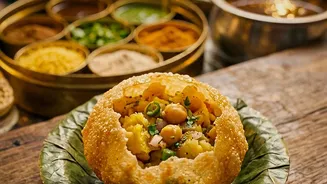
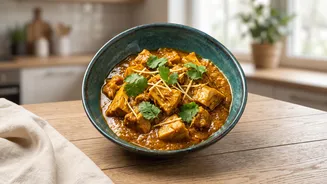
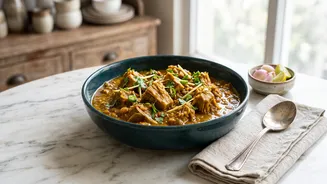
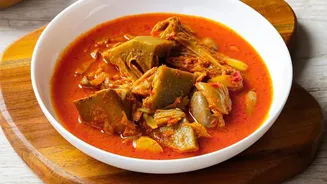
No Bijoya gathering feels complete without a bowl of warm Ghugni. This beloved Bengali dish is a thick, savoury curry made from dried yellow or white peas. It is slow-cooked with a medley of spices, often without onion or garlic, making it a perfect 'niramish'
(vegetarian) offering suitable for the occasion. The magic of ghugni lies in its garnish; a sprinkle of chopped onions, fresh coriander, green chillies, and sometimes pieces of fried coconut elevates it from a simple pea curry to a complex, multi-textured delight. Often served with Luchi or Nimki, it’s the ultimate comfort food that instantly makes guests feel at home.
Nimki: The Savoury Crunch
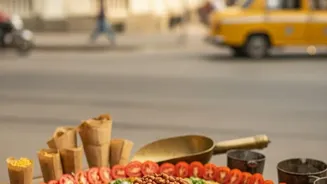
Nimki is the quintessential Bengali savoury pastry, a non-negotiable part of the Bijoya platter. These diamond-shaped, deep-fried crackers are made from a simple dough of flour, water, salt, and kalonji (nigella seeds), which gives them their distinctive flavour. They can be small and bite-sized ('kucho nimki') or larger and flakier. The beauty of nimki lies in its versatility and satisfying crunch. It's the perfect accompaniment to a hot cup of tea, a scoop of ghugni, or simply to be munched on its own while conversations flow. Making a large batch is a common practice, as these treats are exchanged between households throughout the festive period.
Luchi and Cholar Dal: A Divine Combination
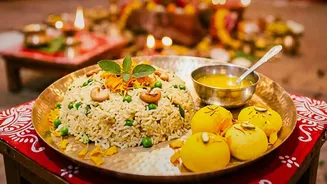
For a more substantial offering, many hosts serve the heavenly pairing of Luchi and Cholar Dal. Luchi are deep-fried, fluffy white breads made from maida (refined flour) that puff up like small balloons. They are served alongside Cholar Dal, a subtly sweet and fragrant lentil curry made from chana dal (split Bengal gram). This dal is unique because it's typically cooked with chunks of coconut, raisins, and aromatic whole spices like cinnamon and cardamom, striking a perfect balance between sweet and savoury. It's a classic festive combination that is especially popular for breakfast or as a filling snack for visiting relatives.
Narkel Naru: The Sweet Taste of Tradition
Bijoya is synonymous with 'mishtimukh' (making the mouth sweet), and Narkel Naru is at the heart of this tradition. These delightful little balls are essentially coconut ladoos, a symbol of love and festivity in every Bengali household. They come in two main varieties: one made with jaggery ('gurer naru'), which is soft and brownish, and another made with sugar ('chinir naru'), which is harder and white. The process of grating the coconut and rolling the narus is often a communal family activity, filling the home with a sweet, festive aroma and nostalgia.
Malpua: The Syrupy Indulgence
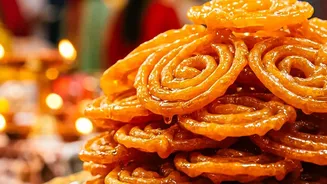
Malpua is a decadent, pancake-like dessert that frequently graces the Bijoya table. A batter of flour, semolina (suji), and sometimes mashed banana or milk is deep-fried until the edges are crisp and the centre is soft. These golden discs are then soaked in a fragrant sugar syrup infused with cardamom or saffron. The result is a sweet, syrupy, and utterly indulgent treat. While popular across India, the Bengali version is a festive staple, representing joy and abundance. Its rich flavour and satisfying texture make it a guaranteed favourite among guests of all ages.
Mihidana: The Tiny Drops of Sweetness
Often described as the smaller, more delicate cousin of boondi, Mihidana is another iconic Bengali sweet. It consists of tiny, golden droplets made from a batter of powdered rice and gram flour, which are fried in ghee and then soaked in sugar syrup. The name itself translates to 'fine grain', a perfect description of its texture. Though it originates from Bardhaman, Mihidana has become a beloved sweet across Bengal, especially during festivals. Its unique texture and light sweetness provide a different kind of pleasure compared to the more common sandesh or rosogolla, making it a sophisticated addition to any Bijoya spread.
Assorted Sandesh: The Classic Finale
A Bijoya platter would be incomplete without Sandesh. This iconic Bengali sweet is crafted from fresh chhena (Indian cottage cheese) and sugar or jaggery. What makes it so special is the sheer variety. It can be soft ('norom paak') or hard ('kora paak'), and can be infused with an array of flavours like cardamom, saffron, pistachio, or mango. Many families take pride in making their own Sandesh, moulding it into beautiful shapes that are almost too pretty to eat. Offering a selection of different Sandesh is a classic gesture of hospitality, providing a perfect, elegant finale to the festive snacking.