


Kolkata: The Grand Heartbeat of Pujo
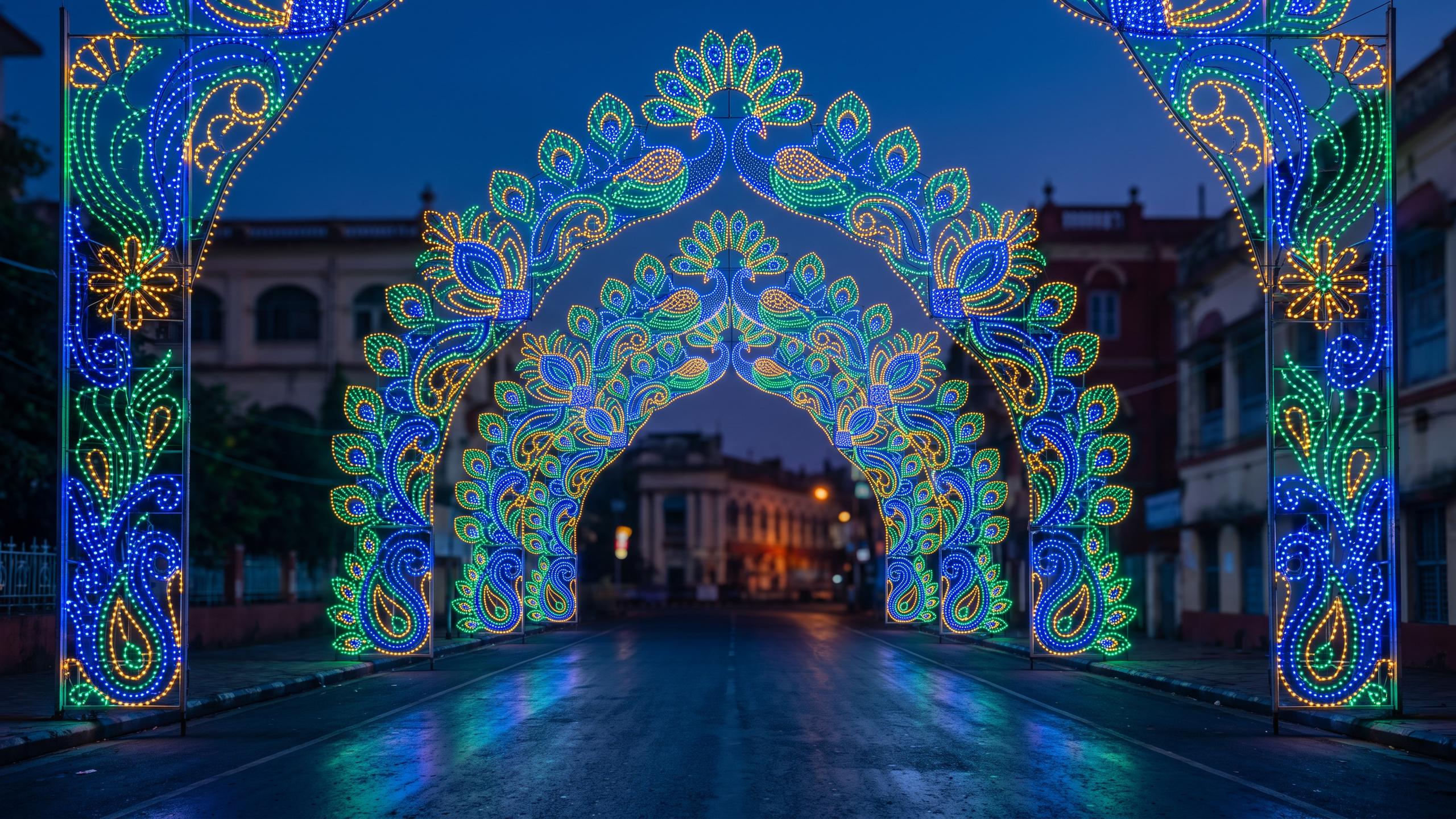
In Kolkata, Durga Puja transcends religion to become a city-wide art festival and cultural carnival. The celebration here, recognised by UNESCO as an Intangible Cultural Heritage, is defined by its sheer scale and artistic competition. Neighbourhoods,
or 'paras', vie for awards with elaborate 'theme' pandals that can replicate anything from the Vatican City to a Rajasthani palace, often built with unconventional materials. These temporary architectural marvels house meticulously crafted idols that are themselves works of art. The entire city effectively shuts down for five days of 'pandal hopping', feasting, and cultural programmes that last late into the night. The air thrums with the constant beat of the dhak (a traditional drum) and the energy of millions on the streets, making it an immersive, electrifying experience that is the benchmark for all other celebrations.
Delhi: A Reverent Slice of Bengal
In the nation's capital, Durga Puja finds its most authentic expression in Chittaranjan Park, fondly known as 'mini-Kolkata'. Established by Bengali families who migrated to the city, CR Park's celebrations are deeply rooted in tradition and community. The focus here is less on avant-garde themes and more on recreating the nostalgic, traditional atmosphere of a Bengali 'parar pujo'. The pandals are grand but stick to more conventional aesthetics, and the rituals, from the morning 'pushpanjali' to the evening 'dhunuchi naach', are observed with great devotion. Food is a massive draw, with stalls serving everything from Kolkata-style street food to the sacred 'khichuri bhog'. For the Bengali diaspora in Delhi, CR Park’s Puja is a powerful cultural anchor, a meticulously preserved piece of home.
Mumbai: A Blend of Glamour and Community
Mumbai’s Durga Puja celebrations mirror the city's own character: a mix of dazzling glamour and steadfast tradition. The festival is famous for its celebrity-backed pandals, particularly in areas like Juhu and Andheri, where Bollywood stars are often seen participating in rituals and even serving bhog. These high-profile events, like the North Bombay Sarbojanin Durga Samiti puja, attract significant media attention and large crowds. Alongside the glitz, Mumbai is also home to some of the oldest and most traditional pujas in the country, such as the one hosted by the Bengal Club at Shivaji Park and the Ramakrishna Mission in Khar. These pandals focus on preserving age-old customs, including the Kumari Puja, where young girls are worshipped as manifestations of the goddess. The immersion processions on the final day at beaches like Juhu add a uniquely coastal flavour to the festivities.
Bengaluru: A Hub for the Modern Migrant
In Bengaluru, Durga Puja is a festival driven by the city's large and growing population of migrant professionals. While some celebrations date back over 70 years, the scale has expanded dramatically with the IT boom. The pujas here are less about neighbourhood rivalries and more about creating a sense of community for those living away from home. Bengali cultural associations organise large-scale events in convention centres and community halls, which become weekend hubs for Bengalis and non-Bengalis alike. The atmosphere is a blend of religious observance and cultural fair, with prominent stages for music, dance, and drama performances alongside rows of food stalls serving Bengali delicacies. Celebrations in areas like Koramangala, HSR Layout, and Sarjapur Road are a testament to how traditions are being adapted and passed on in India's modern, multicultural urban centres.