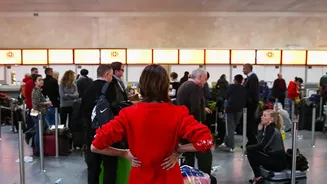







Planning an international trip? The Middle East, a critical corridor for global aviation, is currently a zone of uncertainty. This has a direct impact on Indian travellers, from those flying to the West to those visiting the Gulf itself.
What's Fuelling the Uncertainty?
Ongoing geopolitical
tensions and conflicts have made flying over parts of the Middle East a complex issue. Since early 2026, military actions involving Iran, Israel, and the US, along with attacks by Houthi forces, have led to airspace closures and heightened risks. This has prompted aviation authorities like the European Union Aviation Safety Agency (EASA) to issue advisories recommending that airlines avoid Iranian and Iraqi airspace. As a result, what was once a predictable sky-highway is now a patchwork of restrictions, forcing airlines to make difficult decisions daily. Even airports in normally stable hubs like Dubai and Riyadh have faced disruptions, with thousands of cancellations since the crisis began.
Longer Flights and Higher Fares
For Indian travellers, the most immediate consequences are longer flight times and more expensive tickets. Flights to Europe and North America that used to take the most direct path over the Middle East are now being rerouted. These detours can add anywhere from 30 to 90 minutes, and sometimes more, to a journey. Longer routes mean more fuel is burned, and these costs are being passed on to passengers. Compounding the issue, the regional instability has caused global jet fuel prices to spike, with some reports noting prices have doubled. Airlines, hesitant to lock in these high fuel costs, are warning that fares for 2027 could rise by as much as 15-20% as their previous, cheaper fuel hedges expire.
Which Airlines and Routes Are Affected?
The disruption is widespread, affecting both Indian and international carriers. Air India and IndiGo have had to cancel services to Saudi Arabia at various points. Many European airlines, including Lufthansa, KLM, and British Airways, have repeatedly suspended or pushed back the resumption of flights to key hubs like Dubai, Riyadh, and Amman. Even major Asian carriers like Cathay Pacific have suspended services to the region for extended periods. The situation remains fluid, with carriers like Emirates and flydubai also adjusting schedules based on daily security assessments. This makes booking a flight a game of constant monitoring, as schedules can change with little warning.
The Challenge with Travel Insurance
Unfortunately, relying on standard travel insurance for protection against these disruptions is risky. Most basic policies explicitly exclude cancellations or interruptions caused by 'acts of war', military action, or civil unrest. This means if your flight is cancelled due to an airspace closure related to conflict, you likely won't be covered for your non-refundable trip costs under a standard plan. To get that level of protection, you typically need to purchase a 'Cancel For Any Reason' (CFAR) upgrade. This addon, which is more expensive and must be bought within a few weeks of your initial trip payment, allows you to cancel for reasons not covered by standard policies, though it usually only reimburses 50–75% of your costs.
How to Plan Your Travel Now
Given the unpredictable environment, careful planning is more critical than ever. First, stay informed. Before booking, check the latest travel advisories from official sources, such as India's Ministry of External Affairs, which has previously advised against non–essential travel to conflict zones like Iran. When you book, prioritize flexibility. Opt for fares that allow changes or cancellations, even if they cost a bit more. Communicate directly with your airline for the most current flight status before heading to the airport. Consider routes that bypass the most volatile regions, even if it means a slightly longer trip. Finally, thoroughly review the fine print of any travel insurance policy before you buy it to understand exactly what is and isn't covered.