


The Evening Star Shines Bright
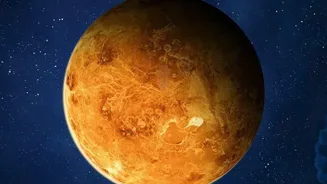
Throughout August 2026, Venus will reign as the magnificent 'Evening Star', visible in the western sky shortly after the sun goes down. Its brilliance is hard to miss; it will be the first star-like object to appear in the twilight and will be brighter
than any other planet or star. This period of excellent visibility is thanks to its position in its orbit relative to Earth and the Sun. The planet will be traversing the constellation of Virgo, offering a beautiful celestial backdrop for your viewing.
When and Where to Look
The best time to observe Venus is in the western sky during the evening twilight, roughly 45 to 90 minutes after sunset. For viewers across India, looking towards the west as the sky begins to darken will reveal the planet as a stunningly bright, white beacon. On August 15, Venus reaches its greatest eastern elongation, meaning it will be at its farthest apparent distance from the Sun in the sky, making it particularly well-placed for observation. It will remain a prominent evening object for the entire month.
A Celestial Dance with the Moon and a Star
August offers some special alignments to watch for. Around August 15 and 16, a beautiful thin crescent Moon will join Venus in the sky, creating a breathtaking photo opportunity. The Moon will appear near the dazzling planet, a sight easily visible to the naked eye. During this time, the bright star Spica, the most luminous star in the constellation Virgo, will also be nearby, forming a lovely celestial trio. Throughout the latter half of August, you can watch Venus draw closer to Spica each evening, heading for an even closer conjunction in early September.
What You Can See with Binoculars
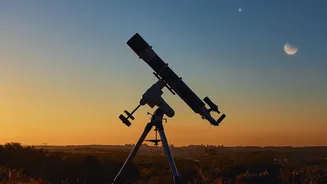
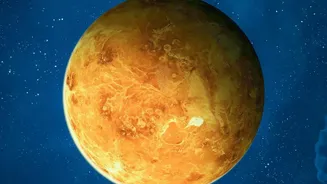
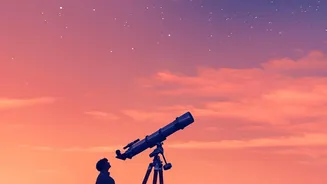
While Venus is stunning with just your eyes, a pair of binoculars or a small telescope will reveal a fascinating detail: its phase. Just like our Moon, Venus goes through phases. During August 2026, Venus will appear as a tiny crescent. Around mid-August, the planet will be about 49-50% illuminated, similar to a quarter moon, an event astronomers call dichotomy. As the month progresses, this crescent will become thinner, even as the planet's apparent size in the sky grows, making it a dynamic and rewarding target for those with simple optical aid.
Tips for the Best Viewing Experience
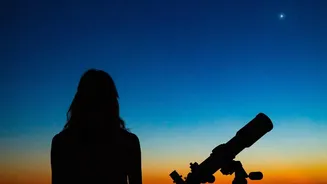
To make the most of your Venus-gazing sessions, find a location with a clear, unobstructed view of the western horizon. While Venus is bright enough to be seen from cities, getting away from the worst of the city lights will always enhance the experience. Give your eyes about 15-20 minutes to adapt to the darkness to see more stars and appreciate the context of Venus in the night sky. No special equipment is needed to enjoy the planet's brilliant appearance or its dance with the Moon, but a steady pair of binoculars will certainly enrich your view by revealing its crescent shape.