



The Latest Successful Leap
The Indian Space Research Organisation (ISRO) recently completed the third and final Reusable Launch Vehicle (RLV) Landing Experiment (LEX-03). In the test, conducted at the Aeronautical Test Range in Chitradurga, Karnataka, the winged vehicle named 'Pushpak'
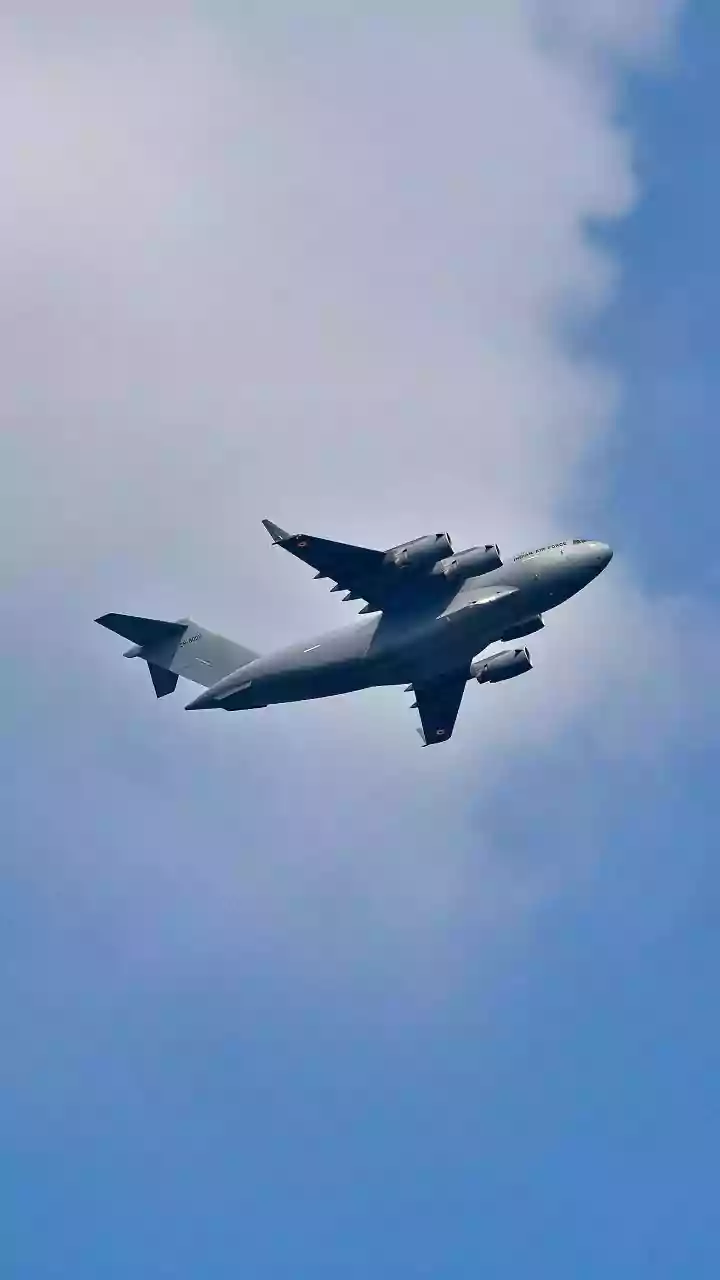
was lifted to an altitude of 4.5 km by an Indian Air Force Chinook helicopter and released. From there, Pushpak autonomously navigated a challenging flight path with severe wind conditions, executed a perfect horizontal landing on a runway, and used its brake parachute and landing gear to come to a halt. This successful trial simulated the high-speed, unmanned landing conditions of a vehicle returning from orbit, proving the robustness of its indigenously developed navigation, control, and deceleration systems.
Meet Pushpak: India’s Space Plane
Named after the mythical flying palace from the Ramayana, Pushpak is ISRO’s answer to the challenge of reusable rocketry. Unlike the vertically landing rockets popularized by companies like SpaceX, Pushpak is a winged vehicle designed to land on a runway like a conventional aircraft. This technology demonstrator is a crucial testbed for a future where ISRO can launch a Two-Stage-To-Orbit (TSTO) vehicle. In this concept, the first and most expensive stage of a rocket, containing the powerful engines, would fly itself back to a runway after separating. It could then be refurbished, refuelled, and readied for another launch, turning a single-use rocket into a reusable space plane.
Why Reusability Is a Game-Changer
For decades, space launches have operated on a use-and-throw model. Every rocket, a marvel of engineering worth crores, was discarded after a single flight. Reusability fundamentally changes this economic equation. By recovering and reusing the most expensive components of the launch vehicle, ISRO aims to drastically reduce the cost of putting a satellite into orbit. The stated goal is to slash the cost per kilogram of payload by up to 80%, potentially bringing it down from current levels to a fraction of the price. This wouldn't just make existing missions cheaper; it would open up space for a whole new range of applications, from satellite mega-constellations to in-orbit servicing and even space tourism, making launches more like routine airline flights.
The ISRO Edge: Frugal Innovation
ISRO's approach to this high-tech challenge is built on its well-established philosophy of 'frugal innovation'. The entire RLV project is a testament to developing cutting-edge technology in-house, which significantly reduces reliance on expensive foreign components and licensing. This culture of cost-effectiveness, simplifying complex systems, and maximising output from every component has allowed ISRO to achieve major milestones, like the Mars Orbiter Mission and Chandrayaan-3, at costs that are the envy of the global space community. The Pushpak program is no different, aiming to deliver a world-class reusable system that is not just technologically advanced but also commercially competitive on a global scale. India is aiming to grow its share of the global satellite launch market fivefold in the coming decade, and affordable launch is the key.
The Road Ahead for Reusable Rockets
With the successful completion of the landing experiment series, ISRO has validated the most critical technologies needed for an orbital re-entry. The journey, however, is far from over. These tests used a scaled-down technology demonstrator. The next phase involves developing a full-scale orbital vehicle that can withstand the extreme heat and pressures of re-entering Earth's atmosphere from space at hypersonic speeds. This will involve further tests, including the development of air-breathing propulsion systems and eventually an orbital flight. While an operational reusable rocket is still several years away, the success of Pushpak's landing trials confirms that ISRO is on the right trajectory to make affordable and sustainable access to space a reality for India, underpinning future ambitions like the Bharatiya Antariksh Station.