





Day 1: Arrival in Aurangabad and Local Immersion
Arrive at Aurangabad (Chhatrapati Sambhajinagar), the gateway to the caves. The city has its own airport and is well-connected by rail and road. After checking into your hotel, spend the afternoon exploring the city's Mughal-era marvels. First, visit
the Bibi Ka Maqbara, a stunning mausoleum built in the 17th century that bears a striking resemblance to the Taj Mahal. Often called the 'Taj of the Deccan', its intricate designs and gardens offer a peaceful introduction to the region's history. Later, visit Panchakki, a fascinating 17th-century water mill complex that showcases the engineering ingenuity of the time. It’s a serene spot with a garden and a tomb, perfect for a gentle evening.
Day 2: The Unforgettable Ajanta Caves
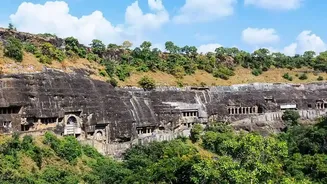
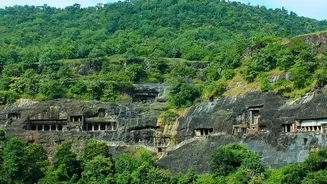
Dedicate the entire day to the Ajanta Caves, located about 100 km from Aurangabad. An early start is essential, as the drive takes 2.5 to 3 hours. The Ajanta complex consists of around 30 rock-cut Buddhist caves, famed for their exquisite murals and sculptures that date back to the 2nd century BCE. These paintings, depicting the life of Buddha and Jataka tales, are among the finest surviving examples of ancient Indian art. Plan to spend at least three to four hours exploring key caves like 1, 2, 16, and 17, which house the most significant artwork. Remember that the Ajanta Caves are closed every Monday.
Day 3: The Architectural Grandeur of Ellora
Today, journey to the Ellora Caves, a shorter drive of about 30 km from Aurangabad. This UNESCO World Heritage site is a unique complex of 34 caves representing Hindu, Buddhist, and Jain traditions, carved between the 6th and 10th centuries CE. The undisputed highlight is Cave 16, the Kailasa Temple—an enormous monolithic temple complex carved top-down from a single rock. It's a breathtaking feat of architecture that demands unhurried attention. Allow four to six hours to explore Ellora's diverse religious artistry without rushing. On the way, consider a stop at the Grishneshwar Jyotirlinga Temple, one of the 12 sacred Shiva shrines in India, located just 1 km from the caves. The Ellora Caves are closed every Tuesday.
Day 4: Forts, Tombs, and City Sights
Use this day to explore the other historical gems around Aurangabad. Start with a trip to Daulatabad Fort, an imposing 12th-century fortress situated on a conical hill. Its formidable defences, including a moat and a labyrinthine dark passage, make it a fascinating climb. Plan for at least half a day here. Afterwards, head to the nearby town of Khuldabad, known as the 'Valley of Saints', to see the simple tomb of the Mughal emperor Aurangzeb. Depending on your interest, you can also visit the Aurangabad Caves, a smaller and less-crowded set of 12 Buddhist caves carved into the hills.
Day 5: Handicrafts and Departure
Spend your final morning shopping for local handicrafts. Aurangabad is famous for its Himroo shawls and Paithani silk sarees, known for their intricate designs inspired by Ajanta's art. Gul Mandi is one of the city's largest markets where you can find these textiles. You can also look for beautiful Bidriware, a metal handicraft inlaid with silver and gold. After a final taste of local Maharashtrian cuisine, proceed to the airport or railway station for your departure, concluding a rich journey through history and art.
Essential Travel Tips
The best time to visit is between October and March, when the weather is cool and pleasant. The summer months of April to June can be extremely hot. Always double-check the closing days for Ajanta (Monday) and Ellora (Tuesday) before planning your daily schedule. Hiring a car with a driver is the most convenient way to travel between sites. Wear comfortable walking shoes, as exploring the caves involves a lot of walking and some climbing.