







The Golden Rule: How Much Sun Is Enough?
The story of a sweet strawberry begins with the sun. To produce the energy needed for flowers and fruit, strawberry plants require at least six to eight hours of direct sunlight each day. This isn't just about survival; it's about flavour. Photosynthesis,
the process fuelled by sunlight, is how the plant creates sugars. More sun exposure generally leads to a larger and sweeter crop of berries. Plants that receive less than six hours may still produce lush green leaves, but you'll likely be disappointed by a lack of fruit or berries that are small and tart. Think of sunlight as the main ingredient for sweetness.
Your Balcony's Solar Map
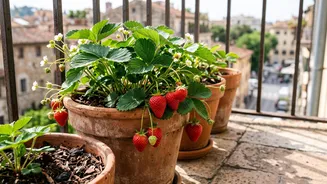
Not all sunlight is created equal, especially on a balcony. Before you place your pots, spend a day observing how the sun moves across your space. A south-facing balcony is often ideal in India as it typically receives the most consistent light. Morning sun is generally preferable as it's less intense and helps dry dew off the leaves, which can prevent fungal diseases. In hotter climates, the harsh afternoon sun can be stressful for potted plants, causing them to wilt or even scorch. If your balcony gets intense afternoon heat, providing some light shade during the hottest part of the day can be beneficial. The mobility of pots is your greatest advantage—don't be afraid to move them to find that perfect spot.
Choosing the Right Pot and Plant
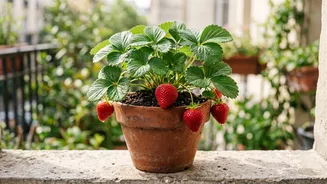
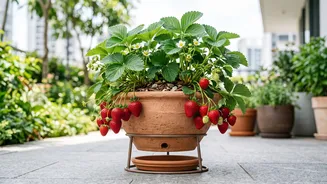
Your choice of container and strawberry variety can make a big difference. For balconies, everbearing or day-neutral varieties are excellent choices as they produce fruit throughout the season, giving you a steady supply. In India, varieties like Chandler, Sweet Charlie, and Festival have shown good results in various conditions. Your pot should be at least 8 to 12 inches deep and wide, with plenty of drainage holes. Strawberries have shallow roots and dislike waterlogged soil, which can lead to root rot. Terracotta pots are a good option as they are porous and allow soil to breathe, though they may require more frequent watering than plastic.
The Foundation: Soil and Planting Depth
Sunlight can't do its job without a good foundation. Never use heavy garden soil in your pots, as it compacts easily and suffocates the roots. Instead, use a high-quality potting mix designed for containers, blended with compost to add nutrients. When planting, getting the depth right is crucial. Look for the 'crown' of the plant—the point where the roots meet the leaves. This crown must sit exactly at soil level. If you bury it too deep, the plant will likely rot; if it's too high, the roots can dry out. Proper planting ensures the plant can efficiently use the sunlight you've so carefully provided.
Watering and Feeding Your Sun-Kissed Plants
Potted plants, especially those in full sun, dry out much faster than those in the ground. Check the soil daily by poking your finger an inch or two deep. If it feels dry, it's time to water. Water the soil directly at the base of the plant, avoiding the leaves and fruit to discourage disease. Because nutrients leach out of pots with each watering, you'll need to fertilize your strawberries regularly. During the growing season, a balanced liquid fertilizer applied every two to four weeks will provide the energy needed to support the fruit production that ample sunlight makes possible.