


Why the Rush? The Fleeting Bloom
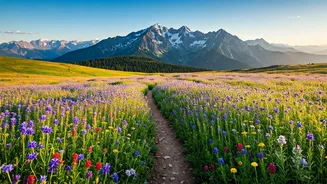
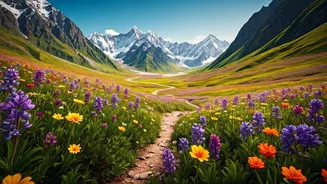
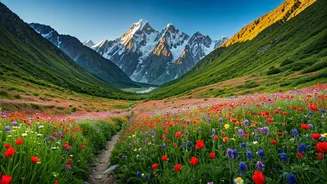
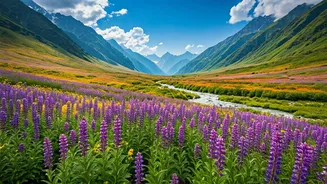
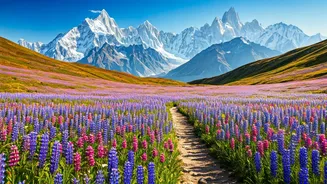
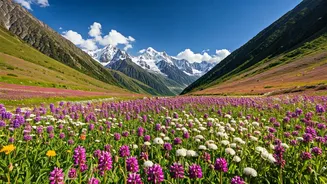
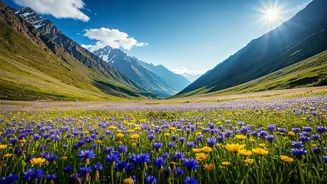
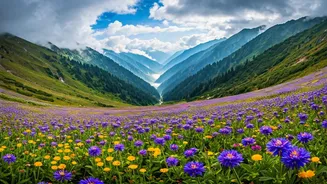
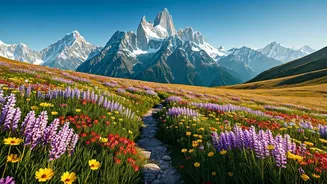
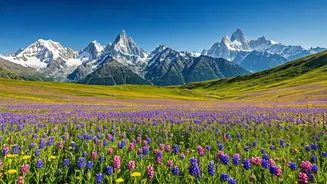
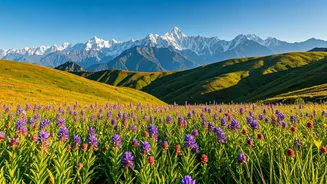
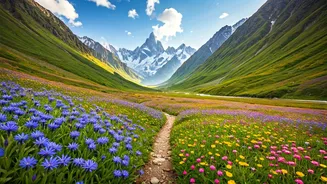
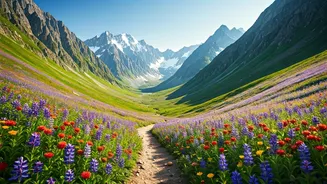
Imagine a high-altitude Himalayan valley, carpeted with hundreds of species of flowers, creating a vibrant mosaic of colour against a backdrop of snow-capped peaks. This is Bhyundar Valley, popularly known as the Valley of Flowers. This natural wonder
comes alive during the monsoon, from June to October. However, the 'peak bloom'—the period when the floral density and diversity are at their absolute zenith—is a much shorter, more magical window. This typically happens from mid-July to mid-August. Right now, the valley is a living canvas painted with balsam, geraniums, potentillas, and the elusive blue poppy. But as August progresses, the monsoon's intensity lessens, and the flowers begin their slow retreat, paving the way for the autumnal hues of September. To witness the valley in its most spectacular, almost-unreal state, the time to act is now.
More Than a Pretty View
Declared a UNESCO World Heritage Site, the Valley of Flowers National Park is more than just a beautiful trek; it's a unique botanical and ecological marvel. According to legend, this is the place from where Hanuman collected the Sanjeevani Buti. The valley is home to rare and endangered animals like the Asiatic black bear, snow leopard, and blue sheep, though sightings are rare. Its true stars are the endemic alpine flowers. The park stretches over 87 square kilometres, but the core valley is a 10-kilometre-long glacier corridor. The protection it receives means the ecosystem is pristine. When you walk its paths, you aren't just taking a holiday; you are stepping into a fragile, high-altitude ecosystem that has remained unchanged for centuries, a living library of biodiversity.
The Journey to Paradise
The trek to the Valley of Flowers is as enchanting as the destination itself. The journey begins at Govindghat, a small town near Joshimath. From here, it's a 14-kilometre trek to Ghangaria, the base camp for the valley. While you can opt for a pony or porter service, the walk itself is beautiful, winding alongside the gushing Pushpawati River. Ghangaria is a bustling little hamlet that comes to life during the trekking season, offering basic accommodation and food. An essential day for acclimatisation at Ghangaria is highly recommended. The actual trek into the Valley of Flowers from Ghangaria is a relatively gentle 3-kilometre walk. You’ll pass through dense forests and cross a small bridge before the valley opens up in front of you, revealing its floral treasures.
A Day in the Valley
Entering the valley is a sensory overload in the best possible way. The air is thick with the scent of a thousand different blooms, and the sound is a gentle hum of insects and the distant rush of water. The path is well-defined but allows you to wander and explore. You are not allowed to camp inside the valley, so visitors must enter and exit on the same day, which gives you about six hours to soak it all in. This is ample time to walk deep into the valley, find a quiet spot by the river, and simply be present. Remember, plucking flowers is strictly forbidden. The motto here is to take only pictures and leave only footprints. Many trekkers also use Ghangaria as a base to visit the revered Hemkund Sahib, a high-altitude Sikh gurudwara located by a glacial lake, which is a much steeper and more challenging climb.
Your Quick-Start Trekking Guide
Ready to pack your bags? Here's what you need to know. Getting there: The nearest airport is Jolly Grant in Dehradun, and the closest major railway station is in Rishikesh. From there, it's a long road journey to Govindghat. Permits: You'll need a permit to enter the Valley of Flowers, which can be obtained at the entrance gate. It is valid for three days. Difficulty: The trek is considered moderate. It doesn’t require technical climbing skills, but a good level of fitness is essential due to the altitude and daily walking distances. What to Pack: Sturdy, waterproof trekking shoes are non-negotiable. Pack layers of warm clothing, a robust raincoat or poncho (it will rain), a basic first-aid kit, sunscreen, and a reusable water bottle. Accommodation: Ghangaria has several guesthouses and a GMVN tourist rest house. It's wise to book in advance, especially during peak season.