


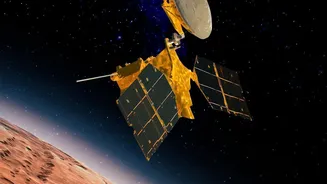
The Robot Advantage: Tireless and Resilient
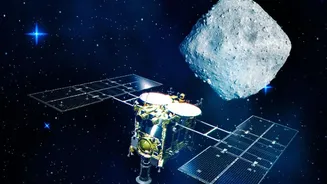
The case for robots is built on practicality and safety. Machines are immune to the biological dangers of space. They don’t need food, water, or a complex life support system, which dramatically reduces mission cost and complexity. They can be designed
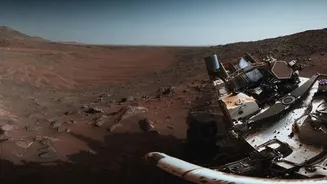
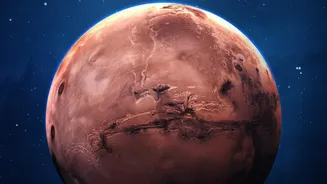
to withstand extreme temperatures and environments that would be lethal to a person. More importantly, they are expendable. The loss of a rover like Perseverance or Curiosity is a significant financial and scientific setback, but it is not a human tragedy. These robotic geologists can work tirelessly for years, analyzing soil, taking high-resolution images, and gathering data in ways that continuously expand our understanding of the Red Planet without risking human life. They serve as essential precursors, scouting locations and identifying resources that could one day support a human presence.
The Human Body in Crisis
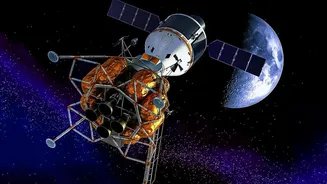
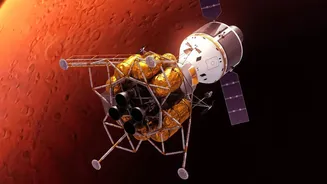
For humans, a trip to Mars is a journey fraught with peril, beginning with the body itself. The mission, which could take up to three years, exposes astronauts to a hostile environment. Outside the protection of Earth's magnetic field, space is saturated with galactic cosmic rays (GCRs) and solar radiation. These high-energy particles can pass through a spacecraft's hull, damaging DNA and cells. NASA considers the cancer risk from this exposure a potential 'showstopper' for a Mars mission, with studies suggesting the risk of dying from cancer due to the trip exceeds acceptable limits. Beyond cancer, radiation poses risks of cardiovascular disease and cognitive damage. This is compounded by the effects of microgravity, which leads to muscle atrophy, bone density loss, and vision problems.
An Unseen Toll: The Psychological Strain
The challenges aren't just physical. A multi-year mission to Mars would push human psychology to its limits. Astronauts would face unprecedented levels of isolation and confinement, millions of miles from home. Even with a carefully selected crew, the stress of living in a small, enclosed environment for years can lead to interpersonal tension, fatigue, and performance-impairing conditions like asthenia, which is characterized by weakness, irritability, and memory issues. Communication with Earth would have significant delays, eliminating the possibility of real-time psychological support and compounding the feeling of isolation. While space agencies are developing support systems, the mental resilience required for such a journey remains one of the mission's biggest unknowns.
The Case for Humanity: Intuition and Adaptability
Despite the immense risks, there are things only a human can do. While rovers are slow and must follow carefully planned instructions, a human explorer is adaptable and intuitive. A human geologist could achieve in minutes what might take a rover months, like digging a trench or breaking open a specific rock that catches their eye. This ability to react in real-time, to apply expertise and curiosity to unexpected discoveries, is invaluable. Many scientists argue that if we are serious about finding definitive proof of past microbial life on Mars, it will require humans on the ground to identify promising sites and analyze multiple samples with a level of nuance a robot cannot replicate. Humans explore; robots, for all their strengths, execute commands.