



The Perfect Plant for Beginners
Crassula ovata, the jade plant, is famously forgiving. As a succulent, it stores water in its fleshy leaves, making it resilient to neglect. This hardiness extends to propagation; a small piece is biologically programmed to grow into a new plant. Unlike
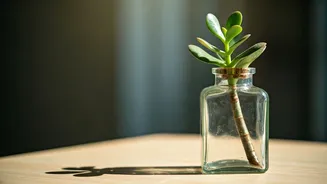
fussier plants that require specific hormones or sterile conditions, a jade clipping just needs a little time to sprout roots. This project is about witnessing nature’s resilience, turning one plant into many. The plump, glossy leaves provide a beautiful contrast to the clean glass of an apothecary jar.
Choosing Cuttings and Jars
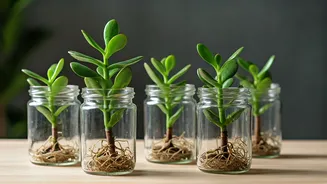
Success starts with a healthy parent plant. Using clean scissors, take a 3- to 5-inch cutting with at least two sets of leaves. Cut just below a leaf node (where leaves emerge) and gently remove the lowest pair of leaves to expose those nodes, as this is where roots will sprout. For your vessel, any clear glass apothecary jar will work. Choose a size that complements your cutting. The glass is key, as it lets you monitor root growth. Ensure the opening is wide enough for easy water changes and eventual removal of the rooted plant.
The Crucial Callousing Step
This is the one step you cannot skip. After cutting, resist placing it in water immediately, which causes rot. You must let the cut end 'callous over'. This means allowing it to dry and form a protective seal. Place your cuttings on a dry surface in a spot with bright, indirect light for three days to a week. You'll know it's ready when the cut end is dry to the touch and has formed a slightly hardened film. This simple act of patience dramatically increases your success rate.
Setting Up Your Propagation Jar
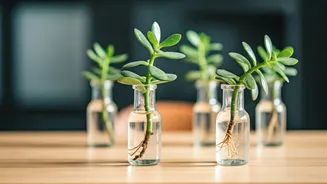
Once calloused, your cutting is ready. Fill your jar with enough room-temperature water to submerge the bottom inch of the stem, ensuring the exposed nodes are underwater but the leaves remain dry. Filtered or distilled water is ideal, but tap water left out for 24 hours also works. Place the jar in a location that receives plenty of bright, indirect sunlight. A windowsill without harsh afternoon sun is perfect. Direct sun can scorch the leaves and encourage algae growth in the water.
Patience, Maintenance, and Growth
Now, you wait. Tiny, white roots should emerge from the submerged nodes within two to four weeks. The key is simple maintenance. Change the water every five to seven days to keep it fresh and oxygenated. If the water becomes cloudy, change it immediately. When you refresh the water, you can gently rinse the stem and any emerging roots. Don't be discouraged if nothing seems to happen for a couple of weeks. As long as the stem and leaves remain firm and green, the process is working.
Transitioning from Water to Soil
While a jade cutting can survive in water, it won't thrive. Water lacks the nutrients essential for long-term growth. Once new roots are at least an inch long, it’s time to move it to a pot. Choose a small pot with a drainage hole and fill it with a well-draining succulent potting mix. Make a small hole and gently place the rooted cutting inside, burying the roots. Lightly pat the soil to secure it. Water thoroughly, letting excess drain completely. For the first week, keep the soil lightly moist to help the roots adjust, then switch to a typical succulent watering schedule.