




Your Smartphone is Your New Telescope
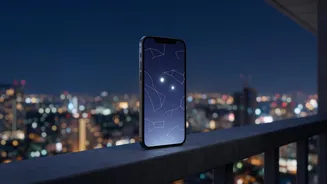
You don't need a bulky, expensive telescope to begin your cosmic journey. The powerful sensors and GPS in your phone are all you need to power a new generation of astronomy applications. These apps use augmented reality (AR) to overlay a map of the stars,
planets, and constellations directly onto your view of the sky. Simply point your phone upwards, and the app will identify exactly what you're looking at, from the brightest star to the most distant planet. It’s an intuitive and powerful way to demystify the night sky, turning a confusing canopy of lights into a familiar, navigable space. Many of these apps are free or offer highly capable free versions, making astronomy more accessible than ever.
Embracing the Urban Skyglow
The biggest challenge for any city-based astronomer is light pollution. The glow from streetlights, buildings, and traffic can wash out fainter stars, making the sky seem empty. But don't be discouraged. The brightest objects, including the Moon and the gas giant planets Jupiter and Saturn, are powerful enough to punch through the haze. You won't see the Milky Way in all its glory, but you can absolutely spot our planetary neighbours. To maximise your chances, turn off any lights on your own balcony and try to find a spot that is shielded from direct streetlights. Even giving your eyes 15-20 minutes to adjust to the darkness without looking at your phone screen can make a significant difference.
Choosing Your Digital Guide
The number of astronomy apps can be overwhelming, but a few stand out for their user-friendly design and powerful features. For beginners, apps like Star Walk 2 and SkyView are excellent choices, offering simple interfaces and beautiful AR overlays. Stellarium Mobile, which has a very popular free version, is another fantastic option known for its accuracy and clean display. For those using iPhones, Night Sky is a highly polished app designed specifically for the Apple ecosystem. Most of these apps function similarly: they use your location to show you a real-time map of the sky. You can search for a planet like Jupiter, and the app will use arrows to guide your phone until the planet is in your sights.
Meet the Stars of the Show
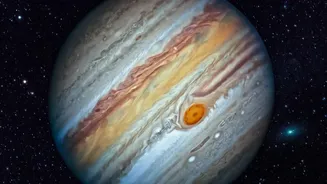
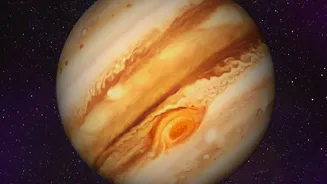
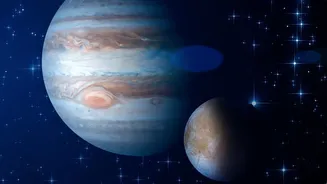
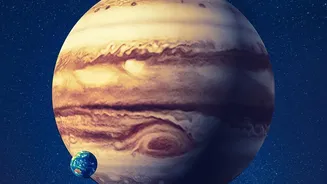
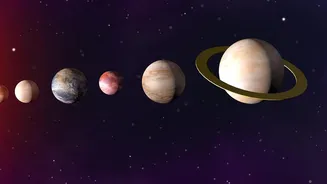
Our primary targets are the gas giants, Jupiter and Saturn, because they are bright and rewarding to observe. Jupiter is often the brightest point of light in the sky after the Moon and Venus, making it an easy first target. Saturn is also bright enough to be easily seen with the naked eye from urban areas. For September 2026, skywatchers are in for a treat. Venus will be exceptionally bright in the western evening sky right after sunset. Saturn will be visible for much of the night, appearing near the Harvest Moon on September 26. And on the morning of September 8, the Moon and Jupiter will have a close encounter, visible in the pre-dawn sky. These events make it an excellent time to start your stargazing journey.
Your First Sighting: A Step-by-Step Guide
Ready to find a planet? First, download your chosen app. When you open it, grant it permission to use your location and camera for the AR feature to work. Before heading out, use the app’s search function to see if Jupiter or Saturn is currently visible. Head out to your balcony and let your eyes adjust for a few minutes. Open the app and point your phone toward the sky. Most apps require a moment to calibrate using the internal compass. Once ready, follow the on-screen arrow that directs you toward your target planet. As you move your phone, the app’s display will shift until you are pointing directly at the planet’s location. Look up from your phone, and you should be able to spot it with your own eyes—a steady, bright point of light that doesn't twinkle like a star.