








A New Era for AI in India
OpenAI has officially brought API inference residency to India, a move that allows businesses and developers to process and compute AI workloads within the country's borders. Announced on Thursday, this development is a significant step towards addressing
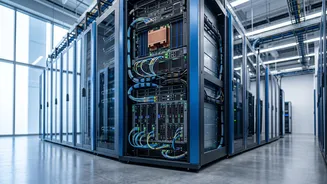
data localisation requirements that have, until now, slowed the adoption of advanced AI in sensitive sectors like finance and healthcare. By ensuring that both API requests and the model's computations occur in India, OpenAI is removing a critical barrier for enterprises that handle confidential information. This launch is part of a broader 'OpenAI for India' initiative, signaling a deep commitment to building AI infrastructure and capabilities tailored for the Indian market.
Meet GPT-6 Luna
The star of this announcement is GPT-6 Luna, the model powering the new local API. While specific architectural details are emerging, next-generation models like Luna are focused on more than just text. We can expect enhanced multimodal capabilities—processing images, code, and speech—alongside superior reasoning and planning skills. The 'Luna' designation suggests a focus on nimbleness and efficiency, likely optimised for the specific demands of local inference. Initially, the local API will support text-based tasks like document summarisation and data analysis through its Chat Completions API. This allows Indian developers to start building with a state-of-the-art model while keeping their data securely in-country.
The Power of Local Inference
So, what exactly is 'local inference' and why does it matter? Traditionally, when you use an AI model via an API, your data is sent to a server in the cloud, processed, and the result is sent back. Local inference changes that by performing the computation—the 'thinking' part—on servers located within India. The benefits are immediate and substantial. First, it guarantees data privacy and security, as sensitive information never leaves the country's borders, which is crucial for compliance in regulated industries. Second, it dramatically reduces latency, or lag, because the data doesn't have to travel to a distant data center and back. This results in a faster, more responsive experience for end-users. Finally, it gives businesses full operational independence and cost predictability, freeing them from the potential volatility of international data transit and cloud provider availability.
What This Means for Indian Businesses
This launch is poised to unlock a new wave of innovation across the Indian economy. For the financial services industry, it means being able to deploy AI for fraud detection and risk assessment with full confidence in data security. In healthcare, it could enable the analysis of sensitive patient data for diagnostics without breaching privacy norms. Startups and developers now have the tools to build world-class applications tailored to Indian needs, from hyper-local customer service bots to content generation tools that understand regional nuances. As Nitin Bawankule, OpenAI's Head of Enterprise in India, stated, this move gives 'more businesses a way to put OpenAI's tools to work, and gives Indian developers and startups more scope to build for their own, and enterprise needs'.
The Competitive Landscape
OpenAI is not alone in recognising India's massive AI potential. Major players like Google and Microsoft have also been investing heavily in the region, establishing data centers and partnerships. However, by being first to offer local API inference for a frontier model like GPT-6 Luna, OpenAI has gained a significant advantage, particularly with enterprises that have been held back by data residency concerns. This move is part of an ongoing strategy that includes partnerships with major Indian conglomerates like Tata Group to build domestic data center capacity and a broader push to open offices in key tech hubs like Bengaluru and Mumbai. It firmly positions OpenAI as a key partner in India's ambition to become a global AI leader.