




A Drier August on the Horizon
The India Meteorological Department (IMD) has forecast that rainfall for August 2026 is likely to be 'below normal' for the country as a whole. This means precipitation is expected to be less than 94% of the Long Period Average (LPA), a benchmark calculated
over a 50-year period. This outlook follows a July that helped erase some of the rainfall deficit from a dry June, but the distribution remained uneven across the country. The IMD's forecast for the second half of the monsoon season (August-September) also points towards below-normal rainfall, partly influenced by strengthening El Niño conditions in the Pacific Ocean, which are often associated with weaker monsoons in India. While some parts of peninsular, central, and northeast India might still see normal to above-normal rain, many parts of the country could face a significant deficit.
The Crucial Link: Rainfall to Reservoirs
For urban India, the monsoon’s performance is not an abstract concept—it directly translates into the water levels of the reservoirs that supply cities with drinking water. These massive storage systems are almost entirely dependent on monsoon rains for replenishment. When rainfall is robust and widespread in the catchment areas, reservoirs fill up, ensuring a stable water supply for the year ahead. For example, consistent rains in July and early August have brought Mumbai's seven supply lakes to over 90% capacity, securing a comfortable position for the city. However, the national picture shows that as of late July, India's major reservoirs were collectively at only 44% of their total capacity. A weak August, as predicted, could prevent many of these critical water sources from reaching satisfactory levels, putting pressure on supply chains for the post-monsoon months.
How Municipal Bodies Respond to Scarcity
When reservoir levels are low, municipal corporations and water boards across the country are forced to make tough decisions. Their primary goal is to stretch the available water to last until the next monsoon. This often leads to the implementation of water management measures that directly affect residents. These can range from scheduled water cuts, where supply is provided only for a few hours a day or on alternate days, to a reduction in water pressure. In more severe cases, authorities may ban the use of municipal water for non-essential activities like washing cars or maintaining swimming pools. These decisions are based on a constant monitoring of reservoir levels against daily consumption rates. A forecast for a dry spell gives officials a heads-up to plan for potential rationing, making it a critical piece of information for urban water management.
Beyond the Forecast: Other Stresses on Supply
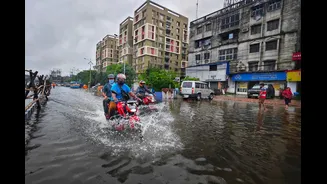
While the monsoon's performance is the biggest factor, it is not the only stress on urban water systems. Rapid urbanisation continually increases demand, while aging infrastructure often leads to significant water loss through leakages in the distribution network. This 'non-revenue water'—water that is treated but lost before it reaches the consumer—is a major challenge. Furthermore, heavy rainfall after a dry spell can sometimes do more harm than good by causing floods that overwhelm drainage systems and contaminate water supply lines with sewage and surface pollutants. These compounding factors mean that even in a year with average rainfall, the water supply system is often under strain. A below-normal monsoon simply exacerbates these existing vulnerabilities.
Why You Should Track Your Local Supply
Given the IMD’s forecast, staying informed about your local water situation is more important than ever. Many municipal corporations, such as those in Delhi, Pune, and Surat, provide information on their websites regarding supply schedules, maintenance shutdowns, and contact details for local engineers. Some, like the Surat Municipal Corporation, have even developed mobile apps to provide real-time updates on water availability and system performance. By tracking these official announcements, households can plan their water usage, store adequate amounts for periods of no supply, and report issues like leaks or contamination promptly. This awareness not only helps families manage their daily needs but also fosters a culture of conservation, which is essential for urban water resilience in the face of increasingly variable monsoons.