





The Star Ingredient: Sabudana
The heart of the dish is sabudana, also known as tapioca pearls or sago. These small, white pearls are not grains but are extracted from the starch of the cassava root. This is precisely why they are permitted during Navratri and other Hindu fasts (vrat
or upvas), when grains like wheat and rice are avoided. Rich in carbohydrates, sabudana provides a quick and sustained boost of energy, which is essential when observing a fast. Before cooking, the pearls must be rinsed and soaked for several hours, or even overnight, until they become soft and swell up, ensuring a fluffy, non-sticky khichdi.
The Foundation of Flavour and Texture
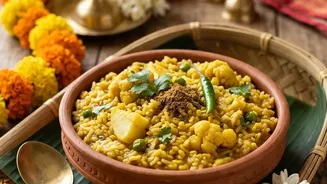
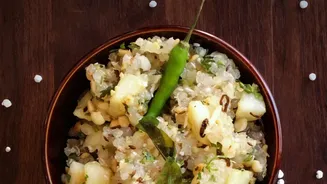
To build the khichdi, a few core components are non-negotiable. Potatoes, boiled or raw and then cubed, are sautéed to provide substance and a soft counterpoint to the chewy sabudana. Roasted peanuts, coarsely crushed, are perhaps the most crucial addition. They impart a delightful crunch, a nutty aroma, and a dose of protein and healthy fats that make the dish more satisfying. The cooking medium is almost always ghee (clarified butter), which is considered pure and suitable for religious occasions, adding its own distinct, rich flavour.
The Rules of Vrat Spices
Fasting recipes adhere to a specific, limited palette of spices. For a Navratri-compliant khichdi, the primary flavouring comes from cumin seeds (jeera), green chillies, and sometimes fresh ginger. One of the most important rules is the type of salt used. Regular table salt is avoided; instead, sendha namak, or rock salt, is used for seasoning. Spices that generate heat or are considered 'tamasic', such as onions, garlic, turmeric powder, and mustard seeds, are strictly excluded to maintain the sattvic (pure) nature of the meal.
The Finishing Touches
Just before serving, a few final touches elevate the dish from simple to sublime. A generous squeeze of lemon or lime juice adds a fresh, tangy brightness that cuts through the starchiness of the sabudana and potatoes. Many Maharashtrian preparations also include a pinch of sugar to subtly balance the flavours of the salt, spice, and sourness. Finally, a garnish of fresh, finely chopped coriander leaves brings a burst of colour and fresh, herbaceous aroma, completing this iconic fasting dish.
What Stays Out of the Pan
Understanding what is omitted is as important as knowing what goes in. During Navratri, the rules of fasting dictate a simple and pure diet. This means several everyday ingredients are strictly forbidden. Onions and garlic are never used in vrat recipes as they are considered 'tamasic' in nature. Grains like wheat and rice, as well as all lentils and legumes, are also off-limits. In terms of spices, turmeric, mustard seeds, asafoetida (hing), and garam masala are avoided. The dish relies entirely on the interplay between the simpler, permitted ingredients to create its signature taste and texture.