





Our Planetary Health Monitors
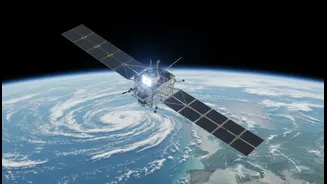
From tracking polar ice melt to monitoring cyclones and assessing drought conditions, Earth-observing satellites are indispensable tools in the 21st century. They provide a continuous stream of data that helps scientists understand our planet's complex
systems, powers weather forecasts, and informs critical decisions on everything from agriculture to disaster management. This global perspective is particularly vital for tracking the subtle, long-term trends of climate change. However, the value of this data is entirely dependent on its accuracy. If a satellite sensor reports that sea surface temperatures are rising, we need to know that the sensor is right—and not just that its instrument is getting old.
The Challenge of Trustworthy Data
The primary challenge for long-term climate studies is ensuring data from different satellites, launched years or even decades apart, is comparable. Instruments in the harsh environment of space can degrade over time, causing their measurements to 'drift'. This creates uncertainty. Is a change in measurement the result of a real change on Earth, or just an instrument aging? It’s like trying to compare the color of two photos taken with different cameras, years apart, under different lighting. To confidently detect decadal trends, such as a 0.1°C change in temperature, scientists need a common, highly reliable reference point. Without this, combining data from multiple missions to form a long-term climate record is fraught with difficulty.
Enter CLARREO Pathfinder
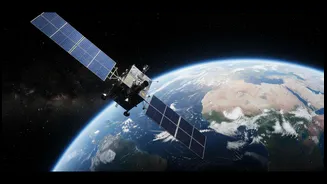
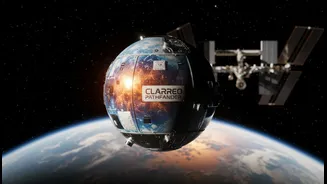
NASA's CLARREO Pathfinder (CPF) mission is designed to be the solution. Launched to the International Space Station (ISS), its purpose is not just to observe the Earth, but to serve as a new, highly stable 'gold standard' for calibration in orbit. Think of it as a tuning fork for other satellites. By providing an exceptionally accurate, SI-traceable benchmark—meaning it's anchored to international standards—CPF will allow other Earth-observing missions to check and correct their own measurements. The pathfinder is a precursor, intended to demonstrate the technologies and techniques for a potential future, more comprehensive CLARREO mission.
A New Standard for Space
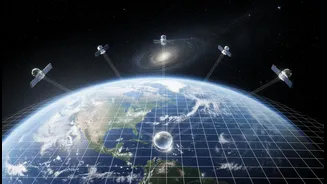
The instrument at the heart of the mission, a hyperspectral imager, will measure sunlight reflected from the Earth and Moon with an accuracy five to ten times greater than existing sensors. What makes it so revolutionary is its ability to calibrate itself in orbit by directly measuring the sun, a very stable and well-understood source. This resilience against degradation is key to its role as a long-term reference. From its vantage point on the ISS, CPF will match the path of other satellites, such as the CERES and VIIRS instruments, and take nearly simultaneous measurements of the same location. By comparing its own highly accurate data with that of the other satellite, it can provide a precise calibration adjustment, effectively 'tuning' the other instrument.
The Ripple Effect on Climate Science
The changes brought by this improved accuracy could be profound. With a trusted reference standard in orbit, scientists can stitch together data from past, present, and future missions with much greater confidence. This will allow them to detect subtle climate trends, such as changes in Earth's energy balance, decades sooner than would otherwise be possible. More accurate and interoperable data will lead to more robust climate models, reducing uncertainties in projections for sea-level rise, temperature changes, and cloud behavior. It means turning long-term climate records from a collection of different datasets into a single, highly reliable story of our planet's evolution.